TwinBed.app practical guide
Can Two People Sleep on a Twin Bed? Width and Practical Limits
Two people can physically perch on many twin beds, but that is not the same question as whether they can sleep safely and reasonably through the night. A twin's compact width is allocated to one body. Dividing it does not create two narrow personal beds; it creates overlapping shoulders, restricted turning, shared edge pressure, and concentrated load on a frame selected for another use. The answer also changes with who the sleepers are. An adult comforting a child for a few minutes is different from two adults planning regular sleep, and two young children still require a frame whose safety instructions permit the arrangement. This guide focuses on width, load, falls, and better ways to create a second sleep space.
Quick answer
A standard twin is intended for one sleeper. Two adults would have about nineteen inches of nominal width each—far less than a normal individual sleep surface—and their combined load may exceed the frame or mattress design. Brief sitting is different from overnight occupancy. Use a larger bed, two separate twins, or a properly rated trundle or bunk arrangement instead.
The width calculation explains the basic problem
A standard Twin is nominally about thirty-eight inches wide. Split evenly, that is about nineteen inches per person before allowing space at the edges or between bodies. Two pillows may nearly fill the head of the mattress. A side sleeper's shoulder and bent knees can cross the center immediately, while a back sleeper's elbows can extend well beyond an individual half. Neither person can turn naturally without affecting the other. Twin XL adds length, not width, so it does not solve shared occupancy.
For comparison planning, mark nineteen inches on a current bed and place one pillow inside the boundary. The result makes the limitation more concrete than a furniture photo. Even small adults are unlikely to have independent space. Sleep is dynamic; people move after they fall asleep and cannot reliably promise to remain rigidly positioned. A mattress that feels just large enough while awake may become precarious when one person rolls or blankets bunch between them.
Frame capacity is not an invitation to add sleepers
A frame's stated weight capacity may include the mattress, bedding, sleeper, and dynamic forces from sitting or turning. Staying below the number does not mean the bed was designed for two-person use. Load distribution changes when two people sit on the same edge or cluster near the center. Slats, side rails, fasteners, and support legs all participate. Product instructions and intended occupancy control; do not reverse-engineer permission from a capacity figure.
Bunks, lofts, trundles, and adjustable bases require particular caution. Upper bunks normally specify one occupant and have guardrail and mattress-thickness rules. A trundle may be designed as a separate low bed, not as an extension supporting two people on the main mattress. Adjustable mechanisms have their own load and movement limits. Never operate a base while occupancy conflicts with its instructions. A decorative twin daybed may accommodate several seated guests yet still designate the sleep surface for one person.
- Capacity includes more than body weight
- Dynamic loads differ from still loads
- Intended occupancy matters
- Special mechanisms require exact instructions
Edge compression and falls become more likely
With two bodies on a twin, at least one person is likely to spend substantial time near an edge. Foam may slope under concentrated load, and even a reinforced hybrid edge is not a guardrail. An adult can roll off; a child can become positioned against a wall or furniture in an unsafe way. Pushing the bed against a wall does not simply remove the risk because gaps between the mattress, frame, and wall can create entrapment concerns, particularly for young children.
Adding a rail casually is not a universal solution. Portable rails have age, mattress, frame, and installation requirements, and they do not create more sleep width. Bunk guardrails are designed as part of a specific elevated system, not to convert a platform into a shared bed. If a child needs supervision or comfort, an adult can use a nearby separate sleep surface rather than planning a full night within the child's twin. Follow pediatric safe-sleep guidance for infants; an adult twin mattress is not an infant sleep environment.
Short exceptions should not become a regular plan
An adult may sit beside a child to read, or a caregiver may briefly lie down while the child settles, when the frame and circumstances permit. That temporary presence should be distinguished from eight hours of unconscious movement. Similarly, two adults may accept a twin in an unexpected emergency, but tolerating a night does not make the arrangement supportive or appropriate for repeated use. The responsible answer is based on normal intended use, not whether a rare situation can be endured.
Pets also consume width and change movement. A dog at the foot can force the sleeper to bend the knees, while a pet along the side can push the person toward the edge. Include habitual pets when evaluating a one-person twin, and do not count them as weightless. If the bed repeatedly hosts a person plus a large pet, a wider mattress or a separate pet bed may improve space and reduce unexpected shifting.
- Brief comforting is not shared overnight sleep
- Emergency tolerance is not a buying standard
- Pets occupy usable area and add load
- Plan for recurring use, not the rare exception
Better ways to sleep two people in a compact room
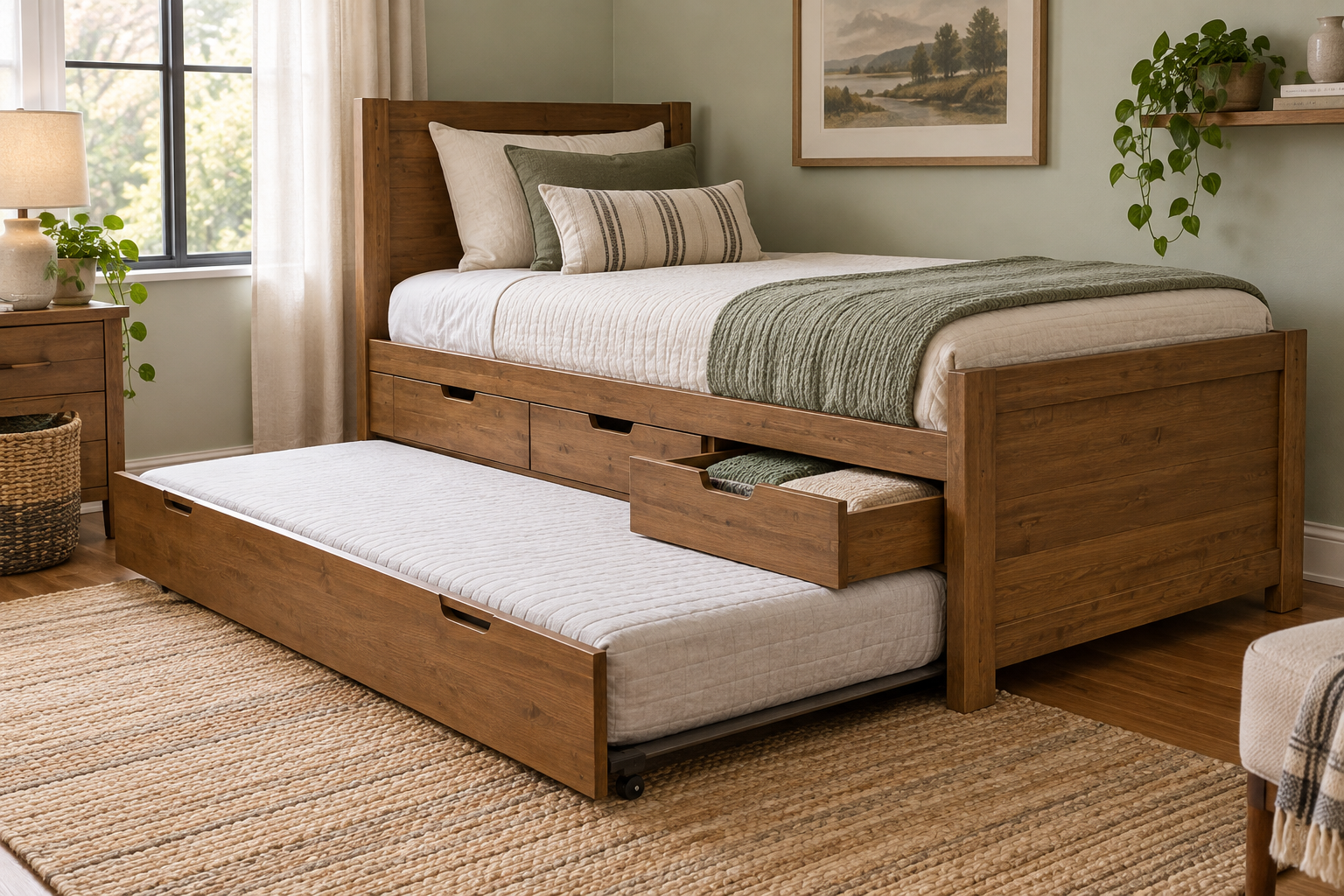
Two separate twins preserve individual width and can sit parallel, end to end, or in an L-shaped layout depending on the room. A twin-over-twin bunk uses vertical space, but users must meet age and safety requirements and the frame must be assembled exactly. A trundle supplies a second mattress that stores beneath the first; verify clearance, mattress thickness, and whether it remains floor-level or rises. A daybed with trundle can make a guest room serve as seating between visits.
If two adults want one shared surface, a Full or larger bed is the more direct category, subject to room fit. Two Twin XL mattresses placed side by side approximate the dimensions of a standard King in width and length, but they require a suitable support setup and do not become a seamless single mattress. Two standard Twins side by side are shorter than a King. These configurations belong to a deliberate frame and bedding plan, not an improvisation with straps on incompatible furniture.
Plan guest capacity from the floor outward
Measure the room with every sleep surface deployed. A trundle needs pull-out clearance and a walking route. A second twin needs access at the sides or foot. Bunks need ceiling clearance, ladder space, and unobstructed guardrails. Door swing, drawers, heaters, windows, and exits remain usable during the night. A solution that technically places two mattresses in the room but blocks the door is not functional.
Then match each surface to one sleeper and verify load, mattress dimensions, and bedding separately. Label stored Twin and Twin XL sheets to prevent rushed mismatches. For occasional overflow, a properly sized air mattress may be more practical than asking two people to share the permanent twin; place it away from sharp objects and traffic and follow its capacity instructions. Good guest planning gives everyone a defined surface instead of expecting closeness to compensate for missing width.
Frequently asked questions
Can two children sleep in one twin bed?
A twin remains a one-person bed unless the frame and applicable safety guidance explicitly say otherwise. Children move unpredictably, and crowding increases edge and gap concerns. Provide separate age-appropriate sleep surfaces.
Can a parent sleep in a child's twin bed?
A brief visit may be possible when the frame supports the load, but regular two-person overnight use is not the intended arrangement. Infants require their own safe sleep environment under current pediatric guidance.
Does a high weight limit mean two adults can use the twin?
No. Capacity does not establish occupancy or usable width. The frame may be strong enough for a heavier solo sleeper while still being designed for one person.
Would Twin XL fit two people better?
No. Twin XL is longer but normally the same nominal width as standard Twin. It gives a tall solo sleeper more legroom, not a second person's width.
What is the best compact setup for two guests?
Common options include two separate twins, a properly used bunk bed, a twin with compatible trundle, or a larger shared bed if the room permits. Measure the layout with every component open.
Final verdict
A twin can hold one sleeper comfortably; dividing it between two removes the movement and edge margin that make sleep practical. Neither extra length nor a large capacity number creates shared width. For two people, plan two approved surfaces or choose a larger mattress. That approach protects the furniture, preserves normal movement, and treats occasional guests as sleepers rather than a packing problem. Plan privacy and bedtime routines along with floor area. Two separate twins may technically fit yet leave no safe place for either guest to change clothes, turn on a reading light, or exit without disturbing the other. Give each surface its own blanket so movement does not pull covering away, and do not stretch one extension cord through the gap. If a trundle is used, identify who can comfortably manage the low height and make sure the upper sleeper can step down without landing on it. Store the correct sheets with each mattress and inspect the deployed pathways after dark. When a room cannot support two independent sleep surfaces with usable access, limit occupancy or arrange another space rather than treating the permanent twin as expandable.
Product examples