TwinBed.app practical guide
Choosing a Twin Bed for a Preschooler
Preschoolers are small, active, and newly independent, while a twin bed is an adult-size piece of furniture. That mismatch is not necessarily a problem; it simply changes the buying criteria. A bed that photographs well may be awkward to climb into, a deep drawer may remove useful walking space, and a thick mattress may make an otherwise low frame surprisingly tall. The most successful choice often has a straightforward construction that caregivers can inspect and a layout the child can understand. This guide works from the room outward: first the clearances and nighttime path, then the frame and mattress, then optional features such as rails, headboards, canopies, or drawers. It supports the Twin Beds for Kids collection without pretending that one style is best for every family.
Quick answer
For a preschooler, prioritize a stable twin frame, a manageable mattress-top height, close mattress fit, simple edges, and a room that is safe when the child gets up alone. Confirm the frame’s support requirements and any rail compatibility before buying. Avoid choosing on theme, storage capacity, or future usefulness until the basic fit and safety questions are answered.
Measure the Usable Room, Not Just the Empty Floor
A standard twin mattress is typically about 38 by 75 inches, but the assembled frame can be wider and longer. Headboards, footboards, side upholstery, ladder-like details, and projecting feet all add space. Mark the manufacturer’s assembled dimensions on the floor with painter’s tape. Open the bedroom door, closet, and drawers through their full travel, then walk the route from bed to door as if the room were dark.
Preschool rooms change quickly. Toy bins, a reading chair, and a dresser can turn a generous diagram into a narrow path. Keep the route clear of hard corners and furniture that encourages climbing. Do not position the bed where the mattress gives easy access to windows, blind cords, shelving, heaters, or ceiling-fan reach zones. The correct location may eliminate a stylish frame whose footprint works only on paper.
- Use assembled frame dimensions, not mattress dimensions.
- Test every door and drawer swing.
- View reachable objects from mattress height.
- Preserve a simple nighttime path.
Calculate the Real Climbing Height
Frame height and mattress thickness combine to create the sleep-surface height. A low platform with a very thick mattress can end up higher than a conventional frame with a modest mattress. Add the listed support-deck height to the exact mattress thickness, then account for any approved foundation. If a product page omits a critical measurement, look for the manufacturer’s manual or ask before purchasing rather than estimating from photos.
Invite the child to practice sitting and standing from a similarly measured surface while supervised. The goal is not a formal pass-fail test; it is to notice whether the child must jump, belly-slide, or use a movable nightstand as a step. An approved, stable step may be appropriate in some setups, but it adds an object and a trip consideration. A bed the child can use without an extra climbing strategy is generally easier to live with.
Prefer a Frame That Explains Itself
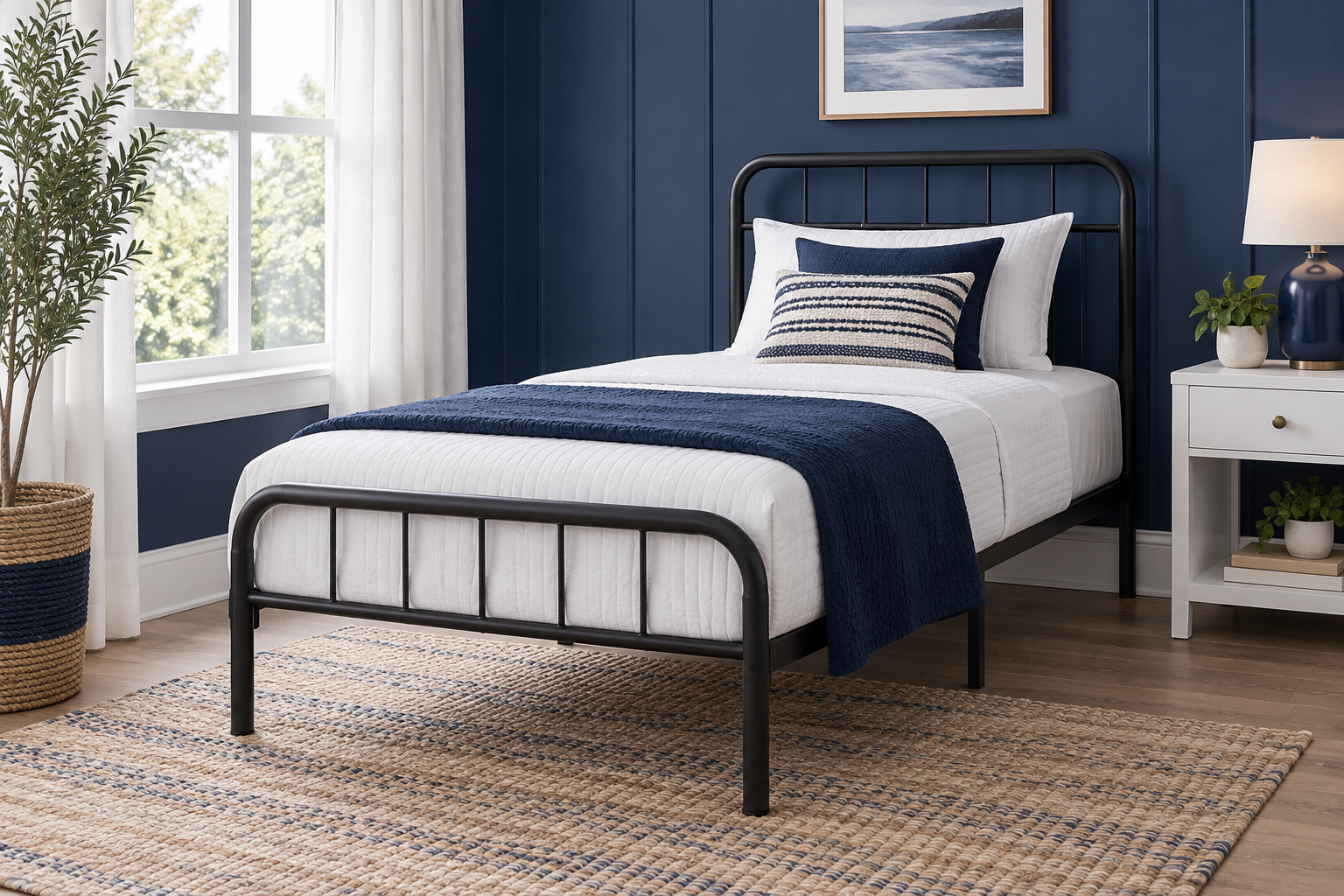
A simple platform can be attractive because the support system is visible and the mattress sits directly on slats when the product permits it. Check slat material, spacing, center support, fastener locations, and whether the mattress maker accepts that support. A traditional frame may work equally well but could require a box spring or foundation. Never omit a required component just to lower the bed.
Look closely at corners, finials, wide gaps, decorative cutouts, and moving parts. Rounded appearance alone does not prove the construction is child-appropriate. Confirm the frame’s stated users and limits. For a secondhand bed, obtain the exact instructions and original hardware. Painted-over warning labels, unidentified replacement bolts, cracks, or previous modifications are reasons to pass.
- Match mattress support to both manuals.
- Avoid unverified structural alterations.
- Check all openings and projections at child height.
- Keep the model and assembly guide.
Think Carefully About Headboards and Footboards
A headboard can give a child a visual orientation and protect the wall, but it should not become a climbing structure or an anchor for decorations. Open scrollwork, horizontal rails, and large cutouts deserve evaluation from a child’s perspective. Do not tie ribbons, lights, cords, canopies, or organizers to a frame unless the manufacturer specifically permits the accessory and the accessory instructions support that use.
Footboards create a defined boundary but add length and can complicate sheet changes. Some children may try to climb over them instead of using the side. Low, clean-ended frames can make adult access easier during bedtime routines. There is no universal need for either component; the better choice is the one that creates fewer ambiguous climbing and trapping spaces in the actual room.
Treat Storage as Furniture, Not Free Space
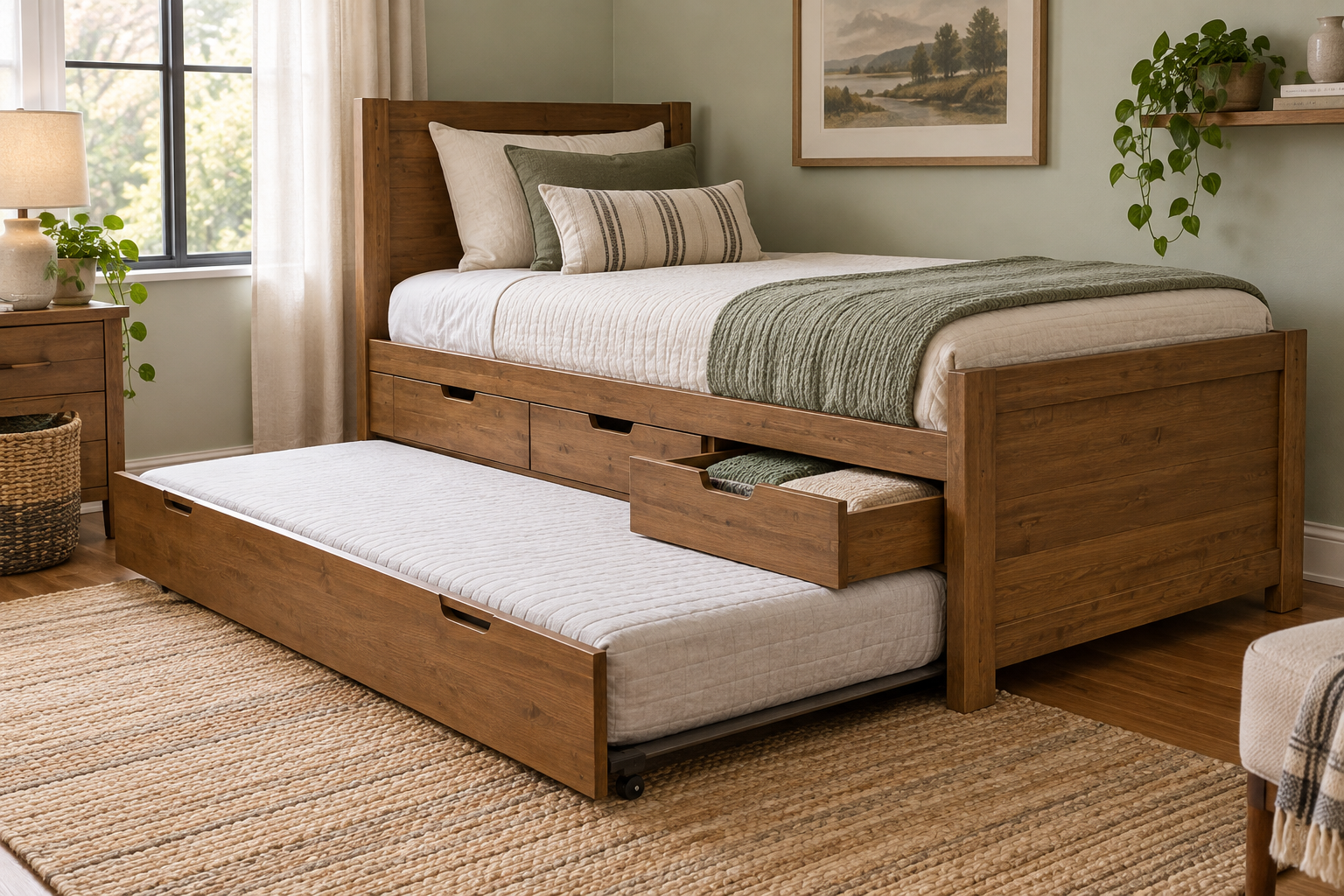
Underbed drawers can replace a separate bin or dresser, but they need clear floor area to open. Measure their pull-out depth and leave room for an adult to remove them for cleaning. Small fingers should not be near the mechanism while drawers move. Follow the manufacturer’s use instructions, and do not allow a drawer to become a step or hiding space.
Open underbed clearance has its own advantages. It is easy to see lost toys and inspect supports, though loose bins can migrate into the walking path. A storage headboard may put books within reach but can also place objects above the sleep surface. Store only light, appropriate items and avoid glass, cords, heavy décor, or anything likely to fall. Storage should simplify the room rather than concentrate hazards beside the pillow.
Choose the Mattress With the Frame
Confirm standard Twin sizing on both listings, then check the frame’s permitted mattress dimensions and thickness. Mattress feel is individual, and labels such as medium-firm are not standardized across brands. For a child without a specific clinical need, focus on a supportive, intact mattress that fits the frame closely and is approved for the support underneath. If allergies, pain, reflux, disability, or another health concern affects sleep, ask the child’s clinician rather than relying on marketing categories.
A waterproof protector can make cleanup easier if it fits smoothly and is permitted by the mattress maker. Loose layers and oversized toppers can alter fit and height. Use fitted bedding that stays secure, keep the sleep area age-appropriate, and follow current pediatric guidance for the individual child. Air the new mattress as directed and inspect it for damage before use.
Decide About Rails Before Checkout
If the child rolls frequently, caregivers may consider a portable bed rail. Do not assume it will attach later. Review the candidate rail’s mattress-thickness range, frame restrictions, anchoring path, age and ability requirements, and placement rules while evaluating the bed. Upholstered edges, platform lips, storage drawers, and adjustable sections can all interfere with installation.
A rail is not the only possible approach, and it is not appropriate for every child. Some families choose a lower bed and a clear floor area without a portable rail. Whichever arrangement is selected, avoid wall gaps and improvised barriers. A clinician should advise when medical or developmental factors make an ordinary transition setup questionable.
Plan for Growth Without Overbuying
A twin bed can last through childhood, but “grows with the child” should not justify features that are awkward today. A very tall loft, complex workstation, or oversized storage structure may be useful later while being unsuitable for a preschooler now. Buy for the current developmental stage and room. A straightforward frame can later be paired with different bedding, a desk, or independent storage without changing the sleep platform.
Durability is partly an inspection habit. Assemble precisely, tighten hardware as directed, protect the frame from jumping and climbing, and recheck after moving it. Keep spare parts labeled, but do not leave them accessible. If the bed begins to wobble, squeak unusually, crack, or shed hardware, stop and investigate rather than treating those signs as normal aging. This approach keeps future flexibility grounded in what the bed can safely do today.
Frequently asked questions
Is a twin bed too big for a preschooler?
The mattress offers more space than a toddler bed, but size alone is not a problem. The important issues are finished height, frame fit, independent access, and the safety of the open room.
What type of twin frame is easiest for a young child?
A stable, relatively low, uncomplicated platform is often easy to understand, provided its instructions allow direct mattress support. Traditional frames can also work when all required components are installed.
Should a preschooler use a box spring?
Only when the frame and mattress instructions require or permit it. A box spring increases height and is not interchangeable with every foundation. Never remove a required support component solely to lower the bed.
Are storage beds good for preschoolers?
They can reduce separate furniture, but drawers need operating clearance and supervision. Check pinch points, weight restrictions, and whether children might climb into or on the storage.
Can a preschooler use a loft or upper bunk?
No. Federal consumer-safety guidance places the upper sleep level outside the under-six age group. Loft-bed makers may set still tighter rules, so a preschooler should use a lower surface that complies with the exact product instructions.
How can I tell whether a rail will fit?
Compare the rail manual with the frame construction and actual mattress thickness. Confirm its anchor path, permitted bed type, placement, and gap requirements before buying either product.
Final verdict
A preschooler’s twin bed should make ordinary nights easier, not add a complicated piece of play equipment beside the pillow. Measure the whole frame and its operating space, calculate the actual sleep-surface height, verify mattress support, and inspect openings or climbing cues from the child’s level. Add storage or a rail only when the feature fits the room and its instructions support the complete setup. A simple, well-assembled bed with a clear route and a consistent routine is usually a stronger long-term choice than a feature-heavy design selected mainly for appearance.
Product examples