TwinBed.app practical guide
Twin-over-Twin vs. Twin-over-Full Bunk Beds
Both configurations stack a Twin upper bed, but the experience below is different. A twin-over-twin bunk is space-efficient and straightforward to furnish. A twin-over-full adds sixteen inches of nominal mattress width on the lower level, changing wall fit, ladder position, circulation, bedding cost, and who can use the bottom. The larger lower bed can be helpful, yet it should not be treated as automatically more versatile: the frame may be heavier, harder to move, and less balanced in a narrow room. Comparing the two requires more than counting sleepers. It requires mapping the entire assembled structure, checking the exact mattress limits, and considering how the room will be used at night and during the day.
Quick answer
Twin-over-twin bunks usually preserve the smallest, most symmetrical footprint and use two Twin mattresses. Twin-over-full bunks give the lower sleeper a wider surface but require more floor area and may have an offset upper structure. The better choice depends on the actual sleepers, room clearances, approved mattress dimensions, and whether the lower bed needs to serve one person, guests, or a caregiver.
Compare the Mattress Footprints First
A standard Twin mattress is generally about 38 by 75 inches, while a Full is generally about 54 by 75 inches. That nominal sixteen-inch width difference appears on the lower level of a twin-over-full configuration. The assembled frames will be larger than their mattresses because posts, rails, ladders, and decorative panels add dimensions.
Use the manufacturer’s assembled length, width, and height rather than adding mattress sizes yourself. Some twin-over-full designs center the upper bunk; others offset it or integrate a side ladder. The broader lower structure may project on one side or both. Tape the full frame outline on the floor and add the ladder’s operating area before judging whether it fits.
- Twin-over-twin uses two Twin sleep surfaces.
- Twin-over-full widens only the lower level.
- Frame dimensions exceed mattress dimensions.
- Ladder and drawers may extend the footprint.
Match the Lower Bunk to Its Real Job
For two children who each need an individual sleep surface, twin-over-twin can be sufficient and leaves more open floor area. A Full lower bunk may suit an older or larger lower sleeper who wants more turning room, though it remains a single Full bed unless the manufacturer states otherwise. Do not infer occupancy from width; follow the bed’s person and weight limits.
A wider lower bunk can also help when a parent reads beside a child or briefly provides care, but adult presence must remain within product limits. It may accommodate an occasional guest more flexibly, yet the room still needs suitable privacy and access. If the Full is rarely used as a Full, sacrificing permanent floor area for hypothetical versatility may not be worthwhile.
Examine Room Circulation and Furniture
Place the taped footprint in relation to the bedroom door, closet, dresser, desk, and windows. A twin-over-twin often fits along a compact wall with consistent side clearance. A twin-over-full may narrow the walking route beside the lower corners or interfere with a drawer that previously opened. The extra width also affects how a caregiver reaches the wall side to make the bed.
Check vertical relationships too. Both use an upper Twin, but overall support height and rail design vary by model. Measure upper-mattress ceiling clearance for the specific bed. Keep the structure away from ceiling fans, blind cords, heaters, and reachable fixtures. A smaller floor footprint does not excuse poor overhead placement.
Budget for Two Different Mattress Systems
Twin-over-twin simplifies replacement because both positions share the same nominal size, but the allowed thickness may differ between upper and lower levels. Never assume the mattresses are interchangeable. The upper bunk has a strict maximum thickness to preserve guardrail height; the lower may allow a different range or foundation arrangement.
Twin-over-full requires separate sheet sets and two mattress sizes. Confirm exact permitted dimensions before buying. The lower Full may accept a thicker mattress, but added depth can reduce sitting clearance under the upper bunk. Evaluate lower headroom with the chosen mattress just as upper headroom is evaluated against the ceiling.
- Read limits for each level separately.
- Count toppers in total sleep-surface height.
- Do not move a thick lower mattress to the top.
- Verify support spacing for both mattresses.
Compare Ladder and Entry Geometry
On a symmetrical twin-over-twin, the ladder may attach to an end or side without crossing the lower mattress. A twin-over-full design can use an angled side ladder, an end ladder, or an integrated panel. The wider lower bunk may sit beneath part of the climb path, changing how the lower sleeper enters and how bedding is changed.
Consider the route at night. The ladder landing should stay free of baskets, trundles, and furniture. The upper sleeper should be old enough and able to climb using the intended opening; CPSC guidance keeps children under six off upper bunks. Never relocate a fixed ladder or switch ends unless the instructions show that approved configuration.
Think About Visual and Social Space
Two equal bunks can feel fair in a shared sibling room, although the upper and lower positions still differ in privacy, headroom, temperature, and access. A Full lower bed creates an obvious size difference. That may be appropriate for an older sibling or regular guest, but families should discuss how positions are assigned rather than assuming the larger mattress solves room-sharing tension.
The lower Full can make the area beneath the upper bunk feel more like a lounge, yet leaning pillows or hanging curtains from rails can interfere with safe use. Avoid fabric enclosures, cords, and attachments unless specifically approved. Keep the frame visible enough for inspection and maintain the manufacturer’s intended openings.
Investigate Conversion Claims Carefully
Some twin-over-twin bunks separate into two Twin beds, which can be valuable when siblings move rooms. Some twin-over-full models separate into one Twin and one Full. Conversion must be explicitly documented; it may require different legs, finials, rails, or hardware. Store those parts with labels and retain the instructions.
Do not assume every stacked joint can become a finished bed. A separated unit may need guardrails removed or components reinstalled in a precise way. Check whether both resulting frames retain appropriate mattress support and whether the room can fit them. Future conversion is useful only when the process and required parts remain available.
Apply the Same Core Safety Rules to Both
Regardless of configuration, install all upper guardrails, use the specified mattress, secure the ladder, and inspect hardware regularly. Do not hang belts, ropes, bags, scarves, or sports equipment from the frame. Prohibit jumping and rough play. Keep only the allowed number of sleepers on each level and respect the individual weight limits.
Confirm secondhand beds by model, manual, labels, complete original hardware, and official recall information. A wider lower bunk does not stabilize a damaged upper structure. If rails, supports, welds, wood joints, or fasteners are compromised, stop use until the manufacturer-approved solution is completed.
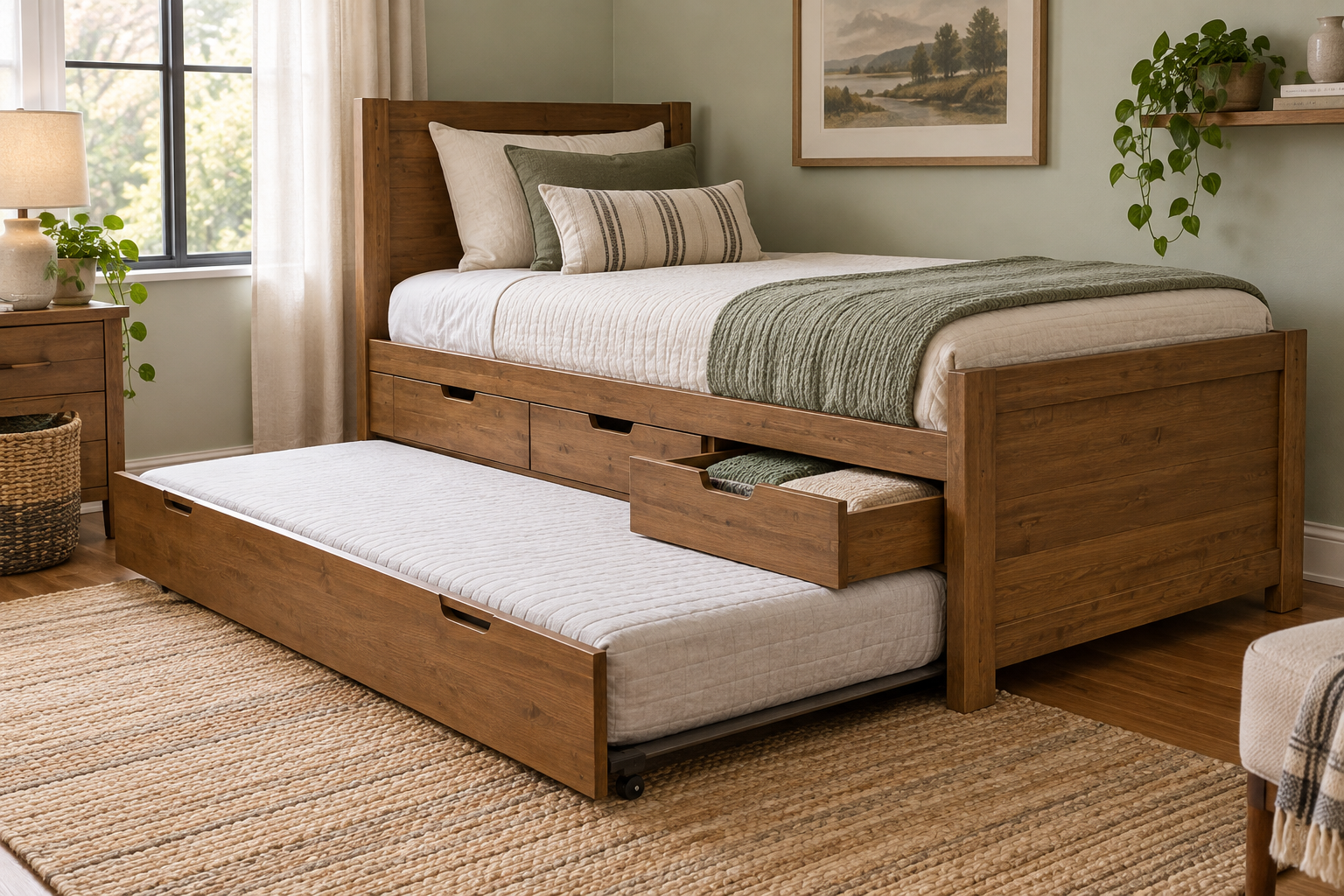
The comparison should also include maintenance access. A twin-over-twin frame may allow the lower mattress to slide out from either long side, while a broader Full mattress can be heavier and more difficult to rotate inside a tight room. Check the mattress maker's handling instructions and ensure adults can reach every fastener without standing on the frame. If drawers or a trundle are included, operate them through their full travel and inspect the support structure behind them. Features below the bed must not conceal loose hardware or become the only way to brace a wobbling joint.
Finally, compare delivery and assembly logistics. The larger lower rails and panels of a twin-over-full model must pass through the home's doors, turns, and stairs before they can serve the room. Measure the route and review package information where available. Assemble in the destination room if directed, using the number of adults specified. A configuration that technically fits after assembly may still be unrealistic if components cannot reach the room without being forced, bent, or altered. Never cut structural parts to solve a doorway problem.
Frequently asked questions
Is twin-over-full safer than twin-over-twin?
Neither configuration is inherently safer. Safety depends on compliant construction, correct assembly, approved mattresses, complete guardrails, room placement, eligible sleepers, and ongoing inspection.
Can two children sleep on the Full lower bunk?
Do so only if the manufacturer permits that occupancy and the combined load stays within its limit. Mattress width alone does not establish how many people the frame is designed to hold.
Does a twin-over-full bunk need a larger room?
Usually it needs more width at the lower level, but compare exact assembled dimensions. Ladder projection, drawers, trundles, and access routes can matter as much as the mattress difference.
Can both bunk types be separated?
Only models specifically designed and documented as convertible should be separated. Follow the exact conversion procedure and retain all required hardware.
Do both configurations use the same top mattress?
Both commonly use a Twin upper mattress, but maximum thickness and exact permitted dimensions vary by model. Check the warning label rather than assuming compatibility.
Which is better for a small room?
Twin-over-twin usually preserves more floor space, but a twin-over-full may replace another piece of furniture or support a specific lower sleeper. Map the whole room before deciding.
Final verdict
Choose twin-over-twin when compact symmetry, matching mattress sizes, and open floor area are priorities. Choose twin-over-full when the lower sleeper genuinely benefits from more width and the room can absorb the larger structure without compromising access. In either case, compare exact frame dimensions, level-specific mattress limits, ladder placement, ceiling clearance, and conversion instructions. The best configuration is the one that serves today’s sleepers safely without depending on imagined future uses. Measure the delivery route, furniture clearances, and adult maintenance access before ordering. Those practical details often decide which configuration remains useful after the novelty of a larger lower mattress fades. Keep the final decision tied to present occupants and verified dimensions, not assumptions.
Product examples
Continue comparing on TwinBed.app