TwinBed.app practical guide
What Size Comforter Fits a Twin XL Bed?
Comforters are more forgiving than fitted sheets, yet the wrong proportions are immediately visible. A short comforter can expose feet or leave no fabric to fold near the pillow. A narrow one barely covers the mattress sides. An oversized one can pool on the floor, overwhelm a dorm washer, or hang unevenly against a wall. Twin XL sizing becomes simple when the decision is treated as a coverage calculation rather than a package-label contest.
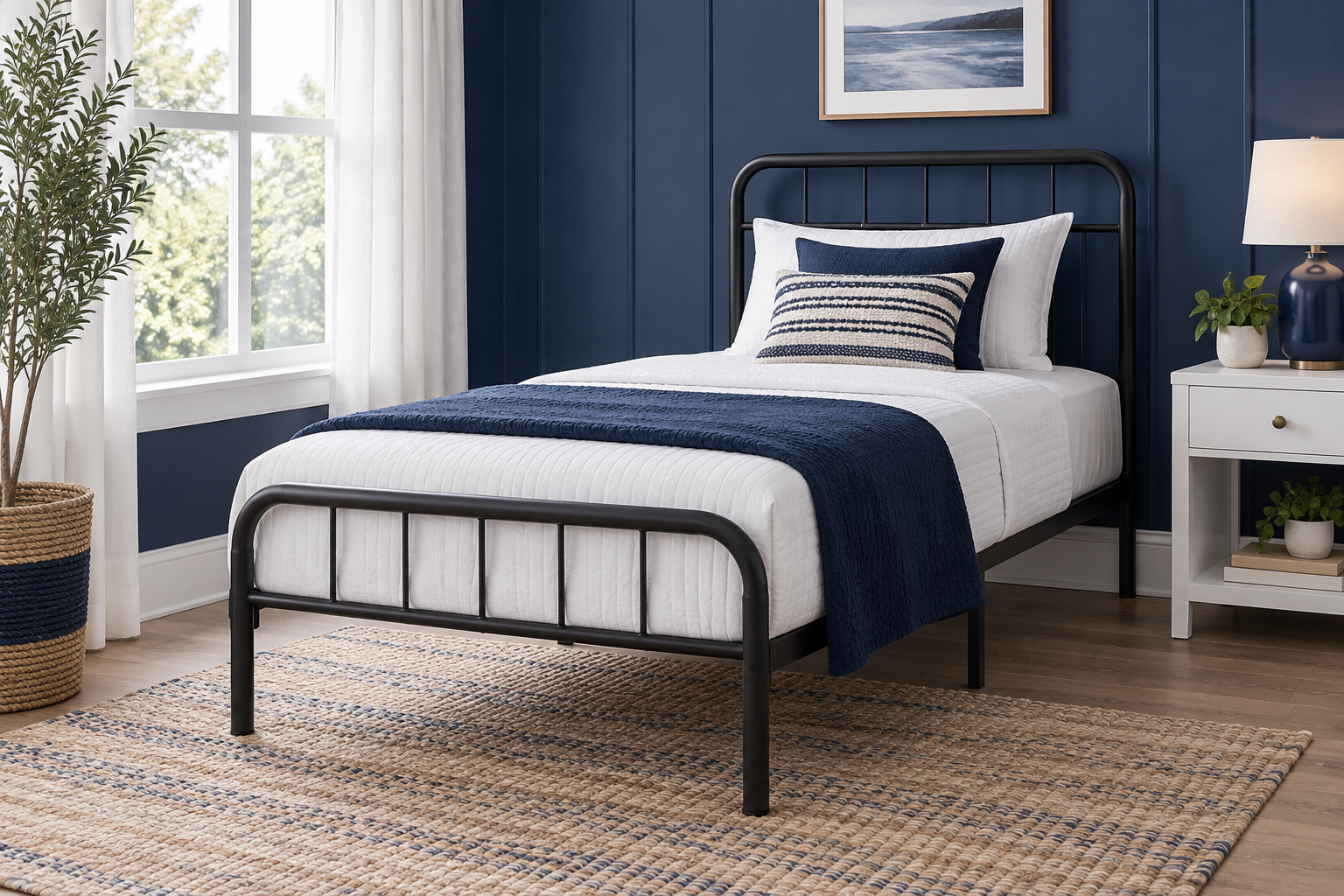
Quick answer
Choose a comforter labeled Twin XL or Twin/Twin XL whose listed length covers an 80-inch mattress and provides the desired fold or foot drape. Labels are not standardized enough to decide alone. Measure mattress width, length, depth, and the amount of side and foot drop you want, then compare that total with the comforter's exact dimensions.
Begin with the 38-by-80-inch sleep surface
Twin XL mattresses are nominally about 38 inches wide and 80 inches long. A comforter must cover that top rectangle before it can create any side drop or foot drape. The listed comforter width and length therefore need to exceed the mattress dimensions by an amount that matches the desired look.
A product labeled Twin may be too short, but labels alone do not settle the matter. Some brands sell a combined Twin/Twin XL comforter with enough length for both. Others use distinct cuts. Read the numerical dimensions for the exact variation instead of relying on the marketing name.
Orientation matters. The longer comforter dimension should run from head to foot. Reversible patterns and square-looking packages can make orientation unclear until the item is unfolded. Keep the care tag at the intended foot or follow any directional stitching specified by the maker.
The mattress length does not include the pillow zone or a decorative fold-back. If the comforter will begin below stacked pillows, less head-end length is required. If it must tuck beneath them or fold over a top sheet, budget additional fabric.
Calculate side drop from mattress depth
For equal side coverage, subtract the 38-inch mattress width from the comforter width and divide the remainder by two. A 68-inch-wide comforter, for example, has 30 inches beyond the mattress top, producing about 15 inches of theoretical drop on each side before loft and shifting are considered.
Compare that result with the mattress depth and exposed foundation. A 10-inch mattress on a platform may be covered neatly by a 15-inch drop. A deep mattress on a tall box foundation can leave support layers visible. Whether that matters depends on the desired appearance and whether a bed skirt or decorative frame already conceals the base.
A plush comforter does not fall like flat fabric. Loft rounds over the mattress edge and uses some width before the side hangs vertically. Exact drape varies with fill, quilting, and stiffness, so the calculation is a planning estimate rather than a tailoring guarantee.
Beds against a wall do not necessarily need symmetrical visual drop. The comforter can be centered for sleeping, but styling may shift slightly toward the visible side. Avoid so much hidden fabric that it becomes trapped, hard to straighten, or close to a heater or vent.
Foot coverage depends on how the bed is made
Subtract the 80-inch mattress length from the comforter length to see the total fabric available beyond the sleep surface. That excess is shared between the head allowance and foot drop. If the comforter starts near the top edge, most excess can hang at the foot. If it folds under pillows, less remains.
A tall footboard changes the visual requirement because the end of the mattress is partly hidden. It can also restrict a thick comforter if fabric is tucked between mattress and board. An open platform displays the drop clearly and may benefit from more length.
Tall sleepers often prefer a comforter that reaches beyond their feet without being tightly tucked. Their body position and pillow stack may shift them farther down the mattress. Measuring an existing blanket that feels comfortable is one of the best ways to establish a preferred finished length.
Do not use a comforter as a structural mattress retainer on an adjustable bed. Moving bases need flexible bedding positioned according to the base and comforter instructions. Excess fabric should stay clear of mechanisms and the floor.
When a Full or Queen comforter is tempting
A wider comforter can create generous side coverage on Twin XL, and some shoppers intentionally use Full/Queen bedding for that look. The tradeoff is more bulk, greater likelihood of floor contact, and a larger item to wash and dry. The mismatch is a style choice rather than an automatic upgrade.
Length must still be checked. A Full/Queen comforter may be wider but not meaningfully longer than a Twin XL design. If the original problem is exposed feet, buying by width category alone can miss the goal. Compare both printed dimensions.
Oversizing works best on a centered bed with open space on both sides. In a dorm corner, half of the extra fabric may collect against the wall. On a lofted bed, a long side drop can interfere with the desk area or make bed-making awkward.
Duvet systems add another relationship: the insert and cover need compatible dimensions. A much larger cover can let the insert migrate, while an oversized insert can bunch. Size both pieces deliberately instead of mixing category labels by instinct.
Dorm rooms add laundry and safety constraints
A dorm comforter should fit the bed, but it also needs to fit the available laundry routine. Very bulky fills can be difficult in compact shared machines. A washable cover with a lighter insert or layered blankets may be more practical, depending on care requirements and personal preference.
Lofted beds deserve careful control of drape. Fabric should not obstruct ladders, hang into a study lamp, cover vents, or trail where a chair catches it. Follow residence rules regarding heaters, electrical items, and furniture placement.
Storage volume matters between semesters. A thick oversized comforter consumes more closet and travel space than a fitted Twin XL layer. Compression storage may be permitted for some products but can be inappropriate for others over long periods; follow care guidance.
Coordinate with the actual mattress depth. Dorm mattresses are often thinner than home mattresses, so a product photographed on a deep retail mattress may hang lower in the residence hall. Ask housing for dimensions when available.
A tape-measure method for choosing confidently
Measure the mattress width, length, and depth after adding any topper. Decide where the comforter should begin at the head and where it should end at the foot. Measure the desired side drop on one side, double it, and add the mattress width. Then add head allowance and foot drop to the mattress length.
If replacing a comforter, lay the old one flat and measure edge to edge without stretching. Note exactly what you want to change: three more inches at the foot, less floor contact, or fuller side coverage. That preference is more informative than a generic chart.
Compare final numbers with each product variation. Retail listings can group several sizes, and images may show a Queen even when Twin XL is selected. Confirm the selected size beside the dimension table before ordering.
Remember that washing can affect textiles according to material and care method. Follow the label and avoid assuming all fills or shells tolerate the same temperatures. A well-sized comforter maintained as directed is more useful than a theoretically perfect measurement altered by improper care.
Check the measurement after deciding whether a duvet cover will be used. The cover adds its own seams, closures, and corner ties, and it must match the insert closely enough to prevent empty edges. Read both specifications because two products described with the same broad size label can still differ by several inches.
Climate and layering habits also influence the ideal choice. Someone who uses the comforter alone may prioritize full side coverage, while a sleeper who adds a separate blanket may choose a lighter, less bulky top layer. Warmth claims are product-specific, so dimensions should not be used as a proxy for insulation.
If two Twin XL beds share a guest room, consistent comforter dimensions create a neater visual pair even when the frames differ slightly. Measure both finished mattress heights before ordering. A taller mattress consumes more side drop and can make nominally identical bedding look uneven across the room.
Frequently asked questions
Can a Twin comforter fit Twin XL?
Some are long enough, especially combined Twin/Twin XL products, but the listed dimensions must cover an 80-inch mattress and the desired foot drape.
Can I use a Full comforter on Twin XL?
Yes, if you want extra width and its length works, but it may hang low, touch the floor, or be bulky in a small room.
How wide should a Twin XL comforter be?
There is no single required width. Add twice the desired side drop to the 38-inch mattress width, then allow for loft.
Are Twin XL comforters five inches longer than Twin comforters?
Not necessarily. Textile sizing varies by brand, so compare numerical dimensions.
Does mattress thickness affect comforter size?
Yes. A deeper mattress uses more of the comforter's width to cover the sides and can change the desired drop.
Final verdict
The best Twin XL comforter is long enough for an 80-inch mattress, wide enough for the chosen side drop, and manageable in the room's laundry and storage setup. Measure the mattress and the drape you actually want, then shop by printed dimensions. That approach works whether the package says Twin XL, Twin/Twin XL, or a deliberately oversized category.
Product examples
Continue comparing on TwinBed.app