TwinBed.app practical guide
Bunk Bed vs. Trundle Bed for Siblings
Bunks and trundles solve different versions of the same problem. A bunk reserves floor area by stacking two permanent sleep surfaces. A trundle hides one mattress below another and borrows floor area only at night. For occasional guests, that trade can be excellent. For siblings using both beds every night, repeated pulling, bedding, and morning storage can become the central room routine. Safety considerations also differ: bunks require climbing and upper-level safeguards; trundles require clear deployment space, stable rolling or lifting hardware, and an unobstructed exit when extended. This guide compares everyday use rather than treating both products as interchangeable space savers.
Quick answer
A bunk bed keeps both mattresses available while using vertical space, but the upper level requires eligible sleepers, guardrails, ladder use, and ceiling clearance. A trundle keeps both sleep surfaces lower, yet the second bed consumes floor space whenever extended and may require daily setup. Choose according to room geometry, each child’s age and ability, approved mattress sizes, and whether the second bed is used every night.
Map Daytime and Nighttime Footprints
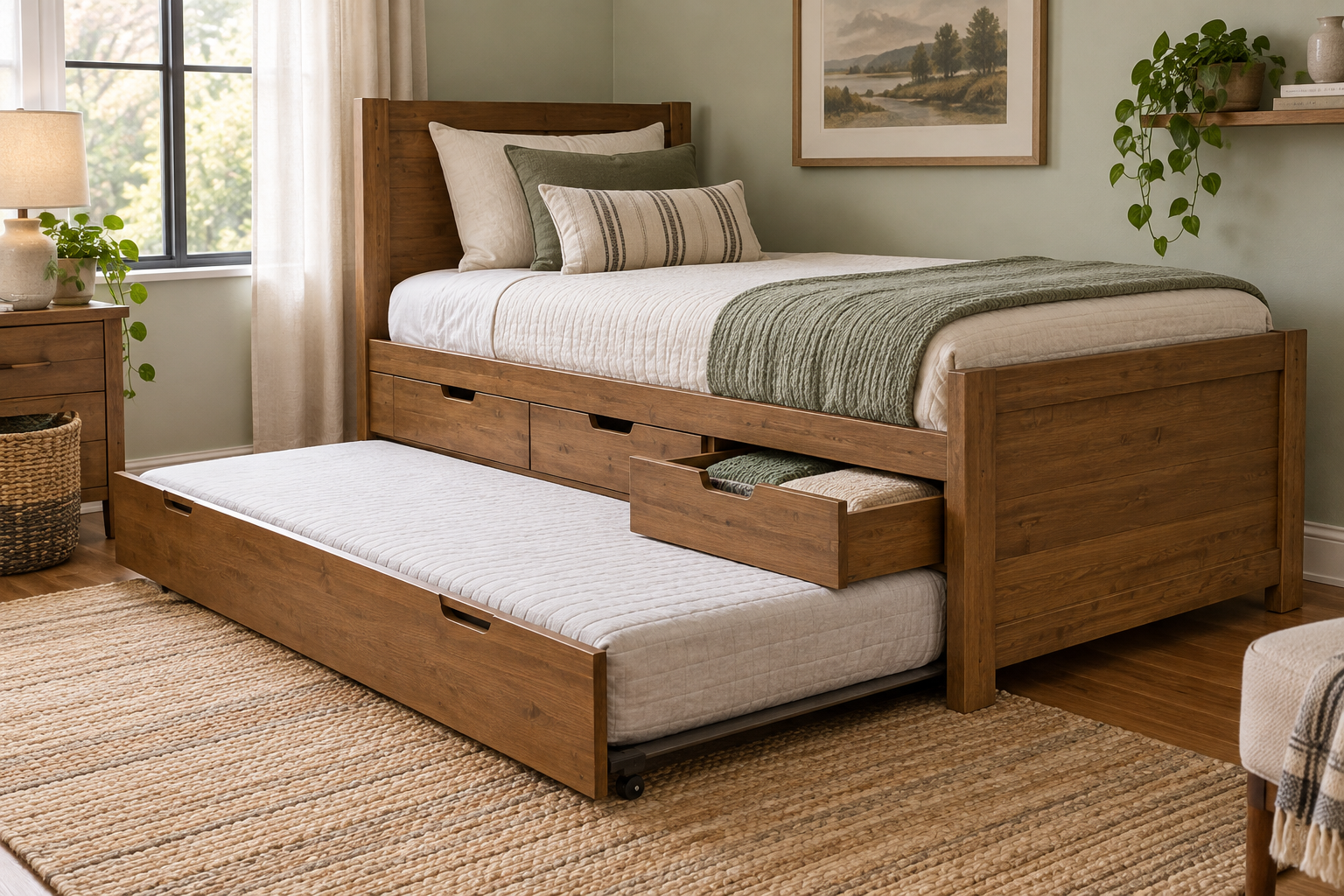
A bunk’s frame occupies nearly the same floor area day and night, although ladders, drawers, or stairs can project. Its vertical footprint reaches toward the ceiling. A trundle bed may look compact during the day but nearly doubles its sleeping width when the lower platform is pulled out, depending on orientation.
Tape both states on the floor. For the trundle, include handle reach, full extension, and space for a caregiver to pull it. Open doors, closets, and drawers with the trundle deployed. For the bunk, map the ladder landing and upper clearance. The room must work in its most expanded condition.
- Measure complete frames, not mattresses.
- Test the trundle fully extended.
- Include ladder or drawer projection.
- Protect a route from both sleep surfaces.
Compare Daily Labor
Both bunk mattresses remain ready for sleep, though the upper bed is harder to make. A trundle may need bedding removed, the platform rolled in, and the floor cleared every morning. Some trundles store with thin bedding; others do not. Follow the product instructions rather than forcing a made bed beneath the upper frame.
Ask who performs the setup. A child should not lift, pull, or latch a mechanism beyond the manufacturer’s intended use. Fingers and feet need to stay clear of wheels, links, and pop-up parts. For nightly sibling use, rehearse the actual routine before assuming the hidden bed will disappear daily.
Match Age and Ability
CPSC guidance keeps children under six off the upper bunk, and manufacturers may set stricter age or ability rules. The upper sleeper must climb predictably and follow no-play rules. Temporary dizziness, injury, or illness can make the elevated position unsuitable.
A floor-level trundle avoids ladder access but is not automatically appropriate for every child. Check mattress height, frame gaps, rolling hardware, and whether the sleeper can enter without stepping on the mechanism. Medical, mobility, or developmental needs should be discussed with the child’s clinician.
Compare Mattress Restrictions
Upper bunks have a maximum mattress thickness that preserves guardrail height, plus exact length and width requirements. Lower bunks may allow a different thickness. Never move a thick lower mattress upstairs merely because both are called Twin.
Trundles often impose a low maximum mattress height so the platform can close. Measure the mattress and allowed bedding stack. A too-thick trundle mattress can jam, scrape, or prevent full closure. Pop-up trundles may have additional mattress and mechanism requirements.
- Read limits for each sleep surface.
- Count toppers in total height.
- Verify slat or deck compatibility.
- Do not force a trundle closed.
Consider Sleep Quality and Privacy
Bunk sleepers have separate vertical zones, though the lower occupant may hear movement and have limited headroom. The upper position can feel private but remains open and should not be enclosed with unapproved curtains. Agree on lights, movement, and ladder rules.
Trundle sleepers are close to floor level and often beside each other at different heights. The lower child may feel temporary if the bed is stored every morning. Give both siblings dedicated bedding and storage so the arrangement feels intentional, not like one permanent bed plus a nightly guest.
Evaluate Nighttime Routes
A bunk ladder needs a clear landing and low-glare lighting without reachable cords. The upper child must descend for bathroom trips. Nothing should hang from rails or ladder. Keep the structure away from fans, windows, and fixtures.
An extended trundle can block the bedroom door, closet, or the upper sleeper’s exit. Preserve a route around or between mattresses that does not require stepping over a sibling. Do not place a loose rug beneath wheels unless the manufacturer permits the surface and movement remains stable.
Compare Storage Tradeoffs
A bunk may free floor area for a dresser or desk, and some models add drawers. Yet tall structures can make wall storage reachable from the upper mattress. Anchor furniture and keep heavy décor away from both beds.
A trundle occupies the underbed space that might otherwise hold drawers or bins. Some daybeds combine a trundle with separate storage, increasing frame depth and moving parts. Verify every compartment’s operating clearance. Do not store objects behind the trundle where they can block full deployment.
Think About Room Cleaning and Maintenance
Bunks require inspection of upper rails, ladder, slats, fasteners, and mattress fit. Caregivers need a safe method to change upper bedding without standing on unapproved furniture. Dust and lost items beneath the lower bunk should remain accessible.
Trundles need wheel, track, latch, handle, and platform inspection. Pull the unit completely out to clean and see hidden damage. Remove debris before closing. If the frame binds, tilts, or will not lock as designed, stop using the mechanism instead of pushing harder.
Compare Flexibility Over Time
Some bunks convert into separate beds, but only documented conversion configurations are valid. Store the necessary hardware and instructions. Two separated frames may require much more floor area than the current room provides.
A trundle can transition from nightly sibling bed to guest bed, but its lower mattress may remain thinner than preferred for another use. Daybeds can serve as seating, though occupants should stay within load and use limits. Future flexibility is valuable only if current daily use works.
Apply Product-Specific Safety Rules
Install all bunk guardrails, supports, and ladder parts exactly as directed. Use every specified trundle stop, wheel, slat, and latch. Neither design should be altered to accept a different mattress or room orientation. Obtain exact replacement hardware.
For secondhand products, identify the model, retrieve the manual, inspect all parts and labels, and check official recall information. Decline modified or damaged frames. A bargain loses value if its safety system cannot be reconstructed with verified components.
Consider floor type before choosing. An angled bunk ladder or trundle caster may behave differently on thick carpet, a loose rug, or hard flooring. Use the surfaces and protective components allowed by the manufacturer. Do not wedge cardboard beneath a bunk post or remove trundle wheels to make it sit differently. A frame that cannot stand or roll as designed in the room needs another location.
Plan bedding storage. If trundle bedding must be removed every morning, it needs a clean, dry home that does not block the closet or pile on the upper bed. A dedicated basket may work when it stays outside the exit route. For bunks, extra bedding should not hang from guardrails or cover the ladder. The storage plan is part of whether the system is realistic for nightly use.
Discuss fairness before purchase. The upper bunk can seem more desirable until nighttime climbing becomes inconvenient; the trundle can feel less permanent when it disappears each day. Assign positions based on age, ability, product rules, and sleep needs—not a coin toss alone. Revisit the arrangement when a child grows, becomes ill, or no longer manages the routine comfortably.
Noise is another difference. Bunk movement can transmit through the shared structure, while trundle wheels and frames can rattle during setup. New or increasing noise should trigger inspection rather than automatic padding. Do not insert cloth, foam, or makeshift shims into joints. Correct fasteners and manufacturer-approved parts are the appropriate response.
Finally, test an ordinary week rather than an ideal night. Imagine laundry day, a sleepover invitation, an early school morning, and a sick child. The arrangement should preserve clear exits and correct setup under those conditions. If a trundle is regularly left half open or a bunk ladder becomes a storage rack, the household system needs simplification.
Frequently asked questions
Is a trundle better than a bunk for young siblings?
A trundle avoids an upper sleep level, but the exact frame, mattress, mechanism, and room route still require review. Children under six should not use an upper bunk.
Can a trundle be used every night?
Yes when the manufacturer permits regular use and the daily setup works for the household. Use the specified mattress and keep deployment space clear.
Which option saves more floor space?
A bunk preserves a stable daytime and nighttime footprint. A trundle saves daytime space but consumes extra floor area while open. Measure both states.
Can standard Twin mattresses be used on both?
Nominal size may match, but thickness and support limits often differ. Verify each sleep surface separately, especially upper bunks and low-clearance trundles.
Are pop-up trundles the same as floor trundles?
No. Pop-up models raise and may use linking or locking hardware, while floor trundles remain low. Follow the mechanism-specific instructions and limits.
Which is easier for parents to make?
A trundle is low but may need daily handling; an upper bunk stays deployed but is harder to reach. Evaluate the whole routine and approved service method.
Final verdict
Choose a bunk when both siblings need permanently available beds, the room has safe overhead space, and an eligible child can manage the upper level. Choose a trundle when a lower second surface and daytime floor recovery outweigh the nightly setup. Measure the room in both use states, follow separate mattress limits, and protect exit routes. The better space saver is the one the household can operate correctly every day, not the one that looks smallest when staged. Write down the expected morning and evening routine before ordering, including who handles bedding, where it is stored, and how each child reaches the door. Then test that routine against taped footprints. This practical rehearsal can expose a blocked closet, unrealistic lifting task, or ladder conflict before a heavy frame enters the room. When both options technically fit, choose the one with fewer daily opportunities for shortcuts. Keep the manufacturer’s manual and mattress limits with household records, and repeat the comparison whenever sleepers change positions, a new mattress arrives, or the room’s daily routine changes.
Product examples