TwinBed.app practical guide
Metal vs. Wood Twin Bed Frames: Strength, Noise, and Style
Material is visible, so it becomes an easy shortcut. Yet many “metal” complaints are loose bolted joints, and many “wood” complaints begin with slender rails, damaged fastener holes, or missing support. A useful comparison follows the load through slats, rails, joints, legs, and floor before considering style.
Quick answer
Neither material is automatically stronger or quieter. Frame geometry, joints, support spacing, hardware, and assembly determine performance. Metal often creates a slimmer profile and efficient clearance; wood often offers furniture character and familiar repair options.
Strength comes from design
Steel tubing can carry substantial load with narrow members, but thin walls, long spans, weak welds, or poorly supported joints reduce that advantage. Wood rails can be robust when their dimensions, grain, joinery, and center structure are appropriate.
Compare the stated capacity for the exact size, number and position of legs, slat span, and what the rating includes. Frame weight is not a strength test; decorative mass can add pounds without improving the load path.
Damage changes the answer. A bent tube, failed weld, split rail, enlarged bolt hole, or missing foot needs attention regardless of the original rating.
Noise is movement made audible
Metal often clicks where bolts, brackets, or slats shift. Wood can creak at joints or where dry surfaces rub. Neither sound is an unavoidable material trait; both indicate relative motion.
Square and level the frame, seat every slat, and tighten approved hardware in sequence. Use washers, thread treatments, or isolation material only where permitted. Padding must not hide a crack or keep a fastener from seating.
Recheck after initial use and moves. A joint that repeatedly loosens points to alignment, hardware, or damage—not merely a need for endless retightening.
Moving and repair differ
Many metal platforms break into compact sections and tolerate repeated assembly if threads are protected. Cross-threaded bolts and bent tabs can make later moves difficult. Label every part instead of assuming symmetric rails are interchangeable.
Wood beds may include long finished rails that need careful wrapping. Some scratches and screw holes can be professionally repaired, while failed joinery needs more than cosmetic filler. Bent structural steel and broken welds are rarely sensible household repairs.
Availability of model-specific parts can outweigh material. A replaceable cap or bracket may extend service life more than a theoretically durable material with no parts support.
Style changes perceived room size
Open metal frames expose wall and floor, which can make a compact bedroom feel less crowded. Wood adds visual mass and warmth and may coordinate with dressers. Upholstery can soften either structure but changes cleaning.
Look beyond color. Rail depth, headboard openness, leg shape, and mattress thickness determine the finished balance. A thick mattress can swallow a low headboard regardless of what it is made from.
Consider touch points. A cold or hard rail may matter where someone regularly sits; a broad wood edge may collect visible dust. Rounded geometry and clear walking paths matter more than stereotypes.
Floor contact and maintenance
Narrow metal feet can concentrate pressure; broad wood legs can still scratch if grit is trapped beneath them. Choose floor protectors compatible with the finish and keep every support level.
Humidity can affect unfinished or poorly sealed wood, while moisture can corrode damaged metal finishes. Follow care instructions and avoid wet cleaning that leaves liquid at joints or beneath pads.
Vacuum access depends on clearance and braces. An open-looking frame may have center legs that block a robot vacuum. Measure actual paths.
Compare real architectures
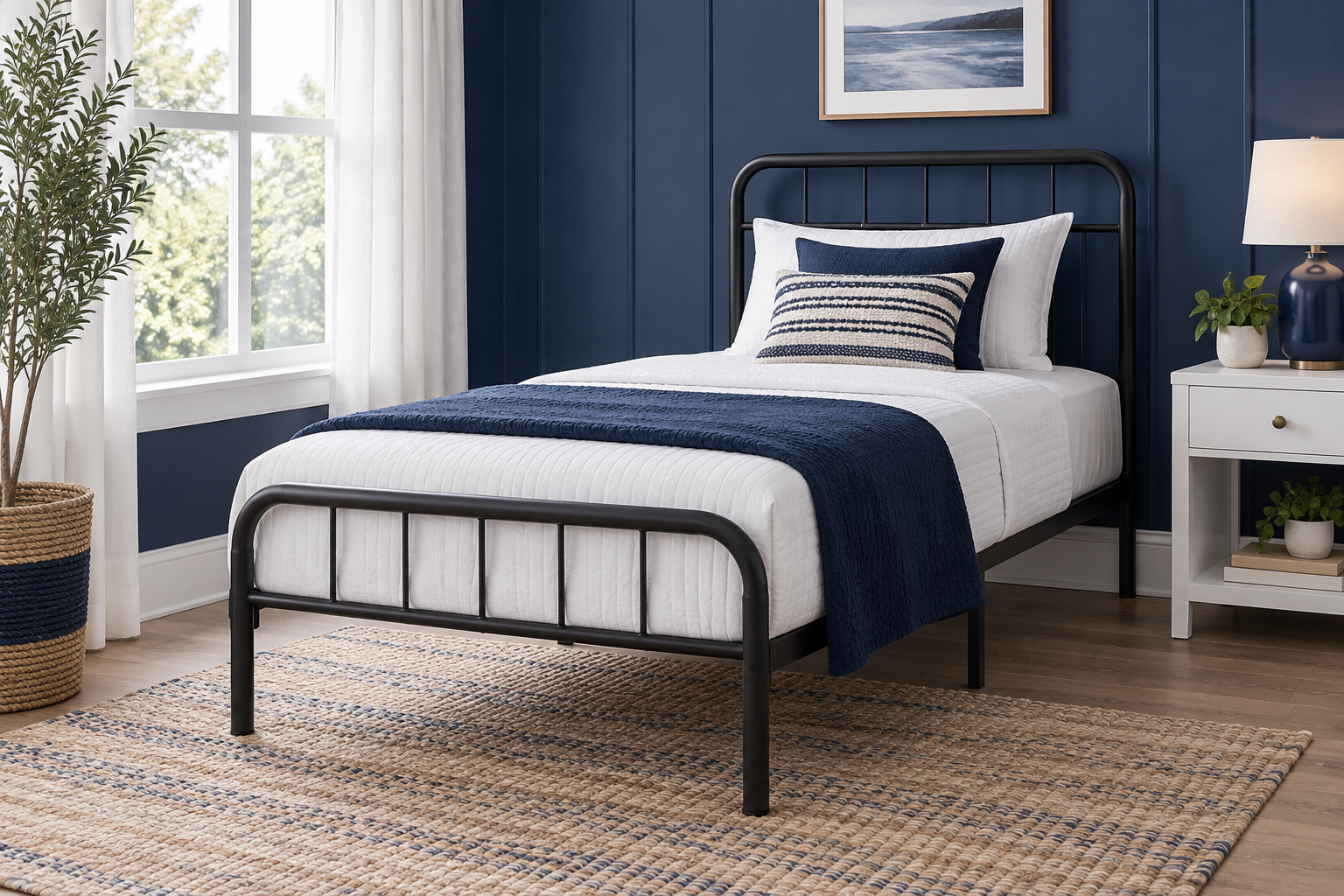
The VECELO Twin Metal Bed with Headboard and Footboard shows an open metal silhouette. The Harper & Bright Designs Wood Twin Sleigh Platform Bed offers a traditional furniture profile, and the DUMOS Wood Twin Platform Bed Frame presents a simpler wood direction.
Use them to compare frame architecture, then verify dimensions, capacity, slat spacing, and current care instructions. Do not transfer a claim from a queen listing to the twin version.
Choose metal for efficient structure and an open visual footprint when its joints and deck are sound. Choose wood for furniture character when its rails, joinery, and support are equally clear.
Decision priorities
First confirm mattress support and total capacity. Second compare user height, storage, floor protection, and moving frequency. Third consider repair access and replacement parts. Style belongs after those filters, not before them.
If silence matters, favor fewer rubbing interfaces, retained slats, accessible hardware, and a stable floor setup. Material alone cannot promise quiet.
Document assembly and keep the manual. A well-maintained modest frame commonly performs better than a premium-looking frame assembled out of square.
Compare finishes, joints, and ownership rather than raw material
Powder-coated or painted metal needs inspection where pieces meet and where tools contact the finish. A chip does not mean immediate structural failure, but exposed steel in a damp environment deserves care consistent with the manufacturer’s instructions. Chrome-like decorative surfaces show fingerprints and abrasion differently from textured finishes. Avoid household chemicals that promise shine but leave a slippery or damaging residue near joints.
Wood finish quality changes cleaning and repair. Sealed surfaces usually tolerate routine dusting better than unfinished edges, while veneers and laminates require care around chips and moisture. Solid wood is not one uniform material: species, board selection, grain direction, and joinery influence behavior. Likewise, engineered wood is not automatically weak; its performance depends on the product design and connector locations.
Joint access is an ownership issue. Exposed metal bolts are easy to inspect but visually prominent. Concealed wood fasteners create a clean look but may require partial disassembly to reach. Evaluate whether routine tightening can happen without removing drawers, upholstery, or the entire mattress deck. A theoretically durable frame becomes frustrating if its service points are inaccessible.
Temperature and humidity can change noise without changing the fundamental choice. Wood moves slightly as indoor conditions change, and metal components can expand, contract, or transmit sound through hollow sections. A seasonal squeak should still be localized and inspected. Do not accept a dramatic new noise as normal simply because the weather changed.
For shared rooms, matching frames can simplify parts and visual balance, but two frames must each be leveled. A pair of light metal silhouettes may keep the room open; two solid sleigh profiles may feel crowded. Measure walking aisles with the complete outside widths. Material selection should support both maintenance and room planning, not serve as a shortcut for quality.
Examine how the headboard joins the load-bearing frame. On some metal beds it is an integral bolted end; on others it attaches through brackets that can introduce movement if hardware loosens. Wood headboards may connect through thick posts, bed bolts, hooks, or concealed fittings. A tall decorative panel can act like a lever when pushed, so it should not be used as a grab bar unless the design supports that use.
Storage changes the comparison. An open metal platform often provides simple bin access, while a wood captain-style base may enclose purpose-built drawers. Open clearance is adaptable but exposes containers; integrated drawers look finished but add slides, boxes, and operating aisles. Compare the lowest brace, leg positions, and drawer extension instead of inferring capacity from overall frame height.
Delivery conditions can favor either material. A long solid-wood rail may be awkward on a turning staircase, while a metal frame can arrive as many smaller pieces whose correct orientation matters. Upholstered wood components may be bulky even when light. Review package dimensions and weights, protect finished surfaces during carrying, and never lift an assembled bed by a decorative headboard or footboard.
Repair expectations should be realistic. A scratched wood finish can sometimes be touched up cosmetically, but a split at a connector is structural. A chipped metal coating may be cosmetic; a cracked weld or sharply bent tube is not a paint problem. Cosmetic repair methods must suit the material and cannot restore a compromised load path. Stop use when structural damage appears.
Consider contact points where the sleeper sits. Metal rails can feel cool and narrow edges may be noticeable during bed-making; wood rails often have broader profiles but can have sharp corners or projecting hardware. These are design details, not universal material traits. Inspect edge shape, fastener coverage, and mattress recess, particularly for a child's room or a tight aisle.
Environmental questions also require product-specific evidence. Recyclable metal content, responsibly sourced wood, replaceable parts, packaging volume, and expected service life can all matter, but material names alone prove none of them. A durable frame kept through several room changes has a different practical story from a poorly documented frame replaced early. Use verified manufacturer information when these factors influence the choice.
Finally, test maintenance access with the mattress in place. Can the user reach bolts without dismantling storage? Can dust be removed below center braces? Can a wood joint be checked for opening or a metal connection inspected for movement? A frame that supports routine inspection is easier to keep stable and quiet. Material preference should follow these ownership details.
Keep finish care separate from structural maintenance. Dusting, spot cleaning, or touching up appearance cannot correct a loose joint, and tightening hardware cannot repair a damaged surface coating. Following the appropriate procedure for each issue prevents cosmetic work from concealing movement that needs inspection.
If two finalists remain close, compare their manuals. Clear part diagrams, labeled fasteners, accessible replacement contacts, and size-specific dimensions provide practical ownership value. Those documents reveal more about future assembly and troubleshooting than a generic promise that either metal or wood will last longer.
Frequently asked questions
Are metal frames more likely to squeak?
Not inherently. Loose or rubbing connections create most squeaks. A well-assembled metal frame can be quiet, while a loose wood joint can creak.
Which material is better for a child?
Choose by stability, rounded or protected edges, appropriate height, capacity, and current safety guidance. Material is not a safety rating.
Can wood twin frames support adults?
Many can, but use the exact model’s capacity, dimensions, and support configuration rather than judging from appearance.
Which is easier to clean?
Open metal designs often expose more floor; panel-style wood beds may reduce access. Clearance, braces, and finish matter more than the category.
Final verdict
Metal and wood are starting points, not verdicts. The better frame has a sound load path, stable joints, appropriate capacity, maintainable parts, and proportions that suit the mattress and room. Compare designs as complete systems rather than assigning strength or silence to a material name.
Product examples