TwinBed.app practical guide
Twin XL vs. Queen: Space, Length, and Sleeping Width
Length does not separate Twin XL from Queen; width does. Both put an 80-inch mattress beneath the sleeper, but one preserves a narrow room and the other creates a broader shared surface. That difference reaches beyond sleep posture. It changes whether a desk chair can move, whether two adults can share the bed, how bulky the delivery is, and which future rooms can accept the furniture. A useful comparison starts with those daily consequences rather than treating Queen as an automatic upgrade.
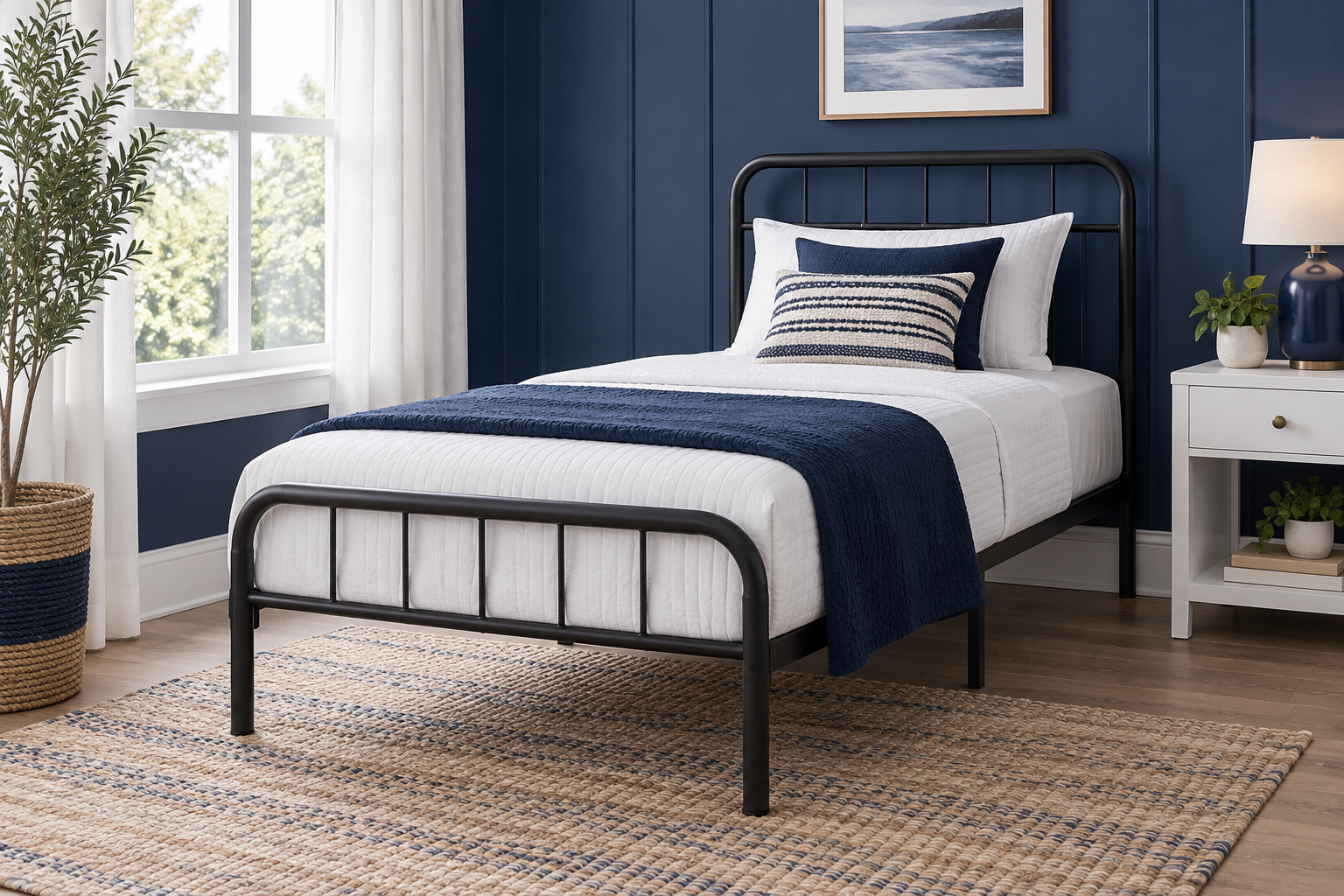
Quick answer
Twin XL and Queen mattresses are both about 80 inches long, but Twin XL is roughly 38 inches wide while Queen is about 60 inches wide. Twin XL is designed primarily for one sleeper and saves 22 inches of mattress width. Queen offers far more turning space and is the practical choice for most couples when the room can support its larger frame and clear walkways.
The dimensions create two very different rooms
Twin XL is nominally about 38 by 80 inches. Queen is approximately 60 by 80 inches. The equal length means a tall solo sleeper does not gain foot room by moving from Twin XL to Queen, but gains about 22 inches of sleeping width.
Those are mattress measurements, not assembled furniture footprints. Upholstered rails, posts, shelves, and footboards add size. Compare actual frame dimensions when taping each option on the floor, because a bulky Twin XL and minimal Queen narrow the expected gap slightly.
Twenty-two inches of width can represent a desk aisle, closet access, nightstand, or the ability to reach both sides for sheet changes. In a generous room, that difference may not constrain anything. In a studio or multipurpose bedroom, it can decide whether the room performs another job.
Both beds extend the same distance from a comparable headboard, so foot clearance is similar. Queen does not solve a room that is too short for Twin XL. It mainly asks whether the room can surrender more width in exchange for a broader surface.
Solo sleepers should evaluate movement, not status
A single adult can sleep comfortably on either size. Twin XL suits sleepers who remain relatively centered and value open floor space. Queen benefits people who change positions often, sleep diagonally, use large pillows, or share space with a pet.
Shoulder width while standing does not reveal the full need. Lie down with elbows, knees, and pillows in their normal positions. A back sleeper may extend arms outward; a side sleeper may draw knees forward. Marking a 38-inch boundary on a larger bed makes the narrower choice tangible.
Edge comfort also matters more on a narrow mattress because the sleeper spends a greater share of the night near the sides. Edge behavior varies by mattress model and should not be inferred solely from size. Test or study the exact mattress rather than assuming Queen automatically has stronger edges.
A bigger bed is not inherently better if it makes the bedroom difficult to navigate. The comfort decision includes both the sleeping surface and the path to the closet, bathroom, desk, and door. A well-placed Twin XL can create a calmer routine than a Queen squeezed between furniture.
Routine sharing strongly favors Queen
Twin XL is generally a one-person bed. Two adults would share only 38 inches of total width, leaving less than the width of a crib mattress per person. Its adult length does not make its narrow surface appropriate for routine couple use.
Queen gives two sleepers roughly 30 inches each. That is still less individual width than one person receives on Twin XL, but it is a common couple format that balances room footprint and shared space. Personal movement and body size still affect comfort.
A child visiting in the morning or a pet sleeping at the foot also consumes space. Solo sleepers should include those habits rather than choosing from the official number of sleepers alone. Occasional shared moments can make Queen useful without making the bed a couple's primary sleep surface.
Guest rooms need a realistic visitor profile. Twin XL works for a tall solo guest and can leave room for luggage or a second bed. Queen is more versatile for couples but may eliminate other furniture or circulation. The likely guest matters more than an abstract idea of hospitality.
Measure usable clearance around each frame
Tape both complete frame outlines on the floor. Open the room and closet doors, pull every drawer, and move the desk chair through its working range. Walk each nighttime route. Remaining square footage is less important than whether it forms a continuous usable path.
Around 24 to 30 inches can serve as a practical planning range for a passage, with more space feeling easier. This is a furniture-layout guideline, not a substitute for applicable access or building requirements. Needs differ for mobility devices and caregivers.
Queen may require one side against a wall in a narrow room. That saves aisle width but complicates bed-making and requires one sleeper to climb across. Twin XL may allow access on both sides, which can make its smaller surface easier to maintain and use.
Include moving elements. Storage drawers need extension room; an adjustable base needs articulation clearance; a bench needs its own path. A Queen platform without drawers may operate in less space than a Twin XL storage frame whose bins pull into the aisle.
Bedding and adjustable plans change the purchase
Twin XL needs size-specific fitted sheets, protectors, toppers, and foundations. Queen fitted bedding is widely available, but existing Twin pieces will not transfer. Compare the cost of the complete sleep system rather than only the mattress or frame.
Comforters are less exact than fitted layers. A Queen comforter used on Twin XL creates a generous drop and may touch the floor, while Twin XL top bedding leaves a Queen under-covered. Use printed dimensions and preferred drape instead of relying on the label.
Twin XL is important in adjustable-bed planning because two units form the nominal 76-by-80-inch footprint of a standard King. A single Twin XL base can be a first step only when the models, heights, and controls will remain compatible with a future second side.
One Queen adjustable base moves the shared surface together. Split Queen products exist but are a different category and should not be inferred from Twin XL. Couples who want independent positions often compare split King rather than a single Queen.
Delivery and future moves reward different choices
Twin XL is narrow enough to move through many doorways, though its 80-inch length still affects stair turns and rigid foundations. Queen components are wider and heavier. Check carton dimensions, individual component weights, elevator limits, and team-lift directions.
Roll-packed mattresses simplify initial delivery but become full-size mattresses after expansion. Plan for the next move, not just the first arrival. A one-piece foundation can be more challenging than a frame shipped in several rails.
Twin XL may transition into a dorm-style room, compact guest room, or half of a split King. Queen can remain a primary adult bed, serve couples, or become a versatile guest bed. A known future use can break a close tie.
Do not choose around a hypothetical move while making the current room uncomfortable. Future flexibility has value only when both options serve today's sleeper. Weight current sleep and circulation most heavily, then use portability as a secondary score.
Use a decision sequence instead of a universal winner
First decide whether two people will sleep there regularly. If yes and the room fits, Queen is the realistic comparison winner between these two sizes. If no, determine whether 38 inches gives the solo sleeper enough movement.
Second, tape the actual frames in the room and preserve necessary paths. Third, compare the complete ownership package: support, bedding, delivery, storage, and future use. Fourth, evaluate the specific mattress feel because size cannot predict firmness or temperature.
If Twin XL feels too narrow but Queen overwhelms the room, Full offers about 54 inches of width but usually only 75 inches of length. That trade may not suit a tall adult. Room redesign can sometimes recover enough width for Queen without compromising necessary furniture.
Photograph both taped layouts from the doorway and normal seated positions. The images make visual mass and access conflicts easier to compare. The best choice is the smallest bed that fully serves the sleeper and leaves the room capable of its other essential tasks.
Compare the complete cost without using price as a shortcut
A Queen mattress may not be the only larger expense. It can require a wider frame, Queen foundation, new fitted bedding, larger protector, and different room storage. Twin XL also needs its own 80-inch fitted pieces, so existing standard Twin sheets may not reduce its total cost.
Delivery and assembly can differ. A Queen headboard or foundation may require an additional helper or a more expensive service, while a Twin XL adjustable base can be heavy despite its narrow width. Compare exact product packages instead of assuming the smaller size is always easier or less expensive.
Long-term value comes from consistent use. Paying for 22 extra inches that block a desk is not value, and saving space on a surface that feels too narrow is not thrift. Set a complete budget only after the room and sleeper determine which category is genuinely suitable.
Frequently asked questions
Is Twin XL as long as Queen?
Yes. Both are normally about 80 inches long, while Queen is approximately 22 inches wider.
Can two adults sleep on Twin XL?
It is only about 38 inches wide and is generally intended for one sleeper, not routine couple use.
Is Queen better for one adult?
It gives more movement space, but Twin XL may be better when the adult is comfortable on a narrow surface and values floor space.
Do two Twin XL beds make a Queen?
No. Two Twin XL mattresses together are about 76 by 80 inches, corresponding to a standard King footprint.
How much room width does Twin XL save?
The mattress saves about 22 inches of width versus Queen, though actual frame-width savings depend on the designs.
Final verdict
Twin XL and Queen offer the same adult length but very different sleeping and room width. Choose Twin XL for one sleeper when 38 inches is comfortable and those saved 22 inches keep the room functional. Choose Queen for routine couples or solo sleepers who need broad movement space. Tape the assembled footprints, test real posture, and price the complete setup before letting the size label decide.
Product examples
Continue comparing on TwinBed.app