TwinBed.app practical guide
Does a Twin Bed Need a Box Spring? It Depends on the Frame
Mattress size does not settle this question; the support system does. Two frames can both be called twin frames while one carries the mattress across closely spaced slats and the other is merely a steel perimeter intended to hold a foundation. The correct decision comes from identifying what actually supports the mattress, checking the mattress maker’s rules, and calculating the finished bed height. This distinction also explains why advice remembered from an older bed can be misleading. For decades, many household beds used a metal rail frame plus a coil box spring, so the extra layer became a habit. Modern platforms, foam mattresses, rigid foundations, and adjustable bases separate those choices. A familiar setup is not automatically compatible with a new mattress. Begin with the exact products in the room, not with the convention attached to the word bed. It also helps to separate three questions that shoppers often blend together. Does the frame need a foundation to be structurally complete? Does the mattress need a particular surface to perform as designed? Does the sleeper want extra height? A box spring can appear to answer all three, but sometimes it answers only the height question and creates new compatibility or proportion problems. Working through the questions independently makes the final decision easier to defend and maintain.
Quick answer
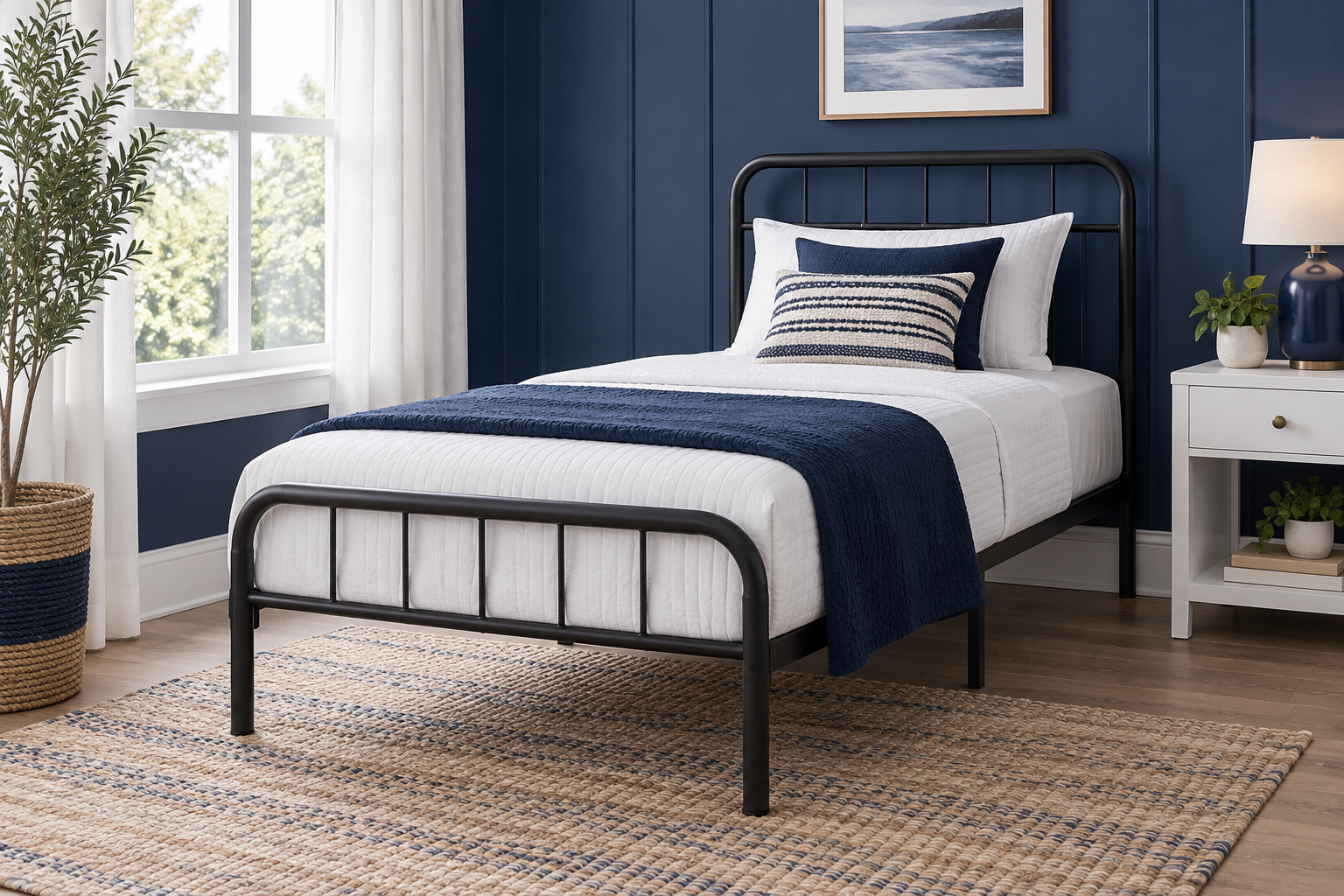
A twin bed needs a box spring only when the frame and mattress instructions call for one. A complete platform, approved slat deck, solid deck, or compatible adjustable base usually supports the mattress directly. A basic perimeter rail frame with sparse crossbars normally needs a compatible foundation.
Look inside the frame, not at its label
A platform combines the furniture frame with a mattress-support surface. Its slats, metal grid, or solid deck distribute weight over the mattress underside. If that surface is approved for direct use and meets the mattress maker’s gap requirement, adding a box spring is usually redundant.
A traditional rail frame behaves differently. Side rails and a few crossbars position a box spring or rigid foundation, which supplies the broad support surface. Removing that layer can leave large unsupported areas even when the outer frame looks sturdy.
- Approved platform deck: usually no box spring
- Sparse rail frame: foundation commonly required
- Adjustable base: compatible mattress sits directly on the base
- Bunk or loft: follow its stated support and thickness limits
Box spring and foundation are not synonyms
Older box springs used flexible coils. Many modern products marketed under the same name are rigid wood or metal foundations wrapped in fabric. That distinction matters because contemporary foam and hybrid mattresses commonly require a firm, nonflexing surface.
Read both manuals. The frame maker defines what completes the frame; the mattress maker defines what preserves proper support. If one document says foundation and the other prohibits a flexible box spring, a rigid approved foundation may be the intended solution. Ask the manufacturers when wording is unclear rather than guessing.
Measure the support surface
For slats, measure the clear opening from one slat edge to the next at the head, middle, and foot. Do not measure center to center. Compare the largest gap with the exact mattress requirement, because foam, hybrid, and innerspring products can specify different limits.
Spacing is only part of the inspection. Confirm slats are not cracked, bowed, or able to migrate together. Install every center rail and support leg shown in the diagram. A bunkie board may create a more continuous approved surface, but it cannot repair weak rails or missing structure.
- Measure several clear gaps
- Check slat thickness and retention
- Verify center supports contact the floor
- Inspect fasteners after moving the bed
Calculate the complete bed height
Add floor-to-support height, foundation thickness, and mattress thickness, then account for any recess inside the rails. An unnecessary foundation can hide a headboard, put the surface above a footboard, and make a child’s bed or compact room awkwardly tall.
Height is a safety issue on elevated beds. Raising a bunk mattress reduces usable guardrail height, so never add a foundation unless the bunk instructions specifically permit it. On ordinary beds, compare the estimated mattress top with the sleeper’s comfortable seated knee height.
Consider mattress type and ventilation
An all-foam mattress needs even support and may also need airflow underneath. A solid panel can close large gaps but changes ventilation, while widely spaced slats can let foam settle between supports. The mattress documentation should address both issues.
Hybrid mattresses contain coils but are not automatically suitable for a sparse antique frame. Adjustable-base mattresses must flex as the base moves. The words foam, hybrid, or spring are not enough; use the requirements for the exact model and size.
Use a four-step decision
First identify the frame model and support type. Second find the mattress’s approved surfaces and maximum slat gap. Third inspect the assembled frame for every required component. Fourth calculate height and access. Choose direct placement, a rigid foundation, or another approved support only after those checks.
The ZINUS Abel Metal Platform Bed Frame – Twin Option and DUMOS Wood Twin Platform Bed Frame are examples of direct-support designs to compare. The ZINUS Compack Adjustable Metal Bed Frame represents a system designed around foundation support. Verify the current listing and manual rather than carrying assumptions from one frame to another.
Mistakes that create avoidable problems
Do not put a mattress directly on three crossbars because the outside rails look strong. Do not add plywood without checking ventilation, thickness, edge finish, and frame approval. Do not stack a foundation merely to make the bed look more substantial.
If an existing box spring is sagging, noisy, or damaged, it is not made acceptable by a new frame. Likewise, a platform with missing slats is not complete. Evaluate every layer instead of allowing one new component to hide a problem in another.
How room use changes the choice
A guest room used a few weekends a year may prioritize a moderate entry height and easy bedding changes. A child’s everyday bed may prioritize lower access and fewer loose layers. An adult using the bed nightly may care more about edge stability and standing comfort. These are reasons to choose among approved support options, not reasons to ignore structural instructions.
Underbed storage also changes the practical result. A tall platform can create room for bins without a foundation, while a low rail frame plus foundation may produce similar sleeping height but little accessible storage. Measure braces and center legs before assuming that visible clearance is usable. If the room doubles as an office, count the space needed to pull bins out without moving a desk or chair.
Future moves deserve consideration. A rigid foundation can be awkward in narrow stairs even when the twin mattress bends slightly. A platform may have more small hardware but fewer bulky layers. Keep the assembly manual, label hardware during disassembly, and never drag the assembled frame; dragging can rack the corners and alter the very support geometry you verified.
What to check after setup
Once the mattress is in place, inspect the perimeter for even support and listen while applying gradual pressure at several points. A new dip, click, or shifting slat is a reason to stop and inspect rather than assuming the mattress must settle. Confirm the center feet remain in contact after the carpet or rug compresses under normal load.
Revisit the setup after the first few weeks and after every move. Fasteners can seat, roll-out slats can creep, and a foundation can reveal damage that was hidden during assembly. Keep the model numbers for both mattress and frame with the manual so a future owner can confirm the combination instead of rebuilding the decision from memory.
If warranty language matters, save the support requirements that applied when the mattress was purchased. Product pages can change, and a receipt alone may not document the required slat gap or foundation type. A few measurements and photographs provide a useful maintenance record without claiming that a home inspection replaces manufacturer approval.
Frequently asked questions
Can I put a box spring on a twin platform bed?
Sometimes, but it is usually unnecessary and may make the bed too high. Confirm that the platform permits it and calculate the finished height first. Also check whether the foundation is rigid or flexible, whether it can sit evenly inside the platform perimeter, and whether the extra stack hides the headboard or changes safe access. Permission from the frame does not override the mattress maker’s support rules. If height is the only goal, compare approved alternatives before adding a structural layer the system does not need.
Do foam twin mattresses need a box spring?
They generally need a firm, even approved surface rather than a flexible box spring. Closely spaced slats, a solid deck, or a rigid foundation may qualify.
What happens if slats are too far apart?
The mattress can dip into openings, feel uneven, wear prematurely, or fall outside warranty requirements. Measure the largest clear gap.
Can plywood replace a box spring?
Only when both frame and mattress guidance permit a solid panel. Plywood changes ventilation and must be adequately supported, smooth, and correctly sized.
Final verdict
A twin bed does not automatically need a box spring. The right setup is the approved system that spreads weight evenly, keeps the frame stable, preserves mattress support, and produces a useful finished height. Treat twin as the size and the manuals as the engineering decision. Before buying an extra layer, inspect the frame you own, measure its support, and write down the completed height. That brief check is more reliable than a rule based on mattress size alone. It also creates a record to revisit after a move, mattress replacement, or flooring change.
Product examples
Continue comparing on TwinBed.app