TwinBed.app practical guide
Twin Bed Frame Dimensions vs. Mattress Dimensions
The mattress and frame perform different jobs, so their dimensions are reported differently. Mattress size defines the sleep surface. Frame dimensions describe furniture that must support that surface, keep it positioned, and sometimes provide a headboard, drawers, or clearance. Treating the two measurements as interchangeable is the reason many otherwise careful room plans fail by several critical inches.
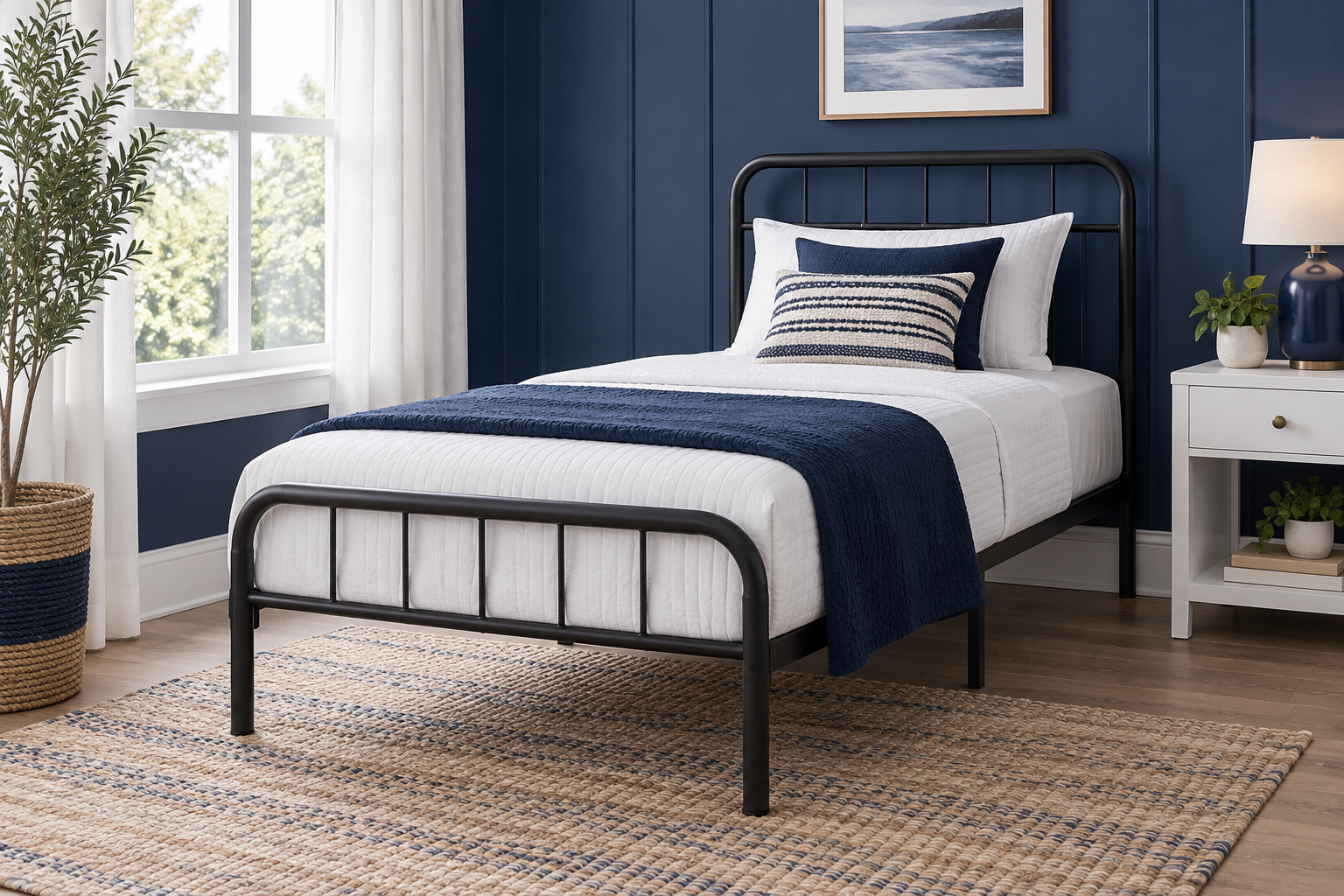
Quick answer
A twin mattress has a nominal 38 × 75-inch sleep surface, but a twin frame has no universal outer dimensions. Most frames add material around the mattress, and headboards, footboards, upholstery, or storage can increase the footprint further. Always match the frame’s supported mattress size and plan the room from its listed assembled measurements.
Interior fit and exterior footprint
The interior or support area is intended for a 38-by-75-inch twin mattress. Depending on construction, the mattress may sit inside a shallow lip or rest on top of slats with small retainers. The exterior measurement includes the thickness of rails, upholstery, hardware covers, and decorative elements.
A slight fit allowance is normal. The mattress needs to be installed and removed without damaging its cover. A large unexplained gap is different: it may indicate the wrong mattress size, an incorrectly assembled frame, or slats and brackets positioned for another setting.
Where extra width comes from
Metal platforms can use narrow rails, keeping the outer width near the mattress. Wood frames need structural side members. Upholstered beds wrap foam and fabric around those members, often adding the most visible bulk. Headboard wings, finials, or angled legs can be the widest features even though they do not support the mattress.
Measure outer edge to outer edge at the broadest point. This is particularly important when fitting a bed between built-ins or beside a door casing. The width near the floor may clear an obstacle while a broad headboard higher on the wall does not.
Where extra length comes from
Headboards and footboards establish most length variation. A headboard can be thin and flat or deep enough to hold shelves. A sleigh footboard curves beyond the mattress, while a platform without a footboard may add almost nothing at that end.
The Harper & Bright Designs Wood Twin Sleigh Platform Bed and ZINUS Leonardo Metal Twin Platform Bed illustrate different furniture silhouettes. Compare overall assembled length rather than assuming that two twin frames occupy the same floor space merely because both accept a standard twin mattress.
Height measurements that affect function
Frame height may refer to the top of the platform, the top rail, or total headboard height. Look for diagrams that distinguish them. Add mattress thickness to platform height to estimate the top-of-mattress sitting height, but remember that the mattress may sink into the frame by an inch or more.
Underbed clearance is measured from floor to the lowest obstruction, not necessarily to the upper rail. Center supports, crossbars, or angled braces can reduce usable storage. For bins, compare their full height—including lids and wheels—with the smallest clearance along the path.
Support dimensions and slat spacing
A correctly sized frame can still be incompatible with a mattress if its support system does not meet the mattress maker’s requirements. Foam and hybrid mattresses often specify a maximum distance between slats. Some rail frames require a foundation; platform frames are designed to support a mattress directly.
Check center legs and floor contact points as well. A rug edge under only some legs can make the frame uneven. Adjustable metal frames may support several nominal sizes, but their brackets must be set to the intended twin position and paired with the proper foundation.
A frame-and-mattress compatibility checklist
Confirm size label, interior support length and width, slat spacing, weight capacity, foundation requirement, and recommended mattress thickness. Then verify outer width, outer length, platform height, headboard height, and underbed clearance against the room.
The VECELO Twin Metal Bed with Headboard and Footboard offers an integrated outline, while the ZINUS Compack Adjustable Metal Bed Frame is intended to support a foundation and has a different dimensional logic. Read the setup, not just the word twin. A matched system should support the mattress without dangerous gaps and should function within the planned room clearances.
Foundations can change both fit and height
A traditional rail frame may be designed to hold a box spring or foundation, which then supports the mattress. A platform uses slats or a deck to support the mattress directly. Placing a foundation on a platform that does not call for one can raise the mattress enough to hide the headboard, make entry awkward, or reduce guardrail protection. Omitting a required foundation can leave the mattress unsupported.
Foundation dimensions should match the mattress category, but height varies from low-profile to standard. Add frame support height, foundation height, and exposed mattress height to estimate the sleeping surface. Account for any recess where a component sits inside the rails. Product diagrams often show these layers more accurately than a single overall-height number.
Check the mattress warranty and frame instructions together. Support requirements can specify slat spacing, center rails, or leg contact. Dimensional compatibility is not just whether the mattress rests on top; it includes whether load is distributed as its maker requires over years of use.
Diagnose an unexpected fit before using the bed
If the mattress appears too small, confirm the labels on both mattress and frame and remeasure each. A standard twin on a Twin XL frame leaves length; a mislabeled variant or frame assembled in an alternate-size position can create a larger gap. Check whether brackets, rails, and retainers face the correct direction before concluding the product is defective.
If the mattress seems too large, allow a compressed mattress its instructed expansion time, but do not force it into a rigid opening. Recheck whether upholstery is caught between the mattress and rail and whether the frame is square. Measure diagonals from corner to corner; unequal diagonals can reveal a skewed assembly.
Stop and contact the manufacturer or seller when required components, safe clearances, or specifications do not agree. Modifying rails, removing supports, or compressing a mattress edge can create hazards and invalidate coverage. A proper twin system should fit without improvised structural changes.
After a successful fit, inspect the frame again once it has carried weight for several nights. Hardware can settle, slats can shift into retainers, and a rolled mattress can finish expanding. Tighten only as instructed and confirm that every support leg remains firmly on the floor. This follow-up keeps the structure square so the mattress continues to sit evenly rather than developing a gap at one corner.
If the frame rocks, diagnose the floor and assembly rather than shimming randomly. A poor shim can overload one support point. Follow the maker's leveling guidance, especially for adjustable or storage mechanisms whose alignment affects movement.
Keep the model instructions and a photograph of the support layout before the mattress is installed. That record helps later when a slat shifts or the bed is disassembled for moving. It also makes clear which dimensions were part of the original design and which gap or height appeared after use.
Do not evaluate mattress fit while heavy bedding is tucked beneath it. Remove protectors, skirts, and sheets so the actual edges are visible, then center the mattress on the support deck. Measure gaps at the head, foot, and both sides. A consistent small allowance is different from one large corner opening, which can point to an out-of-square frame. After diagnosis, reinstall bedding without forcing fabric into hardware or support joints. This method distinguishes a true frame-to-mattress mismatch from bulk created by linens and gives customer support clearer measurements if assistance is needed.
Frequently asked questions
Should a twin frame be exactly 38 by 75 inches?
No. That is the nominal mattress size. The frame’s support area allows fit, and its exterior rails and furniture components make the overall footprint larger.
How much bigger is a twin frame than its mattress?
There is no fixed allowance. Minimal frames may add only an inch or two, while upholstered, sleigh, storage, or poster styles can add several inches.
Why is there a gap at the end of my bed frame?
A modest installation gap can be normal. A large gap may mean a standard twin is on a Twin XL frame, the frame is misassembled, or the product uses an unusually generous opening.
Does a platform frame need a box spring?
Usually not when it has a complete support deck or properly spaced slats, but follow both frame and mattress instructions.
Which frame measurement matters for storage bins?
Use the minimum unobstructed underbed height, the opening width between legs, and the clear path past crossbars—not just the rail height.
Final verdict
Mattress dimensions answer whether the sleeping surface is twin size; frame dimensions answer whether the furniture fits the room and supports that mattress correctly. Check both sets, plus height and support details. That disciplined comparison prevents size gaps, inaccessible storage, and a bed that is larger than the layout allowed. Keep the final assembled measurements with the model information so future mattress changes and room moves begin with dependable numbers rather than assumptions. Also retain the support requirements, including slat spacing and foundation need. A replacement mattress can match 38 by 75 inches yet remain incompatible with the underlying deck. Size, support, and room clearance must agree at the same time; none can compensate for failure in another part of the system. Inspect the assembled frame again after initial use so settling hardware or shifted slats does not quietly change that fit. Correct alignment protects both comfort and durability throughout the bed's complete service life, maintenance, disassembly, and later moves.
Product examples