TwinBed.app practical guide
Twin Bed vs. Twin Air Mattress for Guests and Everyday Use
An air mattress appears to solve the guest-room problem because it vanishes into a closet. That benefit is real between visits, but it does not eliminate the need for a safe sleeping zone when inflated. The host still clears floor, finds pump access, adjusts pressure, manages bedding, and restores the room. A framed twin claims permanent space in exchange for permanent readiness. Comparing those routines is more useful than treating one option as a cheaper version of the other.

Quick answer
A conventional twin provides stable support, predictable height, standard bedding compatibility, and immediate daily readiness. A twin air mattress can store compactly and create occasional guest capacity, but its inflated dimensions still consume floor space and it requires setup, pressure management, and protection from punctures. Choose according to visit frequency, sleeper mobility, available storage, and tolerance for conversion work.
Compare actual sleeping and furniture dimensions
A standard twin mattress is nominally 38 by 75 inches. Twin air mattresses vary more in inflated width, length, and height. Raised edges, integrated pumps, and rounded chambers can make the usable flat area feel smaller than the outer measurement suggests.
A conventional frame adds rails, headboard, and possibly a footboard to the mattress footprint. An air bed has no traditional frame, but needs valve or pump access and separation from sharp furniture, heaters, and door swings. Use inflated dimensions rather than package dimensions.
Mark the air bed on the floor at full size before buying. A compact storage bag can hide a large deployed rectangle. Preserve an entry side and a night route just as carefully as with permanent furniture.
Inflated height also changes total volume and visual presence. A raised air bed may approach conventional sitting height, but its broad vertical sides can crowd a small room. A low model looks less bulky yet places the sleeper near cold drafts and floor dust. Include height in the guest-comfort plan rather than choosing only from width and length.
Check the manufacturer's measurement method. Some inflated dimensions include a bulging edge or pump housing, while the flat sleep surface is smaller. Reviews can reveal perceived size, but the product specification and return terms remain the primary planning sources.
Support behaves differently through the night
A foam, hybrid, or innerspring mattress maintains structure through its materials and support base. An air mattress relies on sealed chambers. Temperature changes, material stretch, valve condition, and pressure influence how it feels from bedtime to morning.
Initial softening in a new air bed can come from the material stretching or air cooling rather than a puncture. Repeated major pressure loss needs investigation according to the product instructions. Overinflating in pursuit of firmness can stress seams and should be avoided.
The CJJSleep 10-Inch Twin Hybrid Memory Foam and Pocket Coil Mattress illustrates a permanent hybrid construction whose feel does not depend on a pump. Neither category guarantees comfort for everyone; the distinction is stability versus adjustable air pressure and temporary construction.
Height and edge stability affect accessibility
A framed twin can place the mattress top near a chair-like sitting height, depending on platform and mattress thickness. That can make standing easier for many adults. A low air mattress requires getting close to the floor and may be difficult for someone with knee, balance, pregnancy, or mobility concerns.
Raised air beds improve height but can feel less stable at the edge because their chambers respond when weight concentrates in one area. The sleeper should enter and stand using a stable plan rather than leaning heavily on a soft edge.
Ask guests about access needs instead of assuming temporary is adequate. Older adults and anyone who needs nighttime assistance may benefit from the consistency of a conventional bed. Clear floor around either option and provide reachable lighting.
Setup work accumulates with visit frequency
An air bed must be retrieved, unfolded, inspected, inflated, positioned, and dressed. After the visit it should be cleaned, dried, deflated, folded without stressing the valve, and stored. None of these tasks is severe occasionally, but frequent cycles become meaningful household work.
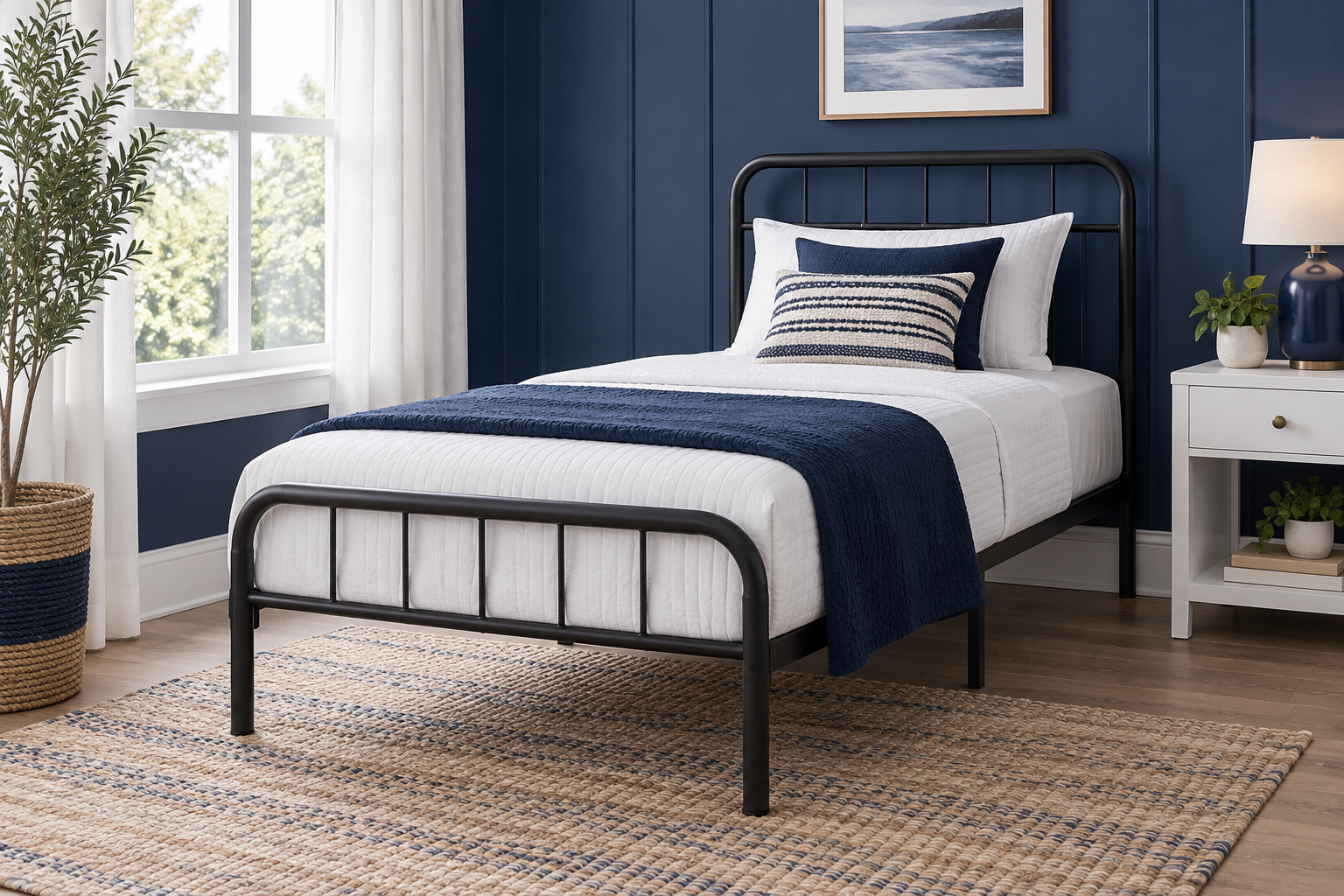
A conventional bed remains ready. Linen changes and cleaning still require effort, yet the room does not need to be converted. A frame such as the ZINUS Leonardo Metal Twin Platform Bed can support a twin mattress directly when its instructions permit, avoiding a separate box spring while retaining permanent structure.
Estimate actual usage: one weekend a year, monthly visitors, or a household member sleeping nightly. Storage flexibility has greatest value when visits are infrequent and the reclaimed floor performs another important job.
Air beds need storage and maintenance
Store an air mattress clean and completely dry in a location protected from extreme heat, moisture, pests, and sharp objects. Keep its pump and compatible repair materials together. A missing proprietary power component can make the bed unusable when a guest arrives.
Before each use, inspect the floor for staples, pet debris, rough transitions, and furniture corners. Follow guidance on protective layers; some materials can trap heat or interfere with the base. Keep pets whose claws may puncture the surface away from the bed.
A permanent mattress also requires care: support inspection, rotation when recommended, ventilation, and a protector. Its frame consumes space continuously, but it does not depend on folded storage conditions or an airtight chamber.
Practice setup before a guest arrives. Time inflation, confirm the pump works, locate the valve, and let the bed stand long enough to reveal obvious pressure loss. The rehearsal also shows whether fitted sheets stay on the rounded corners and whether the selected floor location leaves the expected route.
Keep repair decisions within the product instructions. A patch made from an incompatible adhesive can damage material or create a temporary fix that fails overnight. If the bed cannot hold pressure reliably, replace or professionally address it before offering it to a guest rather than asking the sleeper to reinflate repeatedly.
Temperature, sound, and bedding feel differ
Air beds can feel cool because of their air volume, surface material, and proximity to the floor. Use compatible bedding and follow safety directions rather than adding improvised heated layers. Room temperature can change internal pressure and perceived firmness.
Vinyl or similar surfaces may make noise as the sleeper moves. A fitted cover or compatible topper can soften feel and sound, but thick additions can shift on rounded edges. Make sure no layer blocks an integrated pump or control.
Conventional twin mattresses offer predictable standard-sheet compatibility. The LIFERECORD 6-Inch Twin Gel Memory Foam Mattress has a lower profile that still needs appropriate pocket depth and frame support. Mattress thickness, not merely category, affects bedding fit.
Temporary floor placement changes room safety
An air mattress often occupies floor previously used as a walkway. Do not place it where the bedroom door, closet, or required exit becomes blocked. Route power cords away from feet and disconnect or store them as instructed after inflation.
Low beds can be hard to see at night, especially for another household member entering the room. Provide a clear illuminated path and keep suitcases, shoes, and bedding away from the edge. Avoid squeezing the mattress tightly between hard furniture that could abrade it.
A permanent frame creates a familiar obstacle whose path remains consistent. It can still introduce sharp corners and underbed clutter, but the household adapts to one layout. Temporary flexibility requires rechecking safety each time the room changes.
Select a guest strategy rather than a single product
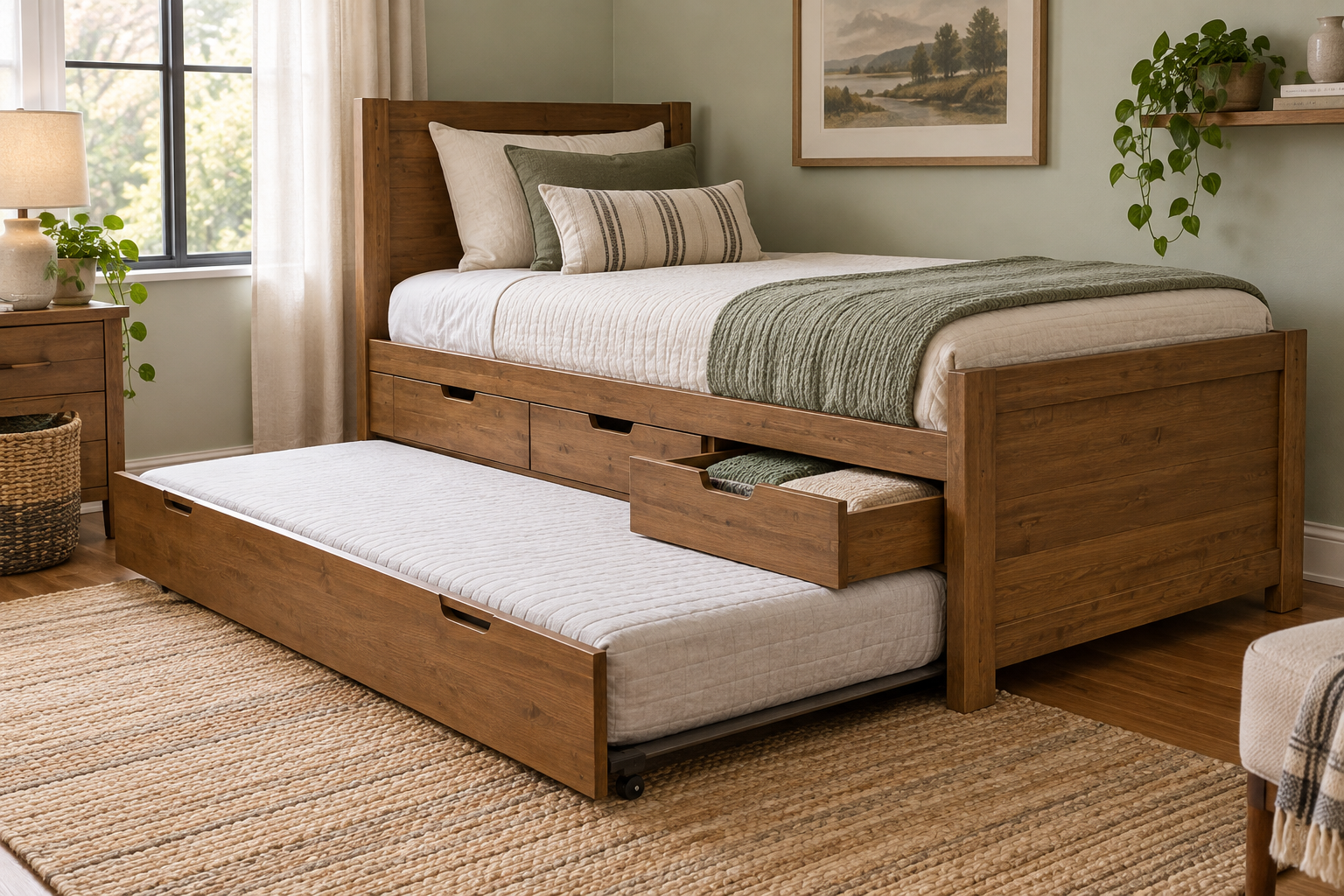
Choose a permanent twin when guests arrive regularly, a household member uses the bed nightly, or stable height and edge access matter. A daybed or storage platform can let permanent sleep capacity contribute another daytime function.
Choose an air mattress when visits are occasional, storage is available, and reclaiming the room’s daily floor area has high value. Keep a tested setup kit with sheets, pump, instructions, and lighting plan so flexibility does not become last-minute improvisation.
A daybed such as the ZINUS Suzanne Bamboo and Metal Daybed with Trundle represents a third path: visible furniture that can offer seating and secondary sleeping. Compare how often each function is used, who performs setup, and which sleeper needs the most dependable access.
Consider a folding guest bed or modular floor system only through the same criteria: supported dimensions, stable access, clear route, storage, and intended frequency. The central question is not whether furniture disappears, but whether the sleeping setup can be created consistently without compromising the room's safety or the guest's needs.
After each visit, note any difficulty—morning softness, cold feel, blocked closet, pump noise, or hard floor access. Repeated issues are evidence that the temporary solution no longer matches the household. A permanent twin may then use more square footage while requiring less recurring labor and delivering more reliable hospitality.
Frequently asked questions
Is a twin air mattress exactly the same size as a twin bed?
It may be close, but inflated dimensions and usable surface vary by product. Check the exact model rather than assuming 38 by 75 inches.
Can an air mattress be used every night?
Follow the maker’s intended-use guidance. Support consistency, durability, edge access, and pressure maintenance may make a conventional mattress more suitable for routine use.
Why does an air mattress soften overnight?
Cooling air and initial material stretch can reduce firmness; repeated major loss may indicate a valve or puncture problem.
Which option is better for an older guest?
A stable framed bed at an appropriate sitting height is often easier, but the guest’s individual mobility and support needs should decide.
How much room should remain around an air mattress?
Maintain a safe entry route, clear required doors and exits, and keep distance from sharp objects, heaters, cords, and other hazards as directed.
Final verdict
A twin air mattress earns its place by storing small; a conventional twin earns its space by staying ready and stable. Match the choice to guest frequency, mobility, support expectations, setup labor, and the room’s everyday purpose. Temporary sleeping still deserves permanent standards for clear paths, suitable bedding, and safe access. When visits become frequent, the convenience equation can legitimately shift toward dedicated furniture.
Product examples