TwinBed.app practical guide
Twin Bed vs. Daybed: Same Mattress, Different Furniture
A daybed does not create a new mattress size. It changes how a twin mattress addresses the room. A conventional bed points outward from its headboard; a daybed turns the long edge forward and encloses three sides. That geometry can make an office feel like a sitting room instead of a bedroom, but it also changes seating depth, sheet access, cushion storage, and the space a trundle requires. The correct choice begins with what the room does while everyone is awake.
Quick answer
Most twin daybeds accept the same nominal 38 × 75-inch mattress as a conventional twin bed. The daybed adds a long back and two side panels so it can sit against a wall and function visually like seating. Daybeds suit guest rooms and multipurpose spaces; conventional frames generally provide easier bed-making, more flexible placement, and more natural everyday sleeping access.
The mattress may match while the frame does not
Most twin daybeds support a standard 38-by-75-inch mattress. Their back, arms, corner posts, and decorative panels extend beyond it. A conventional twin may have a narrower side profile but project farther from the wall depending on headboard orientation.
Confirm the daybed’s supported mattress size and maximum thickness. A thick mattress can rise above the arms, change seating height, hide the back panel, or prevent a trundle from closing. Frame capacity and slat spacing also need to suit the chosen mattress.
Compare assembled footprints. A daybed’s two arms may add length at both mattress ends, while its back adds depth along the wall. The same twin label does not make it identical in room size to a minimal platform.
Interior fit can include a small normal allowance so the mattress can be installed, but a large gap may indicate the wrong size or incomplete assembly. Measure the support deck after tightening the frame square. Do not fill unexplained gaps with loose cushions where they could shift during sleep.
Evaluate back-panel height with the finished mattress. A thick mattress can conceal decorative detail and leave little support for daytime cushions. A thin mattress can sit well below high arms, changing how easily an adult enters. Product proportions matter alongside nominal size.
Orientation changes how the room feels
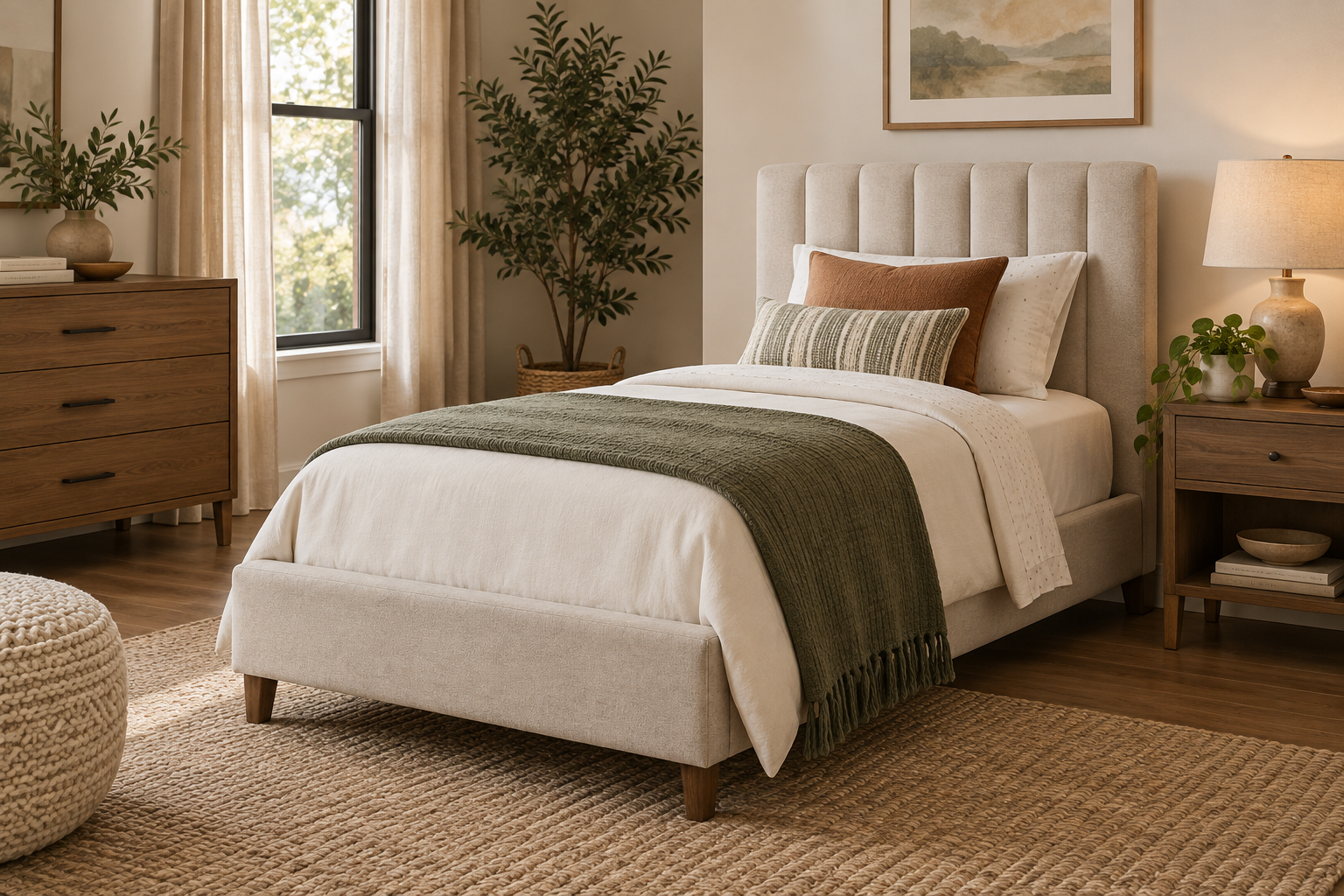
A standard bed commonly places its head against a wall and extends into the room. That arrangement creates recognizable bedside zones and can allow access from both long sides. A daybed runs lengthwise along the wall and presents its broad side to the room.
This sofa-like orientation can preserve a central floor area and make a home office, reading room, or playroom feel less dominated by sleep furniture. It works particularly well when the longest uninterrupted wall would otherwise be hard to use.
The tradeoff is less placement flexibility. A daybed needs a wall long enough for its complete exterior length, and a window, radiator, or doorway can interrupt the back. A conventional bed can use a narrower wall at the head.
Daybed seating is deeper than a normal sofa
A twin mattress is 38 inches deep from front to back when used as a seat, substantially deeper than many sofa seats. Without large back cushions, a person leaning against the daybed back may not place feet comfortably on the floor.
Bolsters and oversized pillows reduce the effective depth and create lumbar support. They also need a storage location at bedtime. If converting the room every night requires moving a large pile to another chair, the seating benefit can become daily clutter.
Mattress edge stability affects sitting comfort. A surface chosen only for sleeping may compress sharply when someone sits along the front edge. Consider the balance of sitting and sleeping rather than assuming any comfortable mattress automatically makes a supportive sofa.
Conventional beds are generally easier to make
A daybed surrounds the mattress along the back and both ends. Fitted-sheet corners must be reached within that enclosure, and a comforter can bunch against the back. A conventional frame with open sides allows easier tucking and can be approached from both sides.
For occasional guest use, the difference may matter only a few times a year. For nightly use, weekly linen changes and daily entry become more important. An adult with limited reach may prefer a standard frame even if the daybed makes the room look more flexible.
Daybed covers can produce a tailored daytime appearance but add a conversion step. Ordinary twin top bedding is simpler, though its side drape may not resemble upholstery. Decide how polished the room must look and how often someone will perform the transformation.
Trundles can add a second distinct sleeper
The ZINUS Suzanne Bamboo and Metal Daybed with Trundle uses the common daybed-plus-trundle arrangement. The second mattress stores beneath the main deck and pulls into the room when needed, creating guest capacity without a permanently visible second bed.
A trundle needs its entire deployed footprint plus a route for pulling it out. Furniture that looks compact while closed can require nearly another twin-width zone at night. Tape that rectangle on the floor and keep it free from desk chairs and rugs that obstruct wheels.
Trundle mattresses often have strict height limits. Thick bedding may need removal before storage. Some trundles remain low; others lift toward main-bed height. Do not assume the two surfaces form one continuous large bed unless the mechanism is designed and documented for that use.
Storage daybeds trade guest space for organization
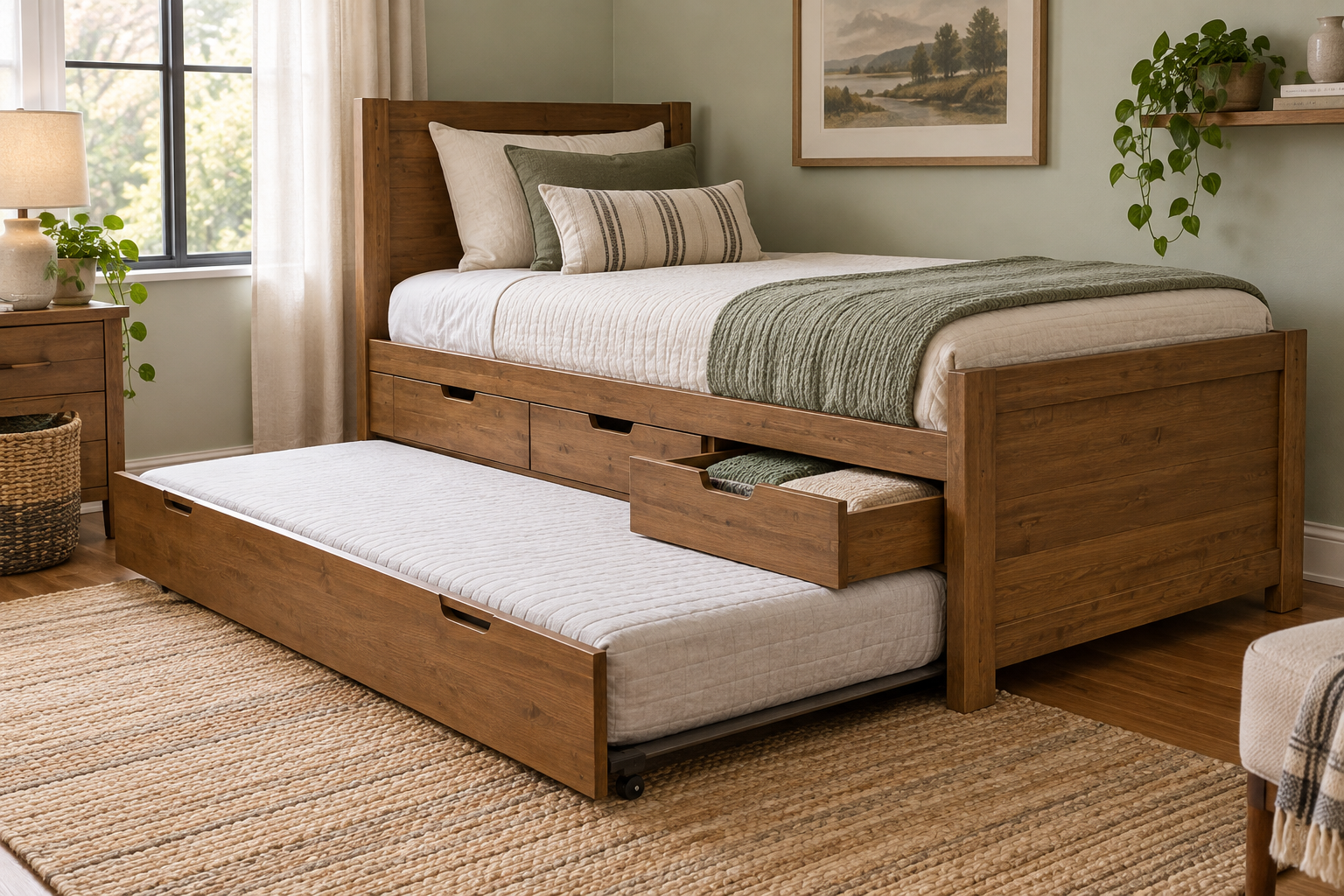
Some daybeds place drawers beneath the mattress instead of a trundle. The LUSIMO Corner Twin Bed Frame with Storage Drawer combines corner-oriented seating cues with drawer storage. This can replace part of a dresser and keep the room multifunctional.
Drawer access decides placement. A long wall is not useful if the drawer opens into a desk or the bedroom door. Measure full extension and standing room. A rug edge can interfere with rolling drawers even when the dimensions work.
Conventional twin platforms can also provide underbed clearance or drawers. Storage is not exclusive to daybeds, so compare the quality, direction, and accessibility of the specific systems rather than awarding the category an automatic advantage.
Everyday sleepers need the right access and height
An adult can sleep on a properly rated twin daybed every night when width, length, support, and mattress suit the person. The furniture label does not make the surface temporary. Access pattern and maintenance determine whether it feels practical.
Most users enter from the long front edge because the back and arms block other sides. This can be convenient in a wall layout but removes a partner-side option—even though a twin is normally for one person. A corner arm can also feel confining to a tall sleeper near the 75-inch limit.
Calculate top-of-mattress height from deck and mattress. A low, soft daybed may be difficult for someone with mobility limitations. A very high one may be awkward as seating. The ideal height can differ when one surface must perform both jobs.
Choose based on the room’s daytime identity
Choose a daybed when the room is an office, den, playroom, or sitting space most days and sleeping space occasionally. Its wall-facing profile and cushions can make the secondary role believable. Choose a standard twin when sleeping is primary and simple access, bedding, and placement matter more.
List the conversion tasks: move cushions, pull a trundle, store bedding, clear floor, and remake the surface. If those steps happen rarely, they may be worthwhile. If they happen every morning and evening, a conventional bed or another dedicated arrangement may create less friction.
Measure the entire system in day and night modes. The winning frame should function in both without blocking exits, vents, doors, or the room’s main route. A daybed saves useful space only when its second identity is genuinely used.
Decide where daytime cushions and nighttime linens live. A nearby drawer, basket, or closet shelf makes conversion sustainable; an unplanned pile on the floor consumes the very space the daybed was meant to preserve. Include storage volume, not merely frame footprint, in the comparison.
Try the sitting posture before assuming the daybed can replace a sofa. Seat height, mattress edge, back-cushion thickness, and arm position determine whether adults can relax for more than a few minutes. If the room primarily needs comfortable seating, a sleeper sofa or separate chair-and-bed plan may deserve comparison.
Frequently asked questions
Can I use a regular twin mattress on a daybed?
Usually yes when the frame specifies standard twin, but verify thickness, slat support, capacity, and trundle clearance.
Is a daybed smaller than a twin bed?
The mattress is often identical. The daybed frame may be larger because it adds a back and side panels.
Is a daybed comfortable as a sofa?
It can be with supportive back cushions, though a twin mattress creates a deeper seat than a typical sofa.
Can an adult sleep on a daybed every night?
Yes when the frame is rated appropriately and the mattress dimensions, support, and access suit the adult.
Does every daybed include a trundle?
No. Some include drawers or open underbed space, and some sell the trundle separately. Check exactly what the listing includes.
Final verdict
A daybed and conventional twin can share a mattress size while organizing the room in opposite ways. The daybed faces the room as seating and rewards multipurpose use; the standard frame favors straightforward nightly access. Compare complete footprints, conversion work, mattress thickness, and moving features. The better choice is the one whose everyday identity matches how the room actually spends most of its time. Test the daybed as both a seat and a sleep surface, including the work of storing cushions and changing fitted sheets. Test the conventional frame for two-sided access and room flow. Furniture that performs one primary role exceptionally well may be more useful than multifunction furniture whose second role is inconvenient to activate. Preserve clear everyday access to every drawer or trundle, because an unavailable secondary feature cannot justify the frame space it consumes.
Product examples