TwinBed.app practical guide
Twin Sofa Sleeper vs. Daybed for a Multipurpose Room
Both pieces promise a seat by day and a bed by night, but they begin from opposite priorities. A daybed is a bed framed to encourage sitting. A sofa sleeper is seating engineered to reveal or unfold a sleeping surface. That difference influences cushion support, mattress choice, setup effort, floor planning, and the way the room reads during work or entertaining. The right answer comes from ranking daytime sitting against nighttime sleeping and counting every conversion step.
Quick answer
Choose a daybed when sleep comfort, a standard twin mattress, and quick bed access matter most. Choose a twin sofa sleeper when the room must look and sit more like a conventional living area, provided its unfolding mechanism and sleep surface suit the guest. A daybed keeps its full footprint all day; a sleeper may be more compact closed but needs a clear conversion zone.
Start With the Room’s Primary Shift
In a guest bedroom that doubles as an office, the furniture may be slept on often but sat on briefly. A daybed keeps a recognized twin sleep surface ready beneath a cover. In a den used by several people every evening, sofa posture and upholstery durability may deserve more weight, making a sleeper format attractive.
Estimate hours per week in each mode and the guests’ typical stay. A child sleeping one night has different needs from an adult staying a week. Do not let rare maximum occupancy dominate every day if an alternative guest arrangement is available. Conversely, do not select a beautiful seat that provides unsuitable sleep for a frequent visitor.
Write the primary function in one sentence: ‘This is an office seat that hosts three adult visits a year,’ or ‘This is a nightly child’s bed used for reading after school.’ That sentence clarifies which compromises are acceptable.
Daybeds Usually Simplify the Sleep Surface
A daybed commonly uses a standard twin mattress on slats or another specified support. That creates broad mattress choice within the frame’s thickness, support, and capacity limits. The sleeper does not lie across folding cushion seams. Bedding setup can be as simple as removing back cushions and a daytime cover.
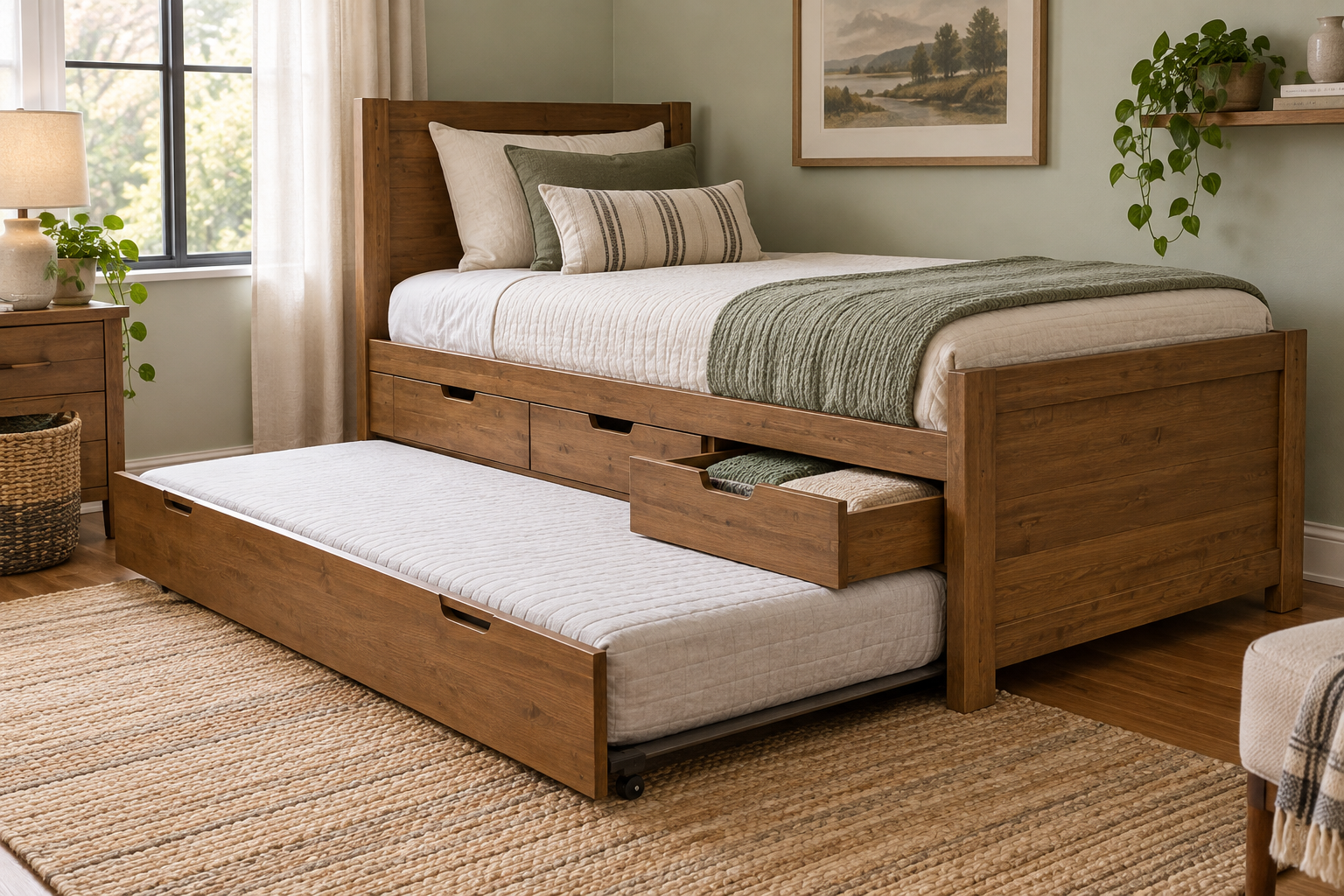
The ZINUS Suzanne Bamboo and Metal Daybed with Trundle adds potential guest capacity beneath the main surface, while the LUSIMO Corner Twin Bed Frame with Storage Drawer adds a corner seating profile and storage. Current product details must be verified; these examples show how daybeds can carry functions beyond basic seating.
The disadvantage is constant bed depth. A twin mattress is far deeper than a normal sofa seat, so firm back cushions are needed for upright sitting. Its full length and width remain in the room even when no one sleeps there.
Sofa Sleepers Usually Prioritize Daytime Posture
A sofa sleeper can provide a conventional back, arms, and seat depth while closed. The bed may pull out, fold flat, or convert from cushions, and each mechanism creates a different sleep surface. A twin label may refer to approximate sleep size rather than compatibility with a standard removable twin mattress. Verify open sleeping dimensions and construction.
Conversion can introduce seams, bars, hinges, or separate cushion pieces. Evaluate support for the intended guest and confirm weight limits. If a mattress is included, replacement choices may be proprietary. A fold-flat seat may be simple yet lower than a conventional bed. No mechanism type guarantees comfort.
Upholstery receives concentrated sitting wear that a covered daybed spreads over a mattress. Look for appropriate care instructions and removable covers where useful. The household should be able to operate the mechanism without pinching fingers or dragging it across flooring.
Compare Closed Footprint With Open Clearance
A compact sleeper may project less than a daybed while closed, but opening it can consume the central room. Record closed width and depth, fully open length and width, and the user’s standing zone. Move coffee tables, desk chairs, and rugs on the plan. Any displaced piece needs a stable parking place.
A daybed’s footprint is predictable. A trundle expands sideways by nearly another sleep surface, while a storage drawer needs a smaller temporary aisle. A plain daybed requires no nightly floor conversion beyond cushion storage. That consistency can be valuable in a small office with cables and equipment.
Protect the room door and route to the bathroom in the sleeping configuration. Sofa arms, an extended deck, or a trundle front can create corners that are difficult to see in low light. Do not route cords beneath either mechanism.
Count Bedding and Cushion Storage
A daybed may use two or three large back cushions, a cover, sleeping pillow, sheets, and blanket. Most of those pieces need a closet shelf or basket at night. A sleeper sofa may hide its mattress but still needs sheets, a pillow, and blanket elsewhere. Some designs offer a compartment; confirm its dimensions and ventilation rather than assuming.
Create one complete conversion kit and locate it within the room. Time setup and reset. Decorative pillows that have no storage home will land on the office chair or floor, erasing the benefits of a dual-purpose space. Fewer, larger support cushions are often easier to manage than a layered display.
Keep used bedding separate from clean upholstery and allow it to dry before storage. Follow mattress and textile care instructions. A sleeper that closes around prohibited bedding can jam; a daybed trundle can catch an overhanging quilt.
Consider Repair, Replacement, and Long-Term Flexibility
A standard daybed mattress is often simpler to replace because dimensions and support requirements can be checked across many twin options. The frame can remain in service while textiles change. A sleeper sofa may use a proprietary folding mattress, integrated cushions, or a mechanism-specific part. Before buying, find the replacement process rather than assuming any twin product will fit.
Upholstery ages differently from bedding. A worn daybed cover can be removed while the underlying frame and mattress remain useful. Worn sleeper-seat cushions may be part of the furniture’s structure or appearance and require model-specific service. Review care instructions, removable-cover details, and access to replacement components. Do not make durability claims from fabric appearance alone.
Moving also favors different designs. A daybed often breaks into rails, support, and side panels, though components can still be large. A sleeper can be compact when closed yet very heavy because the mechanism stays inside the sofa body. Measure stair turns, elevators, and doorways and obtain component or package weights where available.
If the room may change from office to full-time bedroom, a daybed’s sleep-first structure offers a straightforward transition. If it may become a conventional den, a sleeper’s sofa identity may remain more appropriate. Future flexibility should not override current comfort, but it can break a close tie between two otherwise suitable choices.
Trial and return details can also matter because comfort is difficult to infer online. Review the current seller and manufacturer terms before assembly or removing packaging, and understand which parts are returnable once used. Do not assume a mattress trial applies to an entire sleeper mechanism or that an upholstered frame can be repacked easily.
For a shared household, ask the person who performs setup to participate in the final choice. A sofa sleeper that one user finds simple may feel heavy or awkward to another. A daybed with several back cushions may look easy until the nightly sleeper carries them across the room. The operator’s routine deserves the same weight as the guest’s first impression.
Choose With a Weighted Decision
Score each finalist for daytime posture, sleep surface, setup time, closed footprint, open footprint, bedding storage, mattress replacement, cleaning, and the actual user’s mobility. Give primary-mode items double weight. This prevents a rare feature such as an extra trundle from outweighing daily comfort.
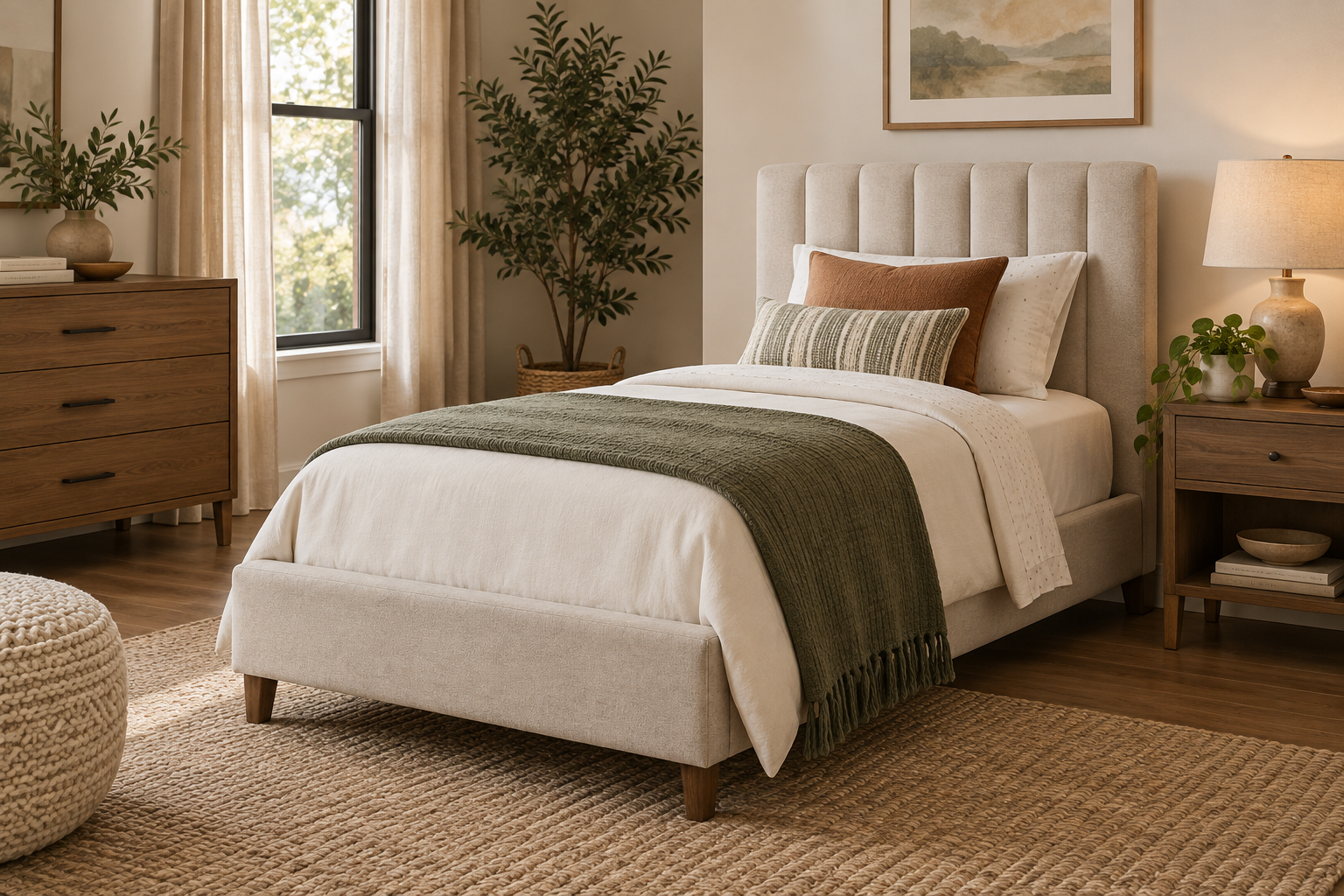
An upholstered platform like the DHP Braylon Twin Bed is not cataloged here as a sofa sleeper or daybed, but it can serve as a useful control: compare the simplicity of a regular bed with an upholstered headboard against both transforming choices. Sometimes the multipurpose room needs a reliable bed and one compact chair rather than a hybrid.
Choose the daybed for sleep-first use, easy access, and a stable footprint. Choose the sofa sleeper for seating-first use and a closed form that genuinely improves the room. In either case, verify exact current dimensions, capacity, support, mattress rules, and mechanism operation.
- Daybed advantage: conventional twin-mattress format and fast sleep setup.
- Daybed tradeoff: deep seating and a permanent bed-sized footprint.
- Sleeper advantage: sofa-like closed seating and potentially smaller daytime depth.
- Sleeper tradeoff: mechanism, conversion clearance, and possibly proprietary sleep surfaces.
- Shared requirement: a real home for bedding and displaced cushions.
Frequently asked questions
Is a daybed more comfortable than a sleeper sofa?
It may offer broader mattress choice and fewer folding seams, but comfort depends on the exact mattress, support, and sleeper. Some sleeper designs may suit a guest better.
Does a daybed take more space than a sleeper sofa?
Often it is deeper while in daytime mode. A sleeper may project farther when open. Compare both closed and fully open exterior dimensions.
Can a sofa sleeper use a regular twin mattress?
Only if its manufacturer specifies that compatibility. Many use included, folding, or proprietary sleep surfaces despite a twin-size description.
Which is easier to convert every night?
A daybed usually requires removing cushions and arranging bedding. A sleeper requires operating its mechanism. Time the exact routines and consider the operator.
Which works better in a home office?
A daybed favors frequent sleep and predictable floor use; a sleeper favors conventional seating and may preserve daytime depth. Desk clearance and cable routing can decide.
Final verdict
A daybed keeps the bed honest and asks the user to adapt it for sitting. A sofa sleeper keeps the sofa honest and asks the user to convert it for sleep. That is the core choice. Prioritize the mode used most, map the fully open furniture, and store every loose textile. The better multipurpose piece is not the cleverer mechanism; it is the one whose daily compromise the household barely notices.
Product examples