TwinBed.app practical guide
Twin Daybed Bedding: What Fits Without Looking Bulky?
Daybed bedding has two jobs that pull in opposite directions. A sleep setup benefits from soft, generous layers; a seating setup looks best when fabric is controlled and the frame remains visible. The solution is not specialty bedding at any cost. It is a measured system built around the mattress depth, frame openings, moving components, laundering routine, and the number of pieces a person is willing to relocate each night. Fit begins with dimensions, while an uncluttered appearance comes from restraint.
Quick answer
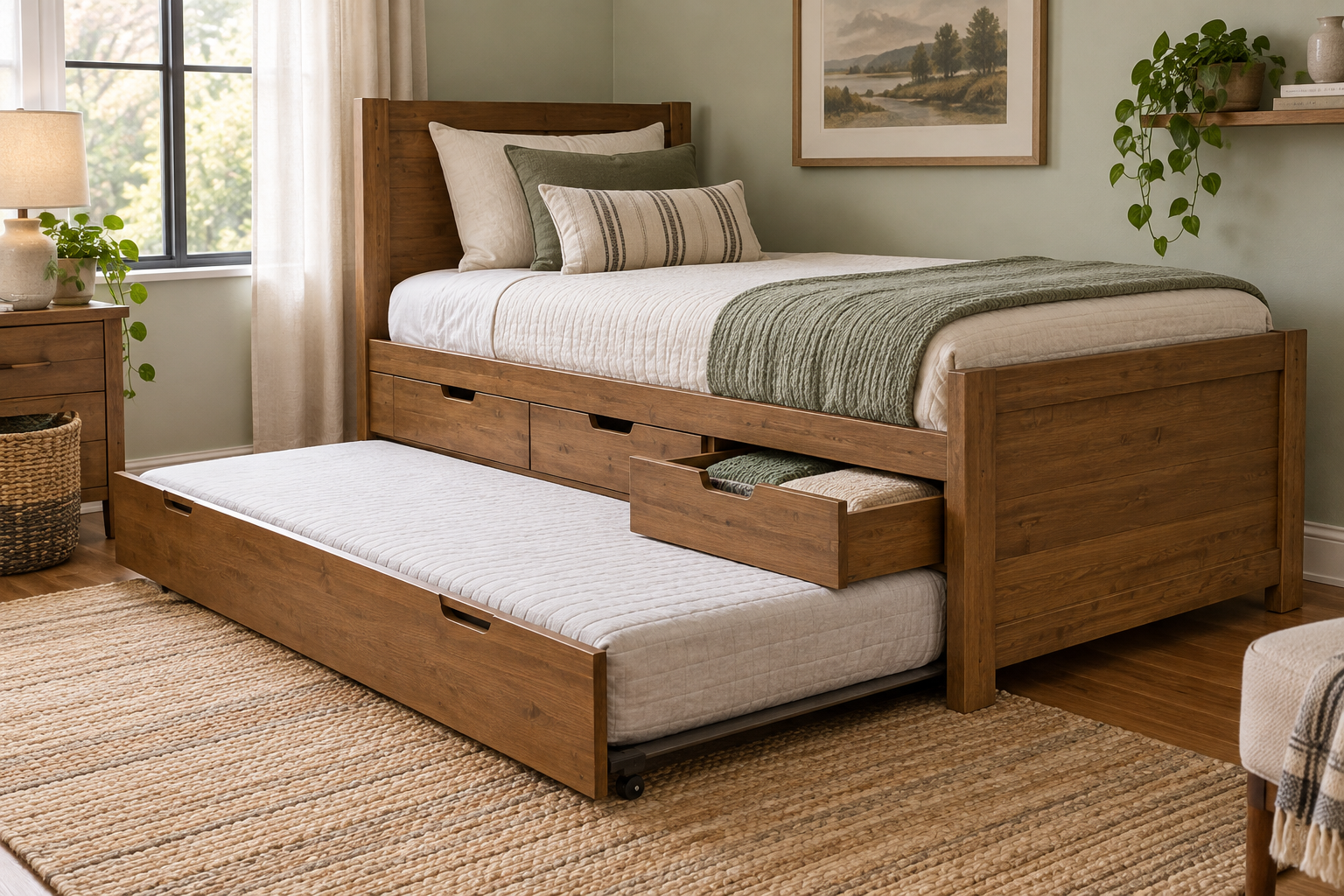
Use a fitted sheet or tailored daybed cover on the mattress, then add a lightweight twin quilt or coverlet that can be tucked without covering the frame. Two or three firm back cushions and one small accent usually provide enough seating support. Avoid deep comforters, oversized pillow stacks, and fabric that interferes with a trundle, drawer, or floor path.
Verify the Mattress Before Buying a Bedding Set
A standard U.S. twin mattress is generally about 38 by 75 inches, but depth varies widely. Measure length, width, and height after the mattress has fully expanded. Record the clearance between the mattress and daybed rails. A very thick mattress may crowd side panels, hide decorative framing, or violate a trundle-related limit. Follow the furniture maker’s mattress guidance.
Fitted-sheet pocket depth should be close enough to grip without creating large folds beneath the seat. A deep-pocket sheet on a shallow mattress can bunch; a shallow pocket can pull off the corners. Include the protector when measuring total depth. If the daybed has a trundle, measure that lower mattress independently because it often has a stricter maximum thickness.
Daybeds such as the ZINUS Suzanne Bamboo and Metal Daybed with Trundle and LUSIMO Corner Twin Bed Frame with Storage Drawer use different surrounds and moving features. Confirm current dimensions for the exact model and color or size variation. Never assume a cover that clears one daybed’s rails will fit another.
Build From a Smooth, Washable Base
Start with a mattress protector compatible with the mattress and a fitted sheet. These form the sleep-ready base even during daytime seating. For a guest daybed, launder the sheet before a visit; for a nightly sleeper, follow the same sheet-change schedule as any bed. A spare fitted sheet avoids dismantling the entire daytime look while laundry runs.
Over the fitted layer, choose either a tailored daybed cover, fitted coverlet, or light twin quilt. A fitted cover produces the strongest upholstery effect. A quilt is more versatile for sleep but needs disciplined tucking along the wall and frame. Avoid securing fabric with pins or loose elastic devices that may damage bedding or create hazards.
Durable, washable textiles are valuable because the sleep surface doubles as a seat. Texture can disguise minor wrinkles, but very loose weaves may snag on frame edges or pet claws. Check care labels and keep all fabric away from casters, drawer runners, and lift points.
Control Overhang at the Front and Ends
A typical twin comforter is designed to hang on both long sides of an ordinary bed. On a daybed, the wall side cannot display that drop, so excess fabric accumulates behind cushions or at the front. A lightweight quilt is easier to tuck beneath the mattress or fold to a controlled front drop. Measure from the mattress top to the desired lower edge before comparing textile dimensions.
Keep the front high enough to reveal any trundle or drawer and prevent fabric from being pulled into wheels. If the daybed has a solid apron and no moving parts, a longer drop may be visually acceptable, but it can still collect dust and look bed-like. At each end, tuck the layer cleanly inside arms when the frame allows, without forcing thick folds into tight gaps.
Test the finished arrangement by sitting, standing, and opening every storage feature. Fabric migrates under body weight. A cover that initially clears a handle may sag after an hour. The final fit should remain functional after normal use, not only during styling.
Choose Back Cushions for Support, Not Just Color
A twin mattress creates an unusually deep seat. Large firm cushions reduce that depth and support upright sitting. Two or three substantial squares can create the foundation; a narrow lumbar pillow can fine-tune lower-back support. Test existing pillows first to discover the needed depth before buying matching covers.
Keep fills consistent enough that the back line does not alternate between rigid and collapsed shapes. Removable washable covers are more practical than decorative-only fabrics. If the wall is the back support, protect it from rubbing with clean cushion covers and periodically inspect for trapped moisture.
Every back cushion needs a bedtime location. A lidded bench may hold them but consumes floor space; a closet shelf or large basket can work if it remains outside the trundle route. Do not pile cushions on a heater, doorway, or the lower guest mattress. If storage is limited, fewer larger cushions generally look calmer and relocate faster than many small pillows.
Separate the Sleep Layer From the Daytime Layer
For a daybed used nightly, keep the fitted sleep sheet in place and let the daytime cover protect it. Store the pillow and sleep blanket in a ventilated, accessible location. At night, remove the cover and back cushions rather than sleeping directly under decorative fabric that has served as seating. In the morning, allow bedding to air according to care guidance before rebuilding the seat.
For occasional guests, a complete clean sheet bundle can be stored separately and installed before arrival. This keeps display textiles from being mistaken for prepared guest bedding. Label lower-trundle and upper-daybed sets if their mattress depths differ. A fitted sheet that fits the upper mattress may be too deep for the lower one.
A throw can remain visible during the day and become an extra layer, but it should not be the only planned guest blanket unless its size and warmth are appropriate. Avoid buying five decorative layers to achieve a catalog look when only one will be useful at night.
Keep the conversion hygienic by separating pieces that touch the floor from pieces that touch the sleeping surface. A cushion basket should be clean inside, and a throw used by pets may need laundering before it becomes guest bedding. If decorative pillows cannot be washed, use removable covers and follow their care labels. This separation helps a daybed remain welcoming rather than merely photogenic.
Use a Compact Bedding Formula
A restrained formula is one protector, one fitted sheet, one tailored cover or light quilt, two or three back cushions, one lumbar or accent pillow, and one folded throw. Adjust for climate and sleeper needs, but add pieces only when they serve a clear function. Repetition of color across the large pieces keeps the surface from appearing crowded.
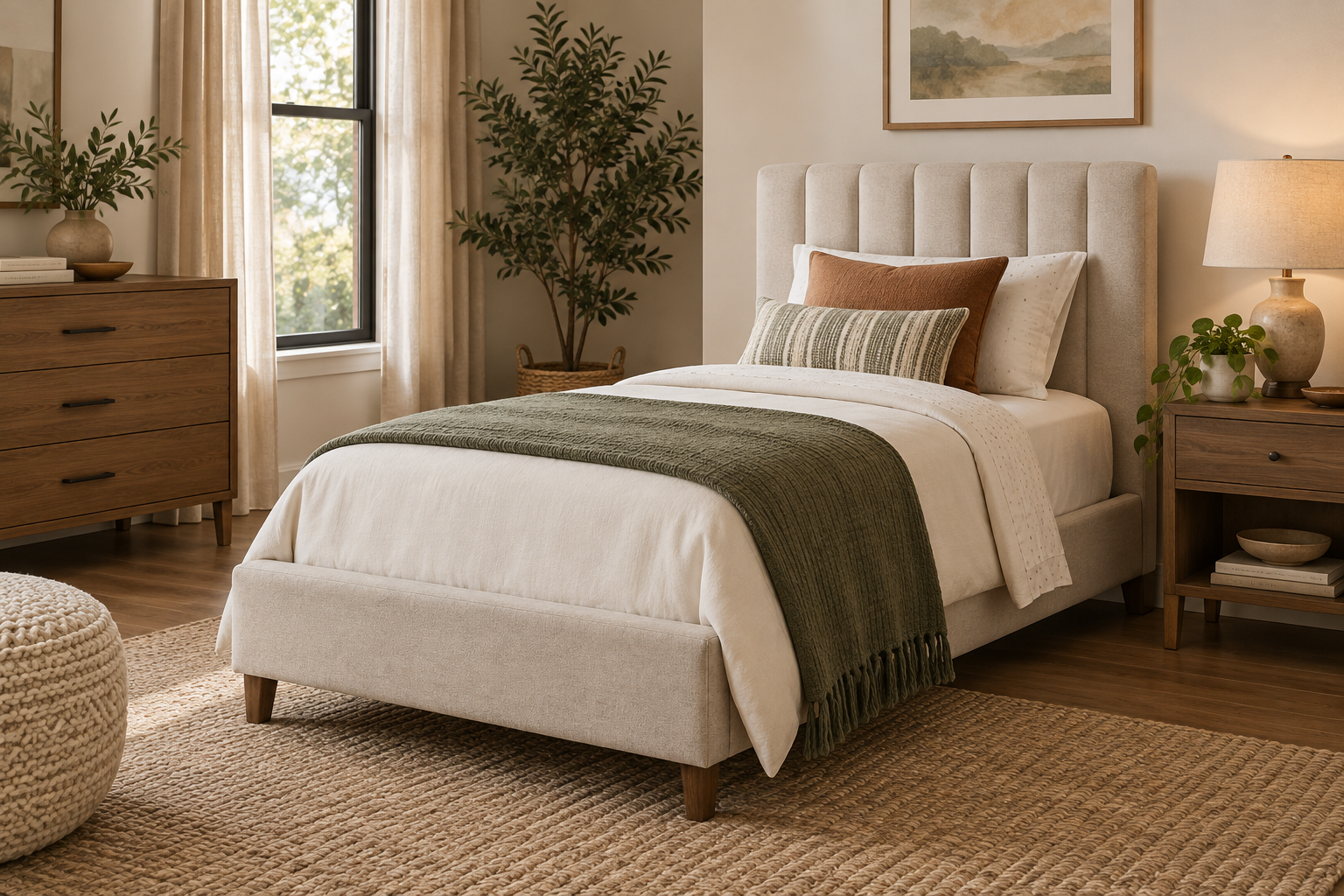
The LUSIMO Corner Twin Bed Frame with Storage Drawer may inspire a corner-sofa arrangement, while the ZINUS daybed configuration may call for balanced cushions between two ends. The DHP Braylon Twin Bed is an upholstered platform rather than a cataloged daybed, yet its upholstered profile can be useful when comparing how soft framing affects bedding color and texture. Verify all present listing details before choosing covers.
Photograph the day and night configurations, then time the conversion. If the daily reset requires more folding or storage than the household will maintain, simplify before purchasing additional accessories. Bedding should make the daybed easier to live with, not turn it into a permanent linen-sorting station.
Seasonal changes do not require rebuilding the entire formula. Swap the throw’s weight, adjust breathable sleep layers, and rotate one accent cover while retaining the fitted base and cushion count. Store off-season textiles clean and dry in a labeled location. This keeps the visual system consistent and prevents a growing pile of decorative bedding from consuming the daybed’s storage or the room’s closet.
Before changing fabrics, remeasure any new protector or topper because added depth changes how the fitted cover grips and how high the mattress sits against the frame. Decorative updates should never override the daybed’s mattress-thickness or trundle-clearance instructions.
- Measure mattress depth with its protector installed.
- Use fitted or lightweight layers instead of a deep overhanging comforter.
- Keep fabric clear of trundles, drawers, wheels, and handles.
- Limit back cushions to the number that has a bedtime home.
- Store upper and lower bedding separately when mattress depths differ.
Frequently asked questions
Do regular twin sheets fit a twin daybed?
Usually, when the mattress is standard twin. Match fitted-sheet pocket depth to the actual mattress and protector, and confirm the frame does not impose special limits.
What size comforter works on a twin daybed?
A twin layer may fit the mattress, but conventional side overhang can look bulky. Compare the comforter dimensions with the desired front drop and consider a lighter quilt or coverlet.
How many pillows belong on a daybed?
Often two or three firm back cushions plus one smaller support pillow are sufficient. Use only what improves seating and can be stored at night.
Can the daytime cover stay on for sleeping?
It can if it is intended and maintained as bedding, but many people prefer to remove the seating layer and sleep on clean sheets. Follow textile care and personal comfort needs.
How do I keep bedding out of a trundle?
Use a controlled front drop, tuck securely without hazardous fasteners, and test the trundle after sitting on the made daybed. Store bulky blankets separately.
Final verdict
Daybed bedding looks polished when each layer fits the mattress, clears the mechanism, and has a reason to be there. Begin with a measured fitted base, add one controlled cover, and use firm cushions to solve seat depth. The most attractive arrangement is not the one with the most textiles; it is the one that still looks intentional after ordinary sitting and converts to clean sleeping space without filling the floor with pillows.
Product examples