TwinBed.app practical guide
How to Make a Twin Daybed Look and Feel Like a Sofa
A twin mattress is longer and much deeper than a typical sofa seat. Simply lining pillows against the wall can produce a bed wearing cushions rather than convincing seating. The transformation works when proportion, support, and daily reset are handled together. The eye needs a back, arms, and an intentional base; the body needs a seat depth that does not force a reclined sprawl; and the sleeper needs a clean way to remove decorative pieces at night. Good styling respects all three jobs.
Quick answer
Treat the long wall side as the sofa back, use firm back cushions to reduce the deep twin seat, keep the mattress tightly covered, and define each end with arm pillows or the frame’s existing sides. A limited color palette, nearby table, and layered lighting complete the seating zone. Keep every layer easy to remove so the daybed can still become a bed without a storage problem.
Build a Clear Sofa Silhouette
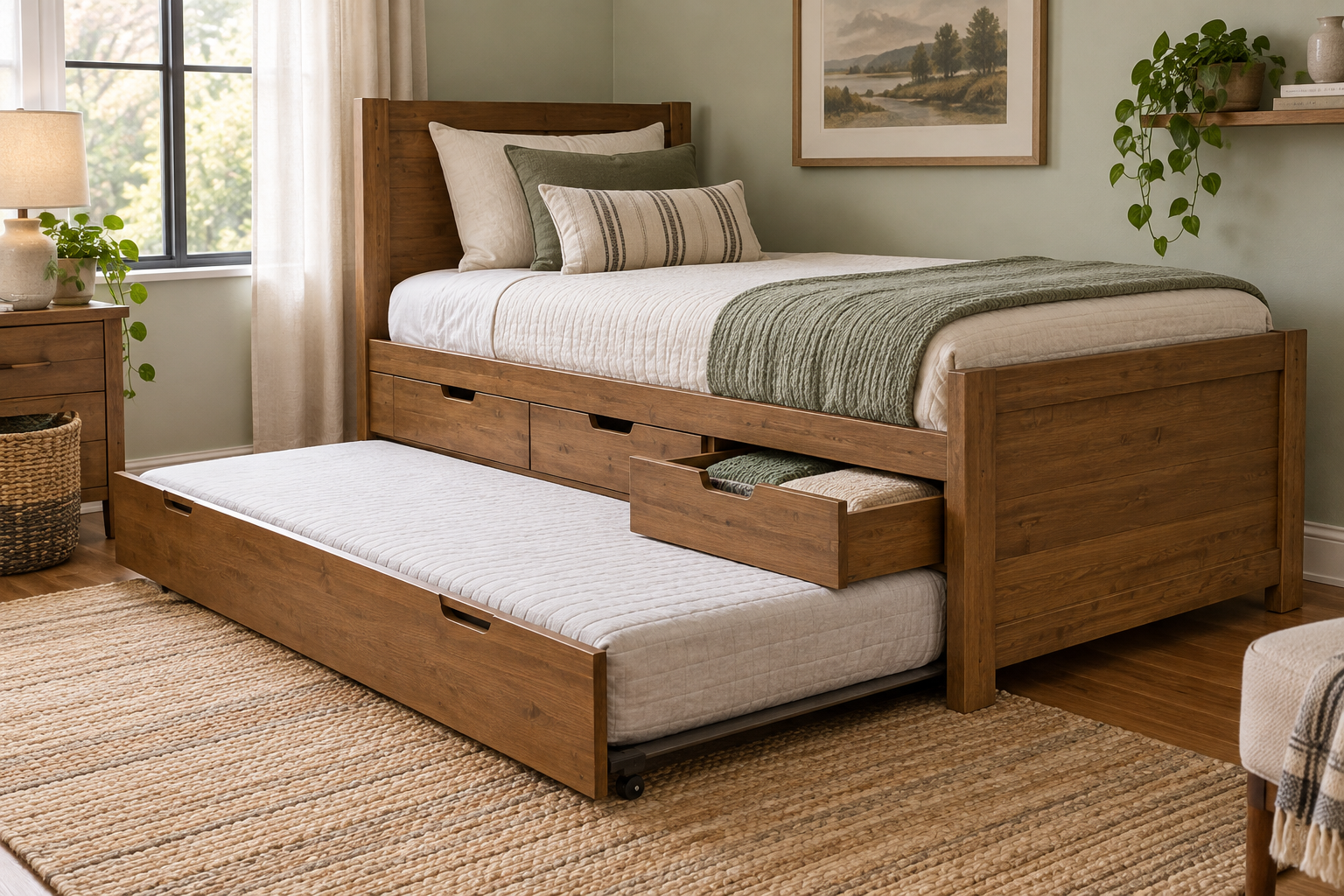
Place the long side of the daybed against a wall or use a frame with a substantial back. That horizontal line immediately reads more like a sofa than a headboard at one end. Frames such as the ZINUS Suzanne Bamboo and Metal Daybed with Trundle provide a daybed profile, while the LUSIMO Corner Twin Bed Frame with Storage Drawer creates a corner-backed arrangement. Verify current dimensions and features before planning upholstery around either.
Create visual arms at both ends. Existing side panels may be enough; otherwise, use two firm rectangular or bolster pillows that remain upright. Match their height and density so the silhouette feels designed rather than improvised. Do not stack pillows above unstable rails or obscure structural joints that need inspection.
Keep the base visually quiet. A tailored cover or fitted layer should reveal the frame line instead of hanging to the floor like a bedspread, unless a deliberate skirt is needed to conceal a simple base. On a storage or trundle daybed, fabric must stay clear of drawer pulls, casters, and moving fronts.
Correct the Extra-Deep Seat
A twin mattress is about 38 inches deep, far deeper than ordinary upright seating. Large, supportive back cushions reclaim some of that depth. Two or three Euro-size pillows, structured floor cushions, or purpose-made back wedges can move the sitting line forward. The right amount depends on user leg length and the daybed frame; test with household pillows before buying a coordinated set.
Back cushions should be dense enough to hold shape but comfortable against shoulders. Loose feather-like fills may collapse into the wall and restore the excessive depth. A combination works well: firm foundation cushions behind, softer decorative pillows in front. Avoid so many layers that the usable seat becomes narrow or the cushions fall onto the floor whenever someone stands.
Seat height also influences the sofa impression. Include the frame, mattress, and any approved topper when judging it. Do not add an unapproved foundation merely to raise the surface, and keep mattress thickness within the daybed or trundle limits. If feet cannot rest comfortably, a stable ottoman may help, but it needs a parking place when the trundle opens.
Use Bedding That Behaves Like Upholstery
A fitted daybed cover, durable fitted sheet, or tightly tucked coverlet produces a smooth seat. Choose a washable fabric suitable for skin contact and the expected use. A subtle texture or solid color generally reads more like upholstery than a billowing comforter. Protect the sleeping surface with a compatible washable protector beneath the visible layer.
Control wrinkles with correct sizing and secure tucking—not pins, loose clips, or cords that can create hazards or damage the mattress. A standard twin cover should correspond to the mattress dimensions, but deep-pocket sheets may bunch on a shallow daybed mattress. Check pocket depth. On a bed used nightly, prioritize a layer that one person can remove or straighten in minutes.
If pets or children use the seat, choose replaceable, washable pieces instead of a complicated arrangement requiring dry cleaning. Keep one spare fitted cover ready. The daybed will look more consistently sofa-like when restoring it after a spill is simple.
Choose a Palette With One Controlled Accent
Limit the largest surfaces to two related colors: one for the seat and one for the back cushions. Add a smaller accent through one lumbar pillow or throw. Repeating that accent in art, a lamp, or a rug connects the daybed to the room without turning it into a display of mismatched bed pillows. Pattern scale should suit the small surface; several competing large prints can make the arrangement feel busy.
For a corner daybed, use the wall color as part of the composition. Cushions close to the wall tone create a built-in effect, while contrast outlines the sofa shape. In a studio or office, repeating the desk chair’s material or color makes the sleeping furniture feel like part of the daytime room.
A throw should look intentional and remain easy to use. Fold it across one arm or the lower corner rather than covering the entire mattress. Heavy layers can hide the tailored seat and create a nightly storage burden. The best daytime palette survives after the decorative throw is removed.
Give the Daybed a Living-Room Setting
Place a small table within reach for a drink, book, or remote. A C-shaped table or compact nesting table may use less permanent floor area than a full nightstand, but its base must stay outside trundle or drawer travel. Add a floor or wall lamp that supports reading without dangling cords across the bed. Follow installation guidance for wall-mounted pieces and keep heavy objects away from the sleeper.
A rug can define the seating zone, but it should not catch a trundle wheel or storage drawer. Place it fully outside the moving path or choose a configuration confirmed to work with the mechanism. Art centered over the long side reinforces the sofa orientation. Mount it securely and avoid heavy frames directly above where someone sleeps.
Leave some open wall and floor space. A daybed already has a long visual footprint, and crowding both ends with tables can restore the bedroom look. One table, one lamp, and one art grouping often communicate purpose more clearly than a complete matching furniture suite.
Design the Nightly Conversion Before Styling
Count every item that must leave the mattress for sleep. Assign a basket, shelf, or storage bench that holds all back cushions without blocking the door. Do not plan to drop them on the floor; that quickly makes the room feel smaller and creates a trip hazard. If the storage destination cannot hold the chosen cushions, reduce the cushion count.
Use a repeatable order: remove the throw and accent pillow, move firm back cushions to their home, uncover or straighten the sleep sheet, and check that nothing has fallen behind the frame. In the morning, air the bedding as appropriate, then rebuild the back from largest to smallest. A five-minute reset makes the dual-purpose promise believable.
If several people use the room, take one photo of the finished daytime arrangement and place it inside the cushion-storage area. That reference keeps the sofa shape consistent without turning styling into a precise chore. It also reveals when a new pillow has been added without a real storage destination.
Trundle models add another conversion. The daytime rug, table, cushion basket, and hanging textiles must stay out of the lower deck’s travel. Rehearse both sofa-to-bed and sofa-to-two-beds before finalizing the room. Styling is successful only if the furniture’s sleeping and storage functions remain fully usable.
- Use firm back cushions to shorten the 38-inch seat depth.
- Create balanced arms at both ends.
- Choose a fitted, washable seat layer with minimal overhang.
- Limit decorative pieces to what can be stored nearby.
- Keep tables, rugs, and fabric clear of moving mechanisms.
Frequently asked questions
How many pillows make a twin daybed look like a sofa?
Usually two or three large firm back cushions plus one or two smaller accents are enough. Test the resulting seat depth and storage burden rather than following a fixed count.
Can I use regular twin sheets on a daybed?
Often yes if the mattress is standard twin, but pocket depth and frame access matter. A fitted daybed cover may look more tailored for daytime use.
Where should daybed pillows go at night?
Give them a dedicated basket, shelf, or closet zone that stays outside doors and trundle paths. If they do not fit, use fewer cushions.
Should a daybed have a bed skirt?
Only when it suits the frame and does not block storage, ventilation, wheels, or pulls. A visible frame often creates a cleaner sofa silhouette.
Can a daybed work as an everyday sofa?
It can for casual seating when cushion support and seat height suit the users. It will not duplicate every ergonomic feature or durability characteristic of a purpose-built sofa.
Final verdict
A twin daybed becomes sofa-like through proportion and routine, not through the largest possible pillow collection. Establish a long back, reduce seat depth with firm cushions, keep the mattress cover tailored, and surround it with only the table, light, and accent pieces that serve daily use. Then make sure every decorative layer has a home at bedtime. The easier the reset, the more convincing the room remains in both modes.
Product examples