TwinBed.app practical guide
Can a Twin Storage Bed Replace a Dresser?
The appeal is obvious: the bed already occupies roughly twenty square feet, so why give another wall to a dresser? In a child’s room, studio, or guest room, putting clothes under the mattress can free the best wall for a desk or walking path. Yet storage-bed drawers are low, wide, and constrained by the frame. Dressers are vertical, easy to scan, and often deeper than they appear. The right question is not whether a storage bed has drawers. It is whether those drawers can handle this person’s actual wardrobe without turning every morning into floor-level rummaging.
Quick answer
A twin storage bed can replace a small dresser for a compact wardrobe, especially when it has two to four accessible drawers. It is less likely to replace a tall dresser for two seasons of clothing, bulky sweaters, or items someone needs while standing. Compare interior drawer measurements and daily access—not the number of drawer fronts—before removing the dresser.
Inventory the Wardrobe Before Comparing Furniture
Empty the existing dresser and group its contents: underwear and socks, sleepwear, shirts, pants, athletic clothing, sweaters, and seasonal overflow. Measure the approximate folded stack for each group. A storage bed works best when the wardrobe is already edited and each category can claim a predictable zone. It works poorly when drawers are expected to absorb clothing, spare bedding, toys, and shoes at once.
Also account for what hangs in a closet. Someone who hangs most shirts and pants may need underbed space only for small folded items. Someone without a closet needs far more. A guest-room bed may replace a dresser with one drawer for visitor clothing and another for linens, while a teenager’s full wardrobe could quickly exceed the same arrangement. Capacity is personal, not a feature-label verdict.
Compare Interior Volume, Not Drawer Count
Decorative fronts can make storage look larger than it is. Find interior width, depth, and height for every drawer. Multiply them for a rough volume, but also note shape: a shallow drawer may organize shirts beautifully yet reject a thick blanket. Hardware, wheel housings, center rails, and recessed sides can reduce space. If interior measurements are absent, ask the seller or keep the dresser until the assembled bed proves itself.
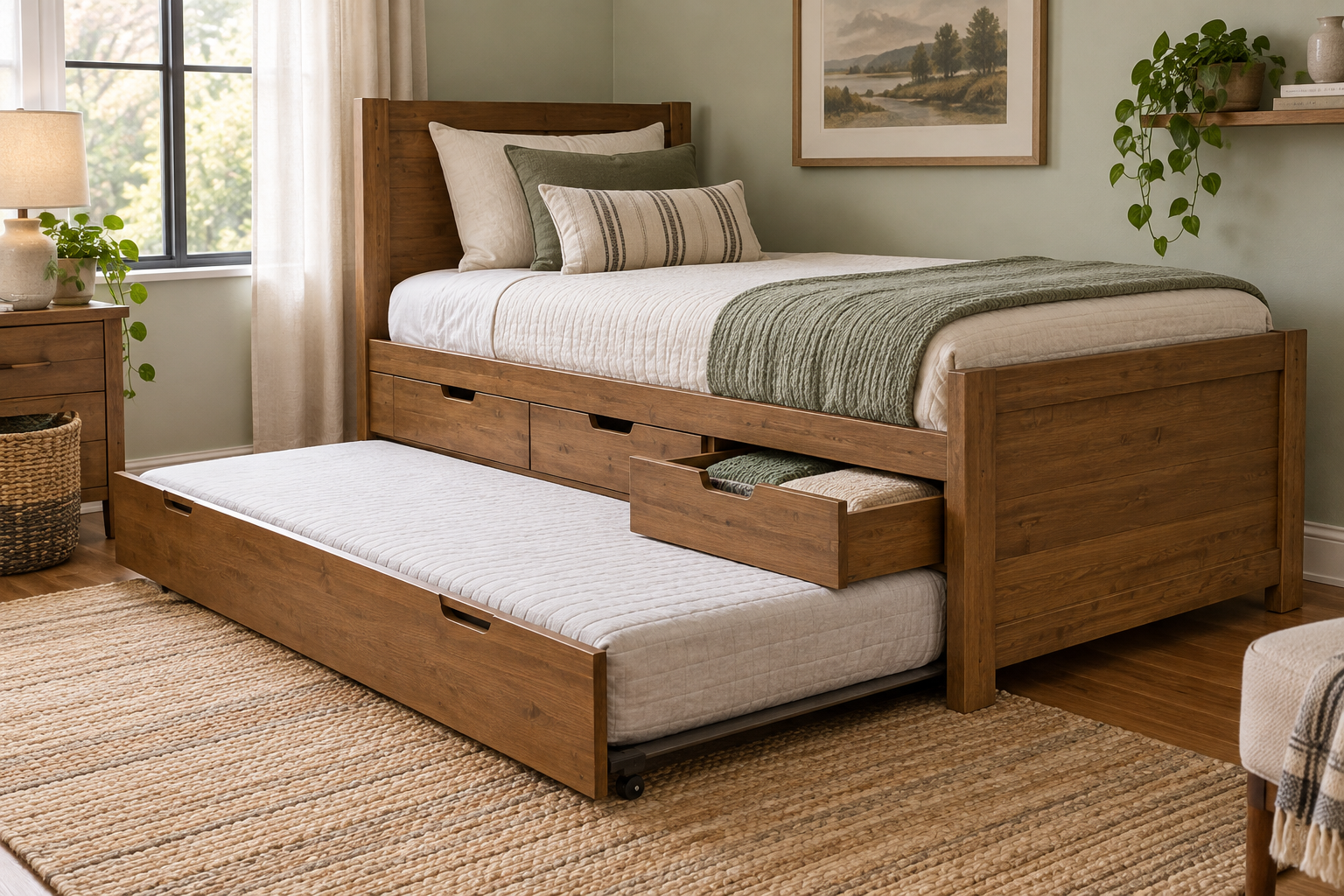
A four-drawer twin frame may distribute modest capacity into convenient categories. Two deeper drawers may hold more awkward pieces but encourage stacking. Storage headboards add shelves, not clothing volume, and open cubbies do not replace closed drawers. The FORABAMB Twin Bed Frame with Four Storage Drawers represents the compartment-rich approach; a two-drawer wood platform represents a simpler split. Current specifications should decide, not the product name alone.
Low Storage Changes the Morning Routine
A dresser presents clothing between knee and shoulder height. Underbed drawers require bending, kneeling, or sitting. That can be manageable for children and flexible adults but inconvenient for anyone with knee, hip, balance, or back limitations. Drawer pulls should be easy to grip, and the open drawer should not block the room’s only path. If two people share the room, test whether one can pass while another chooses clothes.
Visibility is another difference. Wide drawers allow one layer of neatly folded pieces; deep drawers tempt users to bury items. Vertical dividers or small fabric boxes create rows that can be viewed from above. Labeling may help a child maintain categories. The replacement succeeds when putting clothes away is as simple as taking them out. If every load of laundry requires moving bins and rebuilding stacks, clutter will migrate to the floor.
Room Layout Can Cancel Half the Capacity
A bed with drawers on both sides needs both sides open. Push it into a corner and one bank can become inaccessible. In a narrow room, even an exposed drawer may collide with a desk or wall. Measure the drawer’s full extension and add standing room. A door swing, closet door, or deep-pile rug can also interfere. Foot drawers avoid some side conflicts but need a generous path beyond the footboard.
Sometimes a storage bed plus a narrow wall shelf or closet organizer beats the all-or-nothing choice. Use the bed for foldable basics and the closet for hanging garments, then replace the dresser with hooks, a mirror, or a desk. In rentals, retain a small rolling cart until the arrangement has survived a season change. The goal is recovered floor area, not forcing every possession into one piece of furniture.
What Belongs Under the Bed
Soft, frequently washable items are straightforward: pajamas, T-shirts, leggings, underwear, socks, and folded jeans. Keep clean clothing in enclosed drawers rather than open floor-level baskets. Shoes can introduce dirt and odor, so separate them from fabrics. Heavy stacks may exceed drawer-bottom capacity; distribute weight and follow the stated limit. Avoid liquids, food, candles, batteries, and anything that could leak or attract pests.
Seasonal clothing should be clean and fully dry before storage. Breathable organizers can keep categories together without compressing delicate fibers for months. A damp room calls for better ventilation and moisture control, not tighter packing. Leave clearance around moving parts and do not mound clothing above the drawer sides where it can snag. Practical storage has a little empty space.
Use Vertical Space for What the Bed Cannot Do
Eliminating a dresser does not mean eliminating every vertical organizer. A short run of wall hooks can handle tomorrow’s outfit, a shelf above a desk can hold accessories, and a closet door organizer can separate shoes or small items. These additions keep the underbed drawers from becoming overloaded. They also preserve a landing place for clothing that is worn but not ready for laundry—a category that otherwise tends to collect on the mattress or floor.
Plan these pieces with safety and reach in mind. Wall-mounted storage must be installed for the wall type and expected load. Heavy objects should not sit above the sleeper, and children should not need to climb on the bed to reach routine clothing. A narrow closet tower can provide upright cubbies while using far less floor width than a traditional dresser. The point is to replace the dresser’s functions selectively, not pretend one low drawer format performs every function equally well.
Keep a small open surface somewhere for glasses, a phone, or a water cup if those items formerly lived on the dresser. A storage headboard may fill that role when it does not crowd the pillow area, but check depth and cord routing. Without a deliberate landing zone, the new open floor feels cleaner for a week and then small objects migrate to the bed. Successful furniture reduction includes a home for both folded clothing and the everyday items that never belonged in drawers.
If the dresser currently holds sentimental objects or display pieces, decide whether they deserve a wall shelf, a closed keepsake box, or another room. This last category is easy to overlook during a capacity calculation because it is not clothing. Giving it a deliberate destination prevents the storage-bed drawers from being filled with fragile items that must be moved every time socks are needed.
Run a Two-Week Replacement Trial
Before donating the dresser, live from containers with the same internal dimensions as the proposed bed drawers. Place them low and use only those clothes for two weeks. Notice whether categories fit, whether bending is comfortable, and whether laundry returns to the right place. Repeat with cold-weather pieces if the trial occurs in summer. This simulation costs little and exposes unrealistic capacity assumptions.
After the bed arrives, delay removing the dresser until the drawers are assembled, aligned, and loaded. Products such as the Giantex Twin Bed with Storage Drawers and Wood Twin Platform Bed with Storage Drawers may suit the plan when their verified dimensions and access direction match the room. Preserve receipts and packaging during evaluation, and follow assembly and load instructions.
- Keep: daily folded basics and lightweight sleepwear.
- Relocate: hanging clothes, long garments, and bulky coats.
- Separate: shoes, sports gear, and anything dirty or damp.
- Measure: drawer interiors, full extension, and usable standing space.
Frequently asked questions
How many storage-bed drawers replace a dresser?
There is no reliable drawer-count rule because dimensions vary. Compare the combined interior space with the actual dresser drawers and test whether each clothing category fits.
Can a child use underbed drawers for all clothes?
Possibly, if the wardrobe is modest and the drawers are light, accessible, and safely constructed. Keep frequently used items toward the front and teach the child to close drawers.
What if the bed must go in a corner?
Choose drawers that open from the exposed side or foot. Drawers trapped against the wall should not be counted as usable capacity.
Should sheets share the clothing drawers?
Only if there is genuine spare capacity. A separate labeled drawer for one sheet set can work, but bulky linens can crowd out daily clothing quickly.
Is a storage headboard enough to replace a dresser?
Usually not. Headboards are better for books, glasses, and small objects than folded clothing. Closed underbed drawers provide the dresser-like function.
Final verdict
A twin storage bed can replace a small dresser when the wardrobe is edited, drawer interiors are verified, and the room permits full access. It is not a magic expansion of the bed footprint. Measure clothing as carefully as furniture, simulate the low-access routine, and keep a hybrid option in mind. The best result is a room that feels easier to use, not merely one with fewer pieces.
Product examples