TwinBed.app practical guide
How to Choose Underbed Storage Bins for a Twin Bed
Underbed space looks like one long rectangle until you kneel down. Slats sag slightly, center legs divide the footprint, bolt heads project below rails, and baseboards limit the exit angle. The best bin is not simply the largest one that fits under the rail. It must clear the lowest component while loaded, turn through the chosen opening, protect its contents, and remain easy enough to retrieve that the storage does not become forgotten clutter.
Quick answer
Measure the lowest obstruction beneath the assembled twin frame, subtract at least an inch for handling, and divide the open footprint around legs and center supports. Choose rigid lidded bins for protection, soft zip bags for flexible textiles, or wheeled bins for frequent access. Verify that the bin can travel out through the available side or foot aisle before buying it.
Measure the Actual Underside
Assemble or inspect the frame on its final floor. Measure vertically at the side rail, center rail, cross supports, and any low bolt or bracket. Use the smallest number as the maximum obstacle, then subtract handling clearance. An inch is a sensible starting allowance; soft carpet, flexible lids, or floor irregularities may require more. Product labels often round bin height, so check exterior dimensions including wheels and lid ridges.
Next measure clear rectangles between legs. A 75-inch mattress does not guarantee a 75-inch storage lane. Headboard legs, center feet, and diagonal braces can split the area. Record side-entry and foot-entry openings separately. A long bin may fit beneath the bed yet be impossible to angle through a narrow aisle or between frame legs.
Match the Container to the Contents
Rigid plastic bins resist crushing and usually stack neatly outside the bed, but tall molded handles and wheel housings consume clearance. Lids help with dust and accidental splashes. Soft zippered bags flex around bedding and can use shallow irregular zones, though overfilled bags bulge and snag. Open baskets offer fastest access but expose contents to dust and pet hair.
For clothes and linens, store only clean, completely dry items. Separate shoes and sports gear from textiles. Books and tools can become very heavy even in a small bin; check the frame’s storage guidance and choose a container the user can safely pull. Avoid food, liquids, heat-sensitive batteries, and anything that could leak. Under a child’s bed, select simple closures and avoid loose cords.
Wheels, Handles, and Floors
Wheeled bins reduce friction on hard floors and for heavier loads. Small casters can stall at a rug edge or sink into deep carpet. A flat-bottomed plastic bin may slide well on low-pile carpet but scrape wood if grit gets underneath. Soft bags often have fabric handles that are comfortable but can disappear beneath the frame. A rigid front handle is easier to find in the dark.
Consider adding a washable floor runner only if it remains flat and does not obstruct casters. Clean the path periodically; dust and small objects collect beneath any bed. If the frame itself offers generous space—such as the 16-inch profile named in the Maenizi 16-Inch Twin Bed Frame with Storage Headboard—verify the actual clearance beneath its lowest rails rather than treating the marketed frame height as usable bin height.
Choose Modules Instead of One Giant Box
Two or three smaller bins are often more practical than one enormous container. They are lighter, can pass around center legs, and assign categories: spare sheets, out-of-season clothes, and keepsakes. Matching dimensions create a tidy row, but a mixed system may use the footprint better. Place frequent-use bins near the open side and archival items farther back.
Before purchasing multiples, buy or mock up one. Load it to realistic weight and retrieve it from the intended position. Check whether the lid can open while partly under the bed or whether the entire bin must be removed. If a nightstand blocks the first several feet of side access, narrower bins may travel from the foot more easily.
Protect Ventilation and the Bed Structure
Do not force bins against slats, wiring, adjustable mechanisms, or center supports. Air should still move around the mattress and floor, particularly in humid rooms. Packing every inch can make cleaning difficult and conceal moisture or pests. Follow the bed and mattress care instructions; an adjustable base or low-profile frame may prohibit storage in areas that appear empty.
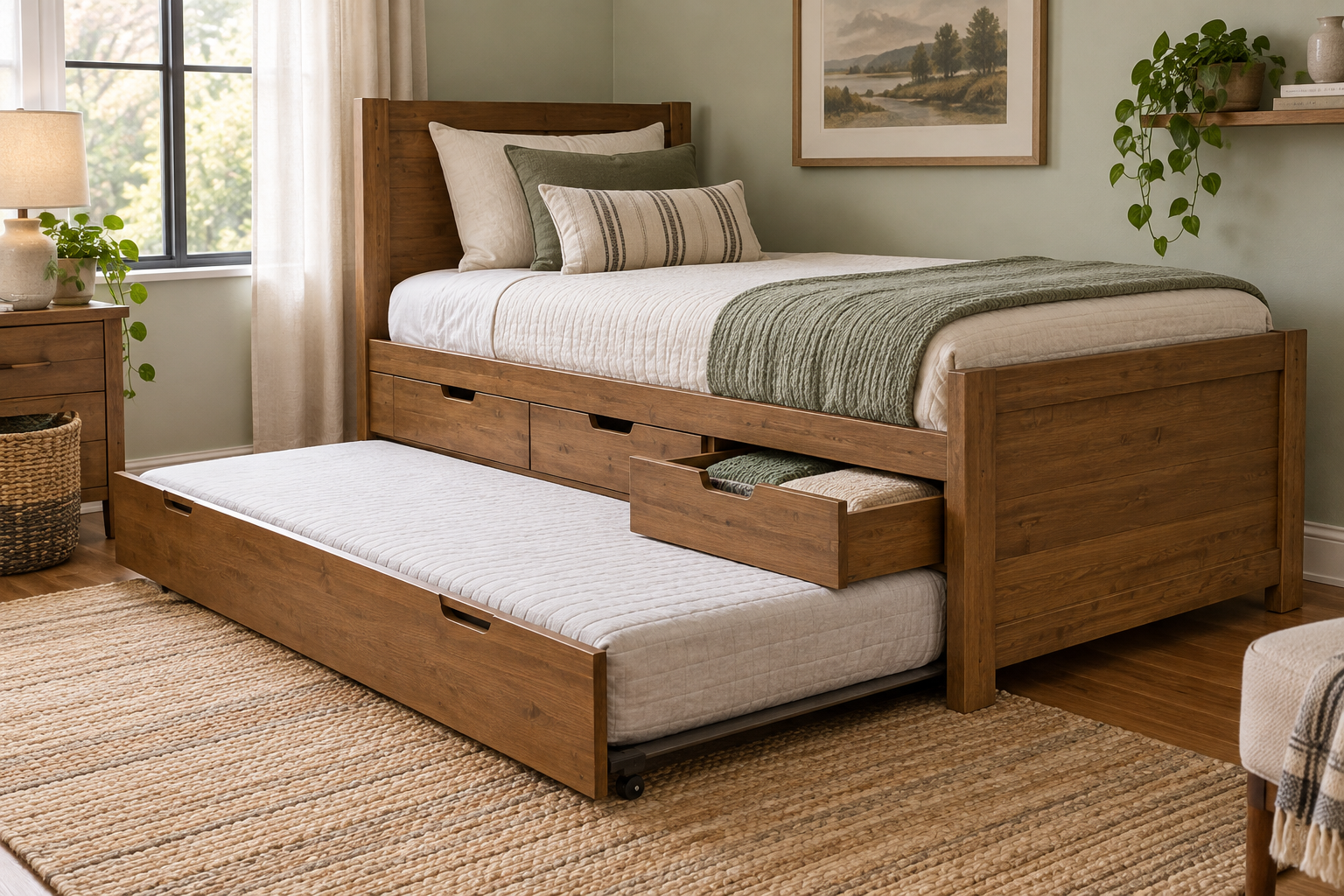
Keep bins below the side rails so they cannot touch the mattress underside when loaded. Inspect soft bags after filling because compressed blankets can rebound and bulge. A low frame such as the GarveeHome Low Twin Platform Bed with Storage Headboard may offer little or no useful underbed height even though it includes storage elsewhere. ‘Storage bed’ does not always mean open floor storage.
Design the System Around Retrieval Frequency
Divide the underside into three access bands. The first band is reachable without moving anything and should hold weekly-use items. The second may require shifting a nightstand or pulling one front bin, so reserve it for monthly needs. The deepest band, near the wall or headboard, is appropriate only for seasonal items. This prevents a frequently needed sheet set from becoming trapped behind holiday decorations and reduces the temptation to leave several bins in the aisle.
Use containers that can be identified before removal. Clear plastic shows contents but can expose fabrics to light; opaque bins protect appearance but need large front labels. A label should describe the category and, for seasonal clothing, the size or person. Numbering bins is useful only if a simple inventory is kept somewhere accessible. Avoid writing directly on a lid that disappears under the bed.
Pack for the retrieval motion. Place heavier items near a handle so the far end does not drag, and avoid one-sided loads that twist a soft bag. Rolled blankets can fit shallow containers more evenly than tall folded stacks. Do not vacuum-compress items unless their care guidance permits it; dense compressed bags can become unexpectedly heavy and may expand into the frame if a seal fails.
Plan an overflow rule before every bin is full. For example, one incoming sweater means one is donated or moved to long-term storage. Underbed systems fail gradually when unrelated objects fill the small gaps. A defined category for every container keeps the space useful and makes annual cleaning possible without sorting an entire room from scratch.
Keep one modest zone intentionally empty. That buffer accommodates a visiting guest’s bag, a newly washed blanket awaiting seasonal rotation, or a container that expands slightly after repacking. It also gives your hands somewhere to maneuver when removing the bin behind it. Maximum packing density looks efficient in a diagram but often makes the last container inaccessible.
If two people maintain the room, agree on front-facing labels and category boundaries. A system that only one person understands will decay quickly. A simple rule—nothing loose under the bed and every item returns to a named bin—protects the floor path, reduces dust-catching clutter, and makes it immediately obvious when the available storage is full.
Create a Retrieval Map
Label the visible end of each bin, not its lid. A simple room-side map prevents buying duplicates and reminds the household what lives in the hard-to-reach back zone. Rotate seasonal bins by moving the next season toward the front. Once or twice a year, empty the area, vacuum, check frame hardware, and remove items that no longer deserve scarce space.
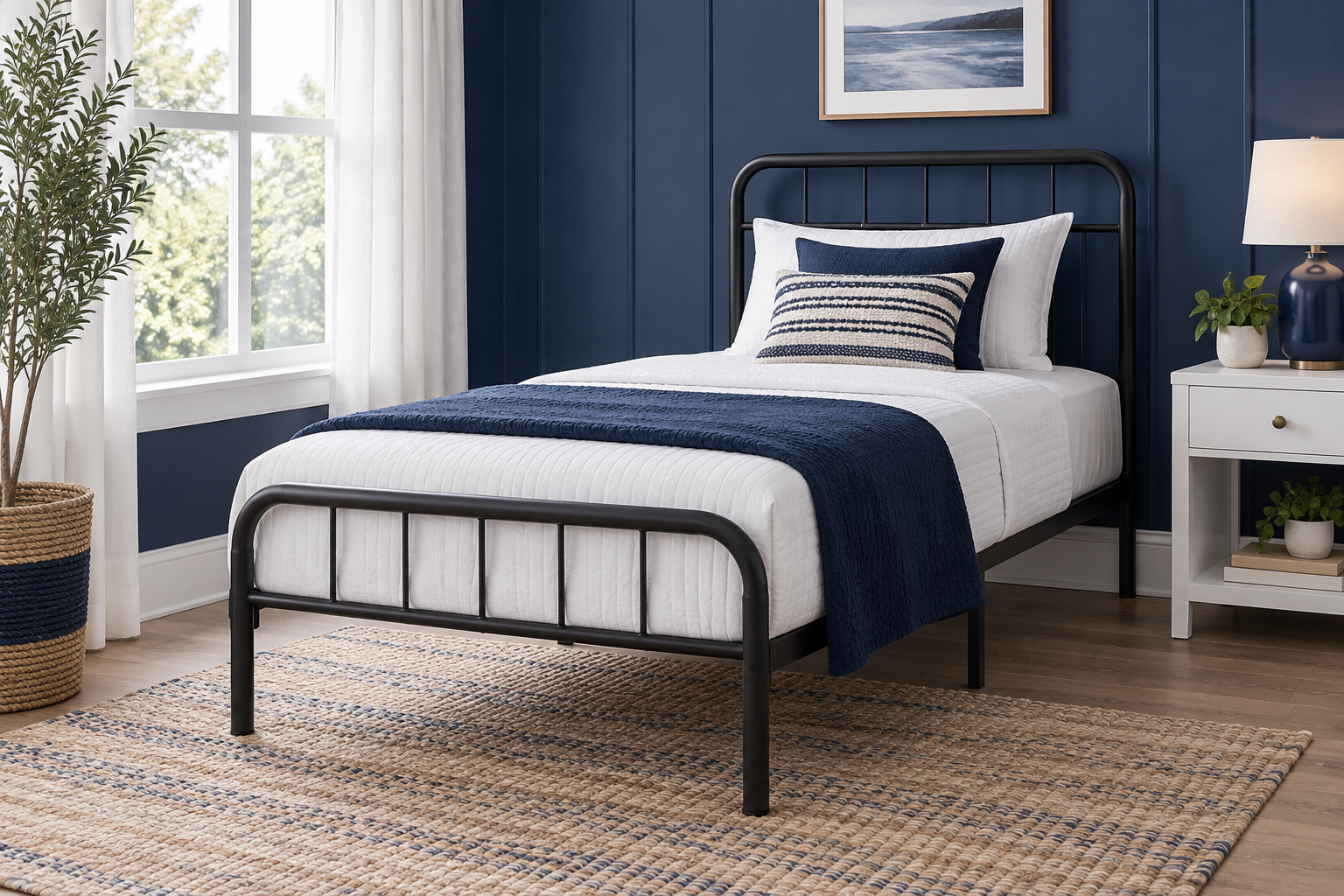
A platform frame with open clearance, such as the VECELO 14-Inch Twin Metal Platform Bed or Allewie 14-Inch Heavy-Duty Twin Metal Bed Frame, can be a better match for modular bins than a built-in drawer bed. Still, confirm exact current dimensions and support layout. The product name’s height includes structural parts and is not a promise of a 14-inch-tall opening.
- Lowest underside clearance minus handling allowance equals target bin height.
- Clear width between legs determines bin width.
- Open side and foot aisles determine retrieval direction.
- Loaded weight determines whether wheels or smaller modules are needed.
- Contents determine lid, ventilation, and material.
Frequently asked questions
How tall should an underbed bin be?
It should be lower than the smallest measured obstruction beneath the frame, with extra clearance for the lid, carpet, and handling. Do not use advertised frame height as the opening height.
Are fabric bags or plastic bins better?
Fabric bags suit light textiles and irregular spaces; rigid lidded bins protect contents and roll or slide more predictably. Choose by contents and floor conditions.
Can bins touch the bed slats?
They should not. Leave clearance for normal movement and ventilation, and keep items away from structural or adjustable components.
How many bins fit under a twin bed?
The answer depends on leg and support placement, not mattress size alone. Divide the measured clear rectangles by the bins’ exterior dimensions.
What should not be stored under a bed?
Avoid food, liquids, damp items, leaking products, and objects that exceed safe handling or stated weight limits. Keep pathways and mechanisms clear.
Final verdict
Measure the underside as a set of usable compartments, then choose bins around movement and contents rather than maximum volume. A slightly smaller container that clears the rail and can be pulled with one hand will be used far more than a perfect geometric fit that jams. Leave breathing room, label the front, and keep the retrieval path honest.
Product examples