TwinBed.app practical guide
Corner Twin Beds: Space-Saving Benefits and Tradeoffs
Pushing a twin bed into a corner seems like the automatic small-room move, but it is really an exchange. Two bed edges stop consuming circulation space, while two bed edges also become harder to reach. That exchange can be excellent in a child’s room, a compact guest room, or a multipurpose office. It can also create a weekly struggle with sheets or strand valuable storage against the wall. Evaluate the corner as a working position rather than an empty rectangle.
Quick answer
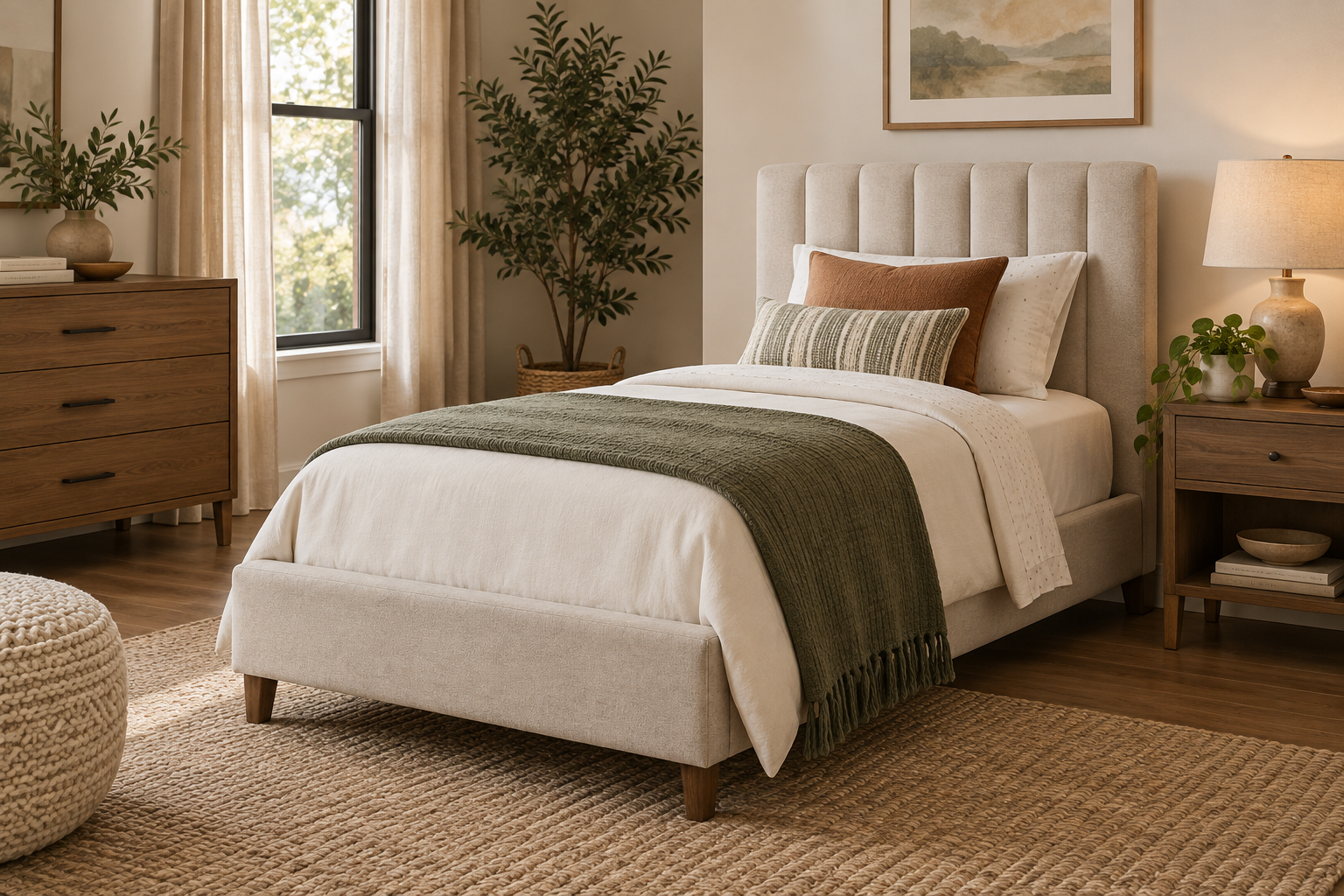
A corner twin bed can preserve the largest continuous patch of open floor, create a cozy daybed effect, and leave one clear aisle. The tradeoffs are harder sheet changes, one-sided access, possible loss of wall-facing drawers, and closer contact with a cold or damp wall. It works best for one sleeper when the exposed side supports every daily task.
Benefit: One Large Area Replaces Two Narrow Aisles
A centered twin often creates a narrow passage on each side. In a tight room, neither passage may be wide enough for furniture or comfortable movement. A corner combines that space into one broader aisle and a more useful center. The recovered area can support play, a desk chair, exercise, or simply an uncluttered route from the door to the closet.
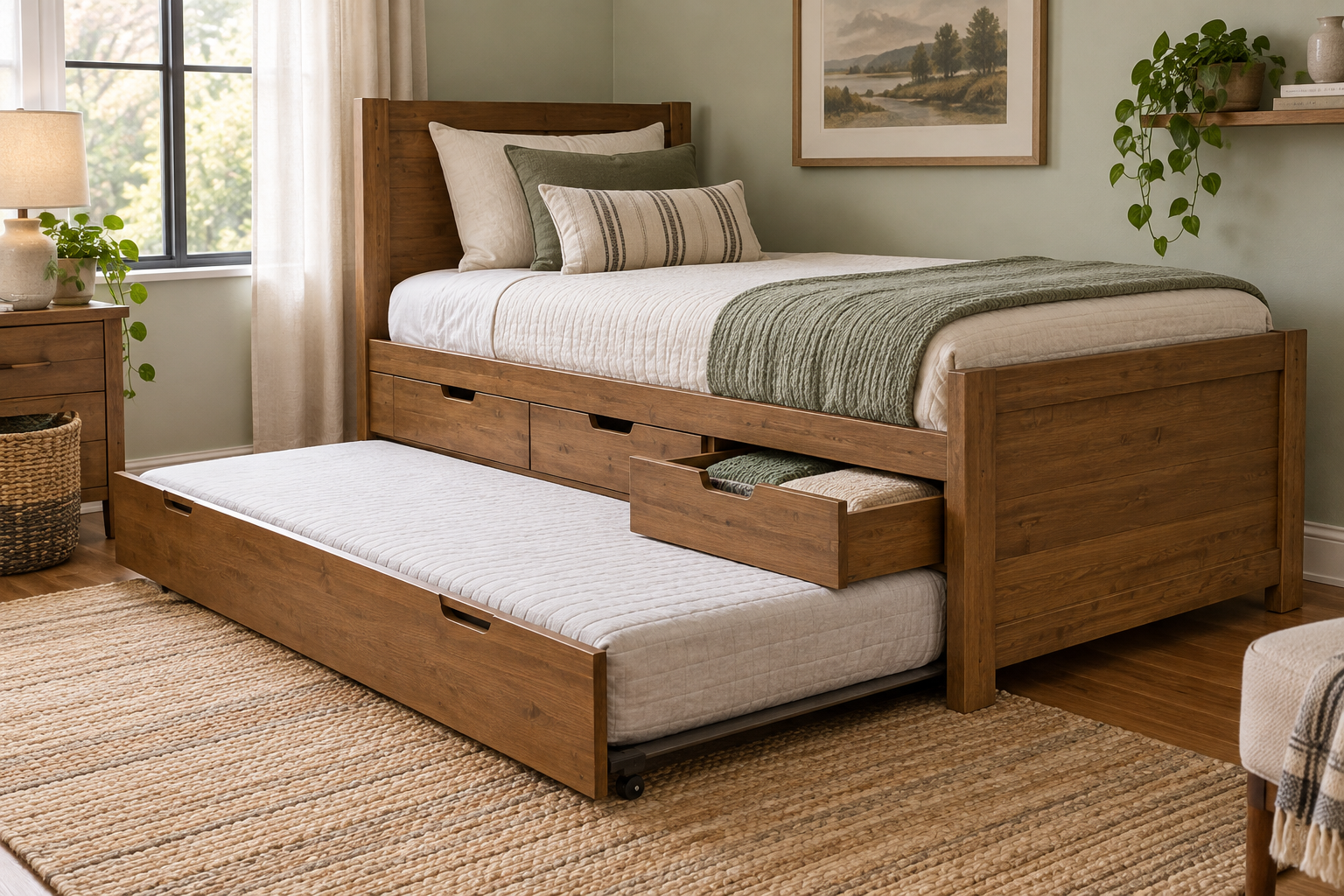
This effect is strongest when the head and long side meet uninterrupted walls. Measure baseboards, trim, radiators, outlets, and the exact assembled frame before deciding. The mattress is generally about 38 by 75 inches, but the bed may be wider and longer. A daybed-style corner frame, such as the LUSIMO Corner Twin Bed Frame with Storage Drawer, also needs its drawer front and upholstered surround included in the plan.
A single open aisle is easier to keep obvious at night. It should still connect both the sleeping position and closet to the room exit. Do not spend the recovered floor on baskets or tables that rebuild the same pinch point.
Benefit: The Bed Can Serve as Daytime Seating
The long wall acts as a visual back, letting firm cushions turn the bed into informal seating. This can make a studio, den, or teen room feel less dominated by a mattress. A fitted cover, two or three supportive back cushions, and a controlled throw usually produce a cleaner result than many small pillows.
Comfort depends on reducing the unusually deep 38-inch seat. Test existing cushions before buying a set, and give every decorative piece a bedtime home. Keep fabric clear of storage drawers, trundles, outlets, and heating equipment. If the wall feels cold or shows condensation, investigate the moisture or insulation issue rather than using pillows to conceal it.
A corner arrangement also gives readers, children, and guests a supported end for lounging. It does not convert an ordinary bed into a purpose-built sofa with identical ergonomics or durability. Judge the actual users’ posture and the mattress edge behavior.
Tradeoff: Making the Wall Side Takes More Work
Fitting a sheet on the far two corners requires reaching across the mattress, kneeling on it, or pulling it forward. That may be a minor inconvenience for an able adult and a significant problem for someone with limited balance, grip, back mobility, or reach. Rehearse the motion with the proposed frame outline before committing.
Keep enough space or a safe method to clean along the walls. Do not stand on a nightstand or unstable object. A lighter mattress may be easier to maneuver, but it still must meet comfort and frame-support requirements. Handles on some mattresses are intended for positioning, not carrying; follow care directions.
A bed used occasionally can tolerate a slower linen routine. A child’s nightly bed with frequent spills may make accessibility more important. The corner saves daily walking space at the cost of periodic maintenance access, so frequency determines whether the trade feels fair.
Tradeoff: Storage and Guest Features May Face the Wrong Way
Side drawers trapped against the wall have no practical capacity. A four-drawer frame can become a two-drawer frame after corner placement. Choose drawers on the exposed side or foot, and measure their full extension plus room for the operator. The LUSIMO corner design should be checked in its current variation for drawer direction and dimensions rather than assumed reversible.
A trundle must pull into the open room. The ZINUS Suzanne Bamboo and Metal Daybed with Trundle belongs to the daybed-and-guest category, but its exact open footprint and current instructions determine whether a corner works. Preserve a path from both sleep surfaces to the door when it is extended.
Underbed bins can offer more direction flexibility than built-in drawers, provided the frame legs and supports permit foot access. Storage headboards use vertical space but may add length or require access at the pillow end. Count only storage that can be opened in the final position.
Tradeoff: Walls Affect Comfort and Upkeep
An exterior wall can be colder than the room air. Furniture placed extremely close may reduce circulation, and humid conditions can contribute to condensation. Follow mattress and frame placement guidance, maintain room humidity appropriately, and inspect the hidden corner during sheet changes. A musty smell or visible moisture needs correction, not a scented cover.
Walls also receive contact from pillows, hands, and frame movement. Washable cushion covers and wipeable paint can simplify care. Allow enough separation to prevent a hard frame from tapping trim during normal use without stuffing loose fabric into the gap. Use appropriate floor protectors if the bed tends to shift, but never alter structural parts.
Keep outlets accessible and cords unpinched. A wall reading lamp can preserve floor area when installed correctly, but heavy objects should not hang over the sleeper. For children, consider window, blind-cord, and climbing hazards before selecting a corner.
Decide Whether the Corner Should Be Permanent
Some rooms benefit from a fixed corner identity; others need furniture that can shift with school, work, or guest needs. A low, independent platform can often move from the corner to a centered position more readily than an upholstered corner daybed with a directional back. Before buying, ask whether the occupant may soon need a larger desk, caregiver access, or a different storage layout. A reversible room is valuable when circumstances are likely to change.
If the frame has a finished back, document whether it can stand away from the wall without exposing hardware or an unfinished panel. Directional drawers and attached corner backs may determine which room corner is possible. ‘Corner bed’ does not necessarily mean left-right reversible. Product photos can show only one orientation, so use the assembly manual and variation details to verify the exact configuration.
For renters, avoid building a custom wall surround that makes the bed difficult to remove or damages the room. Use appropriately installed removable accessories only where suitable, and retain the frame instructions and labeled hardware. A bed chosen for one apartment should still pass through the doorway and adapt to a future bedroom.
Review the layout after the first month. Watch where clothing lands, whether the open aisle remains open, and whether the wall-side sheet corners are maintained. If daily habits defeat the plan, moving the bed slightly off the wall may preserve most of the floor benefit while improving cleaning and linen access. Space-saving success is measured in routine, not in the tightest possible fit.
Record that revised position before adding other furniture, so later purchases preserve the working aisle.
Use a Corner Suitability Test
Tape the complete frame on the floor and place boxes at headboard and rail height. Walk the open side, open the closet, and pull any drawer or substitute bin. Then practice a sheet change. Sit against the proposed long wall with temporary cushions to test depth. These tasks expose whether the recovered floor is genuinely useful.
Compare the same room with the bed six to twelve inches off center or fully centered. An off-corner position may preserve a narrow cleaning gap while retaining most open floor. A low storage design such as the GarveeHome Low Twin Platform Bed with Storage Headboard provides a different storage strategy, but its low profile and headboard depth must be mapped separately.
Choose the corner when the open floor supports an important activity and the exposed side serves sleeping, storage, and cleaning. Choose a less compressed position when caregiving, frequent sheet changes, or two-sided drawers matter more.
- Map the assembled frame, not only the twin mattress.
- Aim all drawers or trundles toward the open floor.
- Practice reaching both wall-side mattress corners.
- Inspect exterior walls for airflow and moisture concerns.
- Protect one direct aisle instead of refilling it with furniture.
Frequently asked questions
Is it okay for a twin bed to touch two walls?
It may fit, but follow frame and mattress guidance for ventilation and access. Check wall conditions and ensure the bed can be cleaned and made safely.
How do you make a corner bed easier to make?
Use well-fitting bedding, keep the exposed side clear, and pull or position the mattress only as its care guidance permits. Do not climb on unstable furniture.
Can a corner twin bed have drawers?
Yes when drawers open from the exposed side or foot. Wall-facing drawers should not be counted as usable capacity.
Does a corner bed make a small room look bigger?
It often creates one larger visible floor area, which can feel calmer. Frame height, color, clutter, and doorway sightlines also affect the impression.
Is a corner bed good for an adult?
It can be for one adult if mattress size, frame capacity, access, and bed-making suit that person. Adults with mobility limitations may need more open sides.
Final verdict
Corner placement is a strong tool, not a default rule. It trades two-sided access for one useful aisle and a broad patch of open floor. That is worthwhile when the exposed side handles drawers, entry, and maintenance without compromise. Test the sheet-changing motion, open every storage feature, and inspect the wall conditions. If those checks pass, the corner can make a twin room work far beyond its dimensions.
Product examples