TwinBed.app practical guide
Low-Profile vs. Standard-Height Twin Bed: Which Is Better?
Low profile describes appearance, not one fixed measurement. A frame close to the floor can become moderate height under a thick mattress, while a tall-looking rail may recess the mattress deeply. Product photos exaggerate this ambiguity by using different mattress depths and room scales. The comparison should begin with finished surface height and daily use: who enters the bed, what must fit beneath it, how the room is cleaned, and whether the frame includes drawers or moving parts. Only then should visual preference decide.
Quick answer
Choose a low-profile twin for a visually open room, lower sleep surface, and reduced climbing height. Choose standard height when easier adult sit-to-stand movement and practical underbed storage matter. Calculate finished height from floor to support deck plus foundation, mattress, pad, and topper; frame labels alone do not reveal where the sleeper will sit.
Calculate finished height instead of comparing labels
Measure from the floor to the top of the support deck, then add any required foundation, mattress, pad, and topper. If the mattress sits recessed, subtract the portion below the rail top only when evaluating visible profile—not actual floor-to-surface distance. Record the number and compare it with a stable chair the sleeper can use comfortably. Photos are not a measurement.
A platform described as fourteen-inch may refer to clearance, frame height, or another dimension depending on the listing. Low-profile can describe rails while a tall headboard remains. Read diagrams for deck height and underbed clearance separately. Verify that built-in levelers, casters, or floor cups do not materially change the installed result.
- Floor to deck
- Foundation if required
- Mattress and topper
- Recess depth for appearance
- Actual underbed clearance
Compare entry and exit for the actual sleeper
A lower bed reduces climbing for a small child and can create a grounded feeling, but standing from it requires deeper knee and hip flexion. Many adults prefer a surface near a comfortable chair height where feet reach the floor and the body can rise with control. Individual proportions and mobility vary; there is no universal ideal number. Test comparable heights rather than selecting by age label.
A very high setup can also be difficult. Feet may not reach the floor while seated, and a child may need to climb. Thick mattresses on tall frames can make sheet changes awkward. If mobility is limited or falls are a concern, seek individualized professional advice and consider the room path, night lighting, and stable transfer area as well as height.
Evaluate storage as usable volume, not empty inches
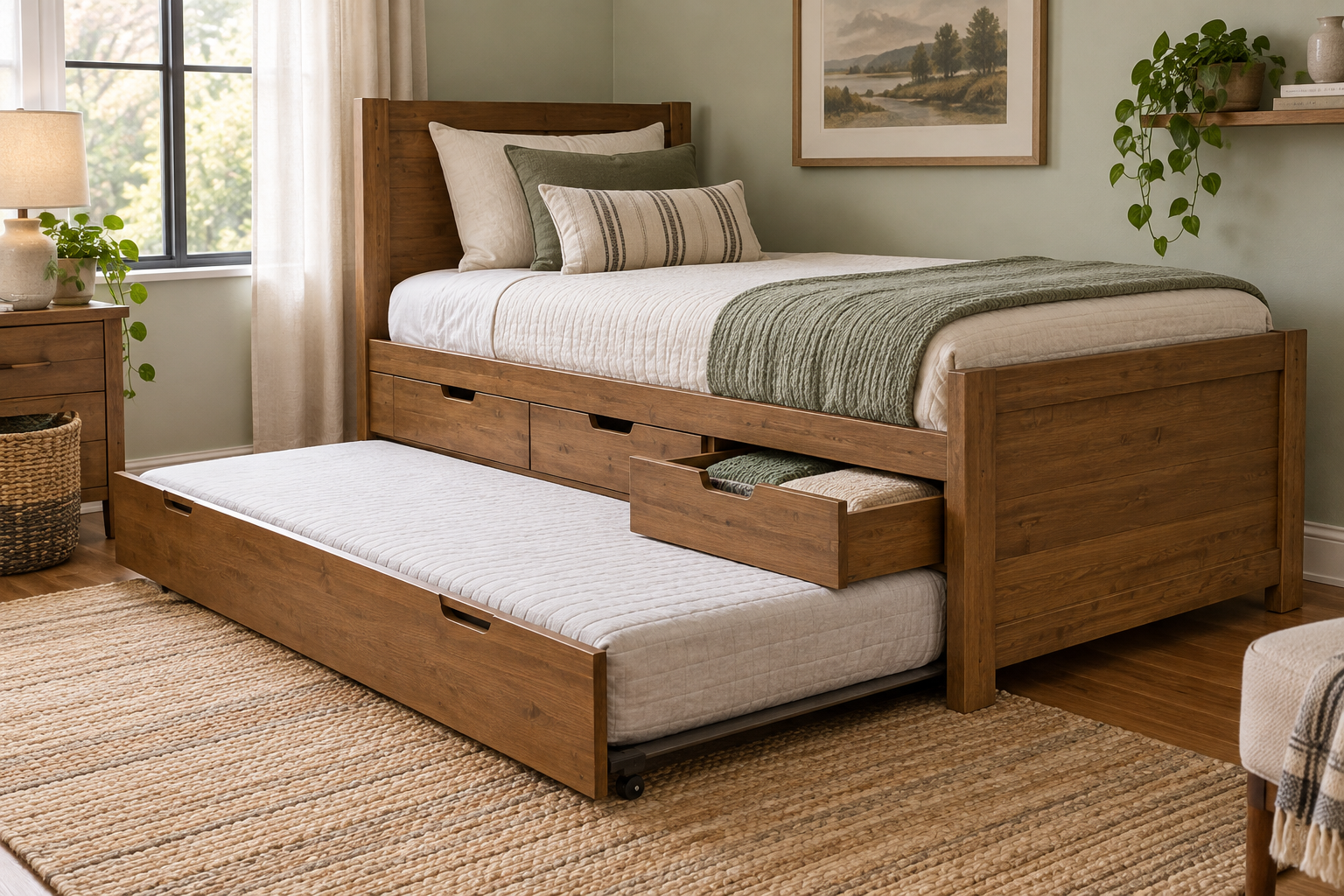
Standard and high-clearance frames can accept bins, luggage, or drawers, but braces and center legs divide the space. Measure container width and height at the exact insertion path. Carpet, rugs, handles, and sloped bin lids reduce practical clearance. Integrated drawers require extension room beside the bed and can be blocked by a nightstand.
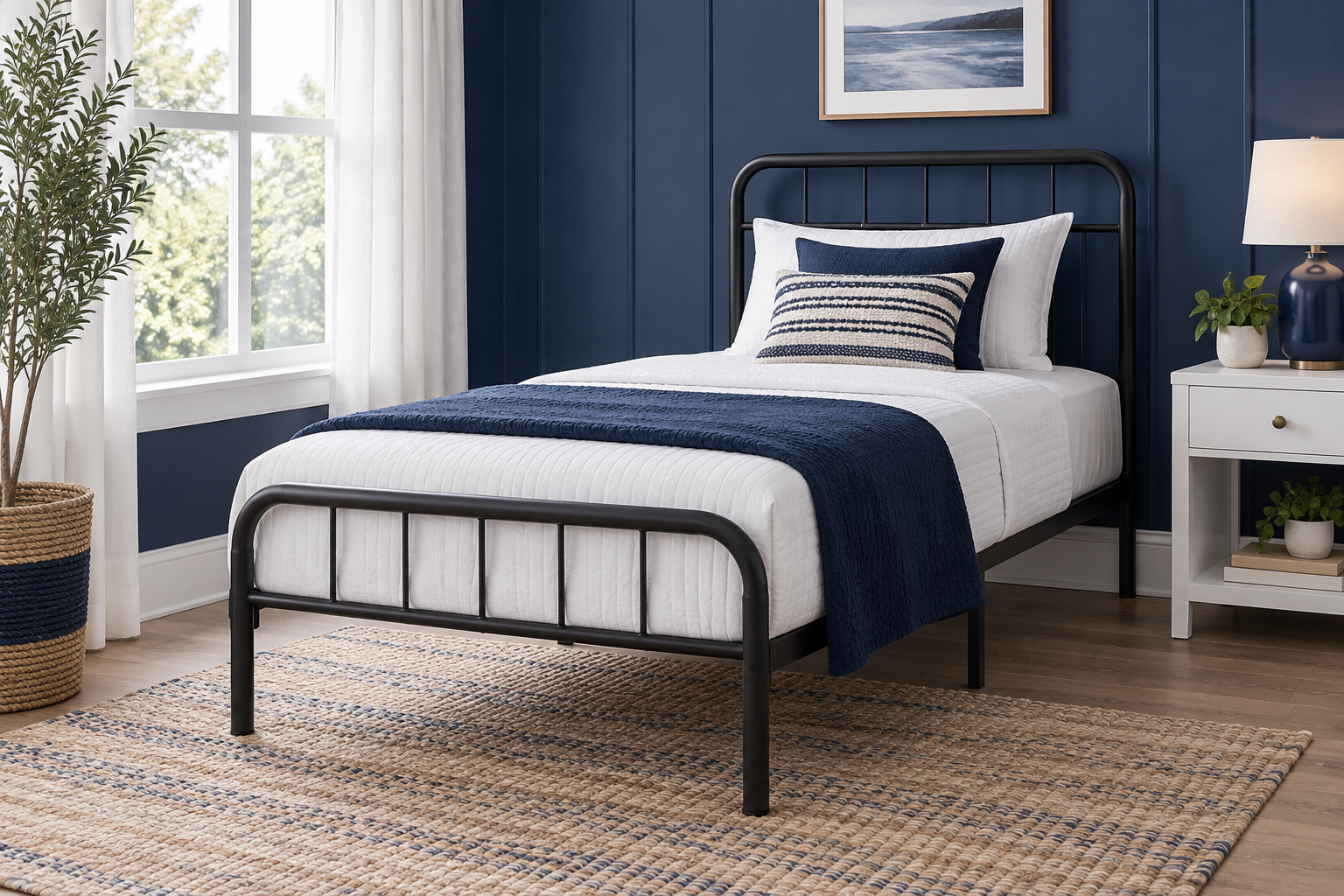
Low frames limit storage and make cleaning beneath them harder if a vacuum head cannot enter. They can also discourage clutter by removing the temptation to pack the bed's underside. A slightly higher open frame may be easier to sweep and inspect than one with narrow inaccessible space. Ventilation should remain around the mattress support regardless of storage choice; avoid filling every opening with tightly packed textiles.
Match room scale and visual weight
A low bed exposes more wall and can make a small room feel open. It works with low windows or a minimalist layout, provided the headboard does not add unexpected height. Standard height gives the bed more presence and can balance taller dressers or ceilings. In both cases, outside frame dimensions and leg style affect visual bulk more than mattress size alone.
Daybeds, storage headboards, and footboards complicate the comparison. A low deck beneath a tall upholstered surround can still feel massive. A slim metal frame with generous clearance may look light despite its height. Mark the silhouette on the wall and floor. Consider sightlines from the doorway and whether bedding will hang to the floor or expose bins.
Consider mattress, rails, and special-frame safety
Mattress thickness changes the final height and how rails function. A deep mattress can cover a low headboard or footboard. On bunks, the maker's maximum thickness preserves guardrail exposure and cannot be exceeded to achieve a preferred surface height. Trundles need closing clearance. Daybeds need enough visible side and back rail for their intended seating function.
Low-profile frames are not automatically safer for children, and floor beds have their own ventilation and room-safety considerations. Follow age, guardrail, gap, and mattress guidance for the exact product. Standard-height frames with open sides may require deliberate nighttime pathways. Do not add unapproved risers to change height; they can destabilize legs and alter capacity.
- Preserve rail function
- Respect bunk maximums
- Keep trundles operable
- Avoid unapproved risers
Choose through a two-position room test
Mock the lower and standard finished surface heights with stable household references, without climbing on unsafe stacks. Sit at each height, simulate making the far corner, and note sightlines. Tape the underbed volume and place the intended bins beside it. This reveals whether storage or aesthetics are theoretical benefits rather than daily ones.
Then compare two actual products using deck height, support type, capacity, outside dimensions, mattress compatibility, and cleaning access. Include the cost and complexity of any required foundation. Confirm the selected Twin or Twin XL variation because frame heights can differ by size. The better choice is the complete system that fits the sleeper and room, not the category name.
Factor in cleaning, pets, and daily room behavior
A frame close to the floor can block a standard vacuum head and make dust visible at the perimeter but unreachable beneath the center. Measure the cleaning tool, including its joint when angled, and determine whether the bed can be moved safely. A taller open frame simplifies floor access, although bins and center legs create obstacles. Robot vacuums need both vertical clearance and a path around braces; advertised underbed height alone may not guarantee navigation.
Pets change the height decision. A low surface may be easier for a small or older animal to approach, but pet access should not override the sleeper's safe transfer or expose bedding to constant floor-level dirt. A taller bed may discourage jumping yet tempt repeated leaps that stress joints. A separate pet step or bed should be selected for stability and used only when appropriate; unapproved objects beside a bed can become nighttime trip hazards.
In children's rooms, low frames can support independent entry and a visually open play area. The entire room still needs age-appropriate safety: anchored furniture, managed cords, clear exits, and no hazardous gaps. A low profile is not the same as a floor-bed philosophy, and a decorative rail is not automatically a guardrail. Follow the product's intended age and use rather than relying on proximity to the floor.
For a guest room, standard height often serves a wider range of adults and allows luggage or spare linens below. A low daybed may work better as seating but can be harder for some visitors to rise from. Because guests vary, favor uncomplicated access and provide a stable nearby surface rather than maximizing a particular aesthetic. Test the room with a suitcase and open door, not only an empty styled bed.
Understand how height affects upkeep and longevity
Higher clearance makes it easier to see loose center legs, displaced slats, and dropped objects. A very low enclosed base can hide moisture or dust until the mattress is removed. Establish an inspection routine appropriate to the design. Remove storage periodically, check floor contact, and look for finish wear where bins rub legs or rails.
Tall legs create more leverage at their joints when the frame is pushed sideways. Move the bed by the structural rails as instructed, not by the headboard, and lift rather than drag when safe help is available. Low frames are not immune to racking; their shorter legs simply change the geometry. Correct assembly and level floor contact matter at every height.
Changing mattress thickness later can transform the category. A low frame paired with a fourteen-inch mattress may produce a standard sitting height, while replacing it with a six-inch model lowers the sleeper dramatically. Recalculate sheets, rail exposure, and entry rather than assuming the frame determines the experience forever. The mattress should still meet support rules and comfort needs; height should not be adjusted through an unsuitable product.
If underbed storage is a primary reason for standard height, measure the objects before purchase and keep a weight plan. Storage does not usually count against bed capacity when it rests on the floor, but it can contact braces or moving mechanisms. Avoid placing valuables where a leaking drink or protector failure could reach them. Useful clearance is organized, accessible, and inspected—not merely filled.
Frequently asked questions
What counts as a low-profile twin bed?
There is no universal cutoff. Compare the stated floor-to-deck measurement and calculate the final sleep surface with the chosen mattress rather than relying on the label.
Is a low bed easier for an adult to use?
Not always. It reduces step-up height but requires more bending to stand. Test a comparable surface and consider leg length, mobility, and balance.
Does a taller twin frame need a box spring?
Height does not decide. The support design and mattress instructions determine whether a foundation is required, allowed, or unnecessary.
Can I use bed risers on a low-profile frame?
Only when the frame maker explicitly approves them. Risers can reduce stability, change load transfer, and create uneven leg support.
Which height is better for a small bedroom?
Low frames often look more open; higher frames can replace other storage furniture. Measure visual silhouette, walking space, bin access, and the sleeper's entry needs.
Final verdict
Low versus standard height is a decision about the installed bed, not the bare frame. Calculate the complete surface, test entry and exit, map real storage, and preserve every rail and support requirement. A lower silhouette can open a room; a moderate height can improve access and organization. The stronger choice is whichever benefit remains real after the mattress, sleeper, bins, and cleaning tools arrive.
Product examples