TwinBed.app practical guide
Twin Bed vs. Double Bed: What Is the Difference?
Double is a familiar word with several jobs. It can name the American full-size mattress, describe a hotel room for two people, or serve as an approximate translation of a regional size. Twin can likewise name a mattress or a room with two separate beds. The difference becomes simple only after the context is fixed. For U.S. home shopping, it is a width comparison; for travel or imported goods, it is a terminology investigation.
Quick answer
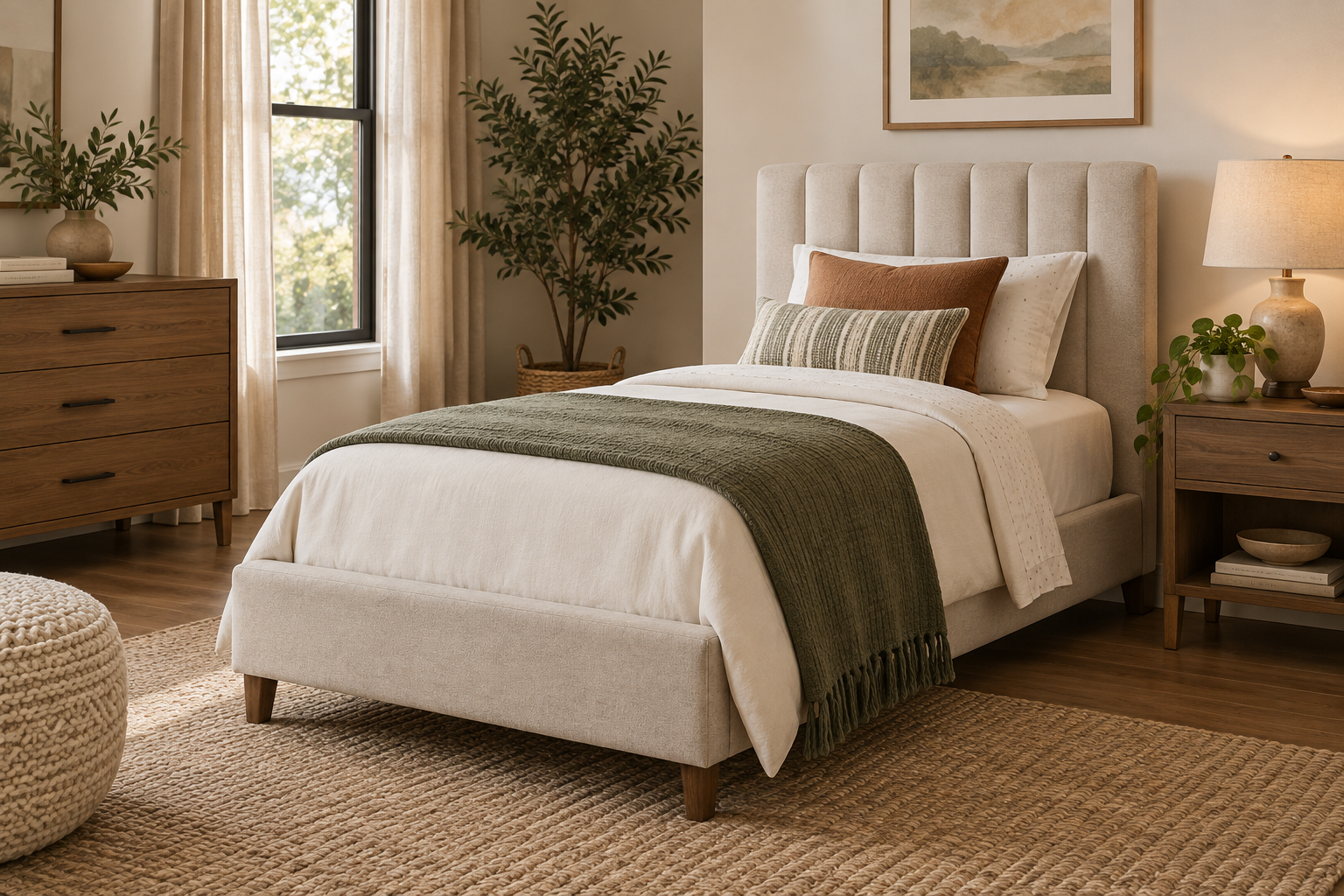
In standard U.S. retail language, a twin mattress is 38 × 75 inches and a double mattress usually means a full at 54 × 75 inches. Double is 16 inches wider but not longer. International stores and hotels may use these terms differently, so exact dimensions and the number of separate sleep surfaces are more dependable than names.
The U.S. mattress comparison
A standard twin mattress is nominally 38 inches wide and 75 inches long. A U.S. double, more commonly labeled full in modern retail, is 54 inches wide and 75 inches long. Double adds 16 inches of width and no length.
Twin has about 19.8 square feet of surface, while full/double has about 28.1. The added area helps one sleeper spread out. It does not solve the needs of a tall person because both end at the same 75-inch length.
Frames make each footprint larger. A padded double headboard or sleigh footboard can increase the room demand beyond the mattress difference. Compare exact assembled furniture rather than applying a universal allowance.
The width difference is large enough to change the position of the mattress center by eight inches when one side remains against the same wall. That shift can affect alignment with ceiling fans, lights, windows, wall art, and outlets. Re-centering the entire frame may instead reduce the opposite aisle. A complete plan therefore locates the bed, not merely its boundaries.
Mattress area is not a proxy for support or quality. Foam density, coil construction, edge reinforcement, and firmness can vary within either size. Choose size for body and room fit, then compare construction among products in that size. This keeps a high-quality twin from being dismissed simply because a low-quality double has more surface.
The common 75-inch length deserves special emphasis in a guest room. A double accommodates a broader guest, but not a taller one. If the goal is inclusivity across unknown visitors, compare the value of Full XL where available, Twin XL, queen, or two separate long beds rather than assuming double is the universal upgrade.
Why double does not mean two twins
Bed names are conventions, not equations. Two twin mattresses side by side total 76 inches, while one double is 54 inches. A double is not twice twin width, and a twin is not half of a double.
The word double historically suggested a bed for two. Dividing 54 inches gives each person 27 inches, which many modern couples find restrictive. Queen or king is typically more plausible for regular shared sleep. Double/full remains a strong solo-sleeper size when the room can spare its width.
Similar naming traps occur elsewhere: Twin XL changes length, not width, and a split king uses two Twin XL mattresses rather than standard twins. Dimensions should always follow the name in a careful comparison.
Hotel room labels describe configurations
A twin room often means two separate single beds for two occupants. A double room may mean one bed for two people, a room category based on occupancy, or another arrangement defined by the property. It does not guarantee a 54-by-75-inch American full mattress.
Read the detailed bed configuration and ask the hotel when separation matters. Questions should be concrete: Are there two distinct mattresses? What are their approximate dimensions? Can they be separated? A photograph can distort scale and may show a representative room rather than the exact category.
Terms such as double-double may indicate two double beds, while twin may mean two singles. Because properties and countries differ, the number of beds and their measurements are safer than interpreting the category name.
International and imported sizes
Countries use their own common mattress dimensions. A product translated as single or double may be narrower, wider, shorter, or longer than the closest U.S. category. Metric measurements allow a direct comparison without relying on translation.
When importing a frame, compare its interior support area with the physical mattress. When importing sheets, compare width, length, and pocket depth. A familiar English label does not guarantee compatibility with an existing U.S. product.
Look for whether dimensions refer to the mattress, the assembled frame, or the package. A shipping carton can be surprisingly small for compressed bedding and bears no useful relationship to the final sleep surface.
Sleeper fit and room tradeoffs
Twin suits one person who values floor efficiency. Its saved 16 inches may protect a desk, dresser aisle, or second bed. Full/double gives one sleeper more freedom to change position and accommodate a pet or occasional child, but it can crowd a narrow room.
Neither option adds tall-person length. A sleeper who needs 80 inches should compare Twin XL for narrow solo use or queen for greater width. The best progression is based on the needed dimension, not a ladder of names from small to large.
The LIFERECORD 6-Inch Twin Gel Memory Foam Mattress illustrates the twin category, while the Lunarflex 14-Inch Twin Hybrid Mattress in a Box shows how thickness can vary dramatically within the same width and length. Size and construction are separate choices.
Frames and support compatibility
A twin mattress belongs on a twin support system; a double/full needs its wider structure. Do not center a twin on a full platform and accept large side gaps, especially where an enclosure can create entrapment or movement. Match size labels and verified dimensions.
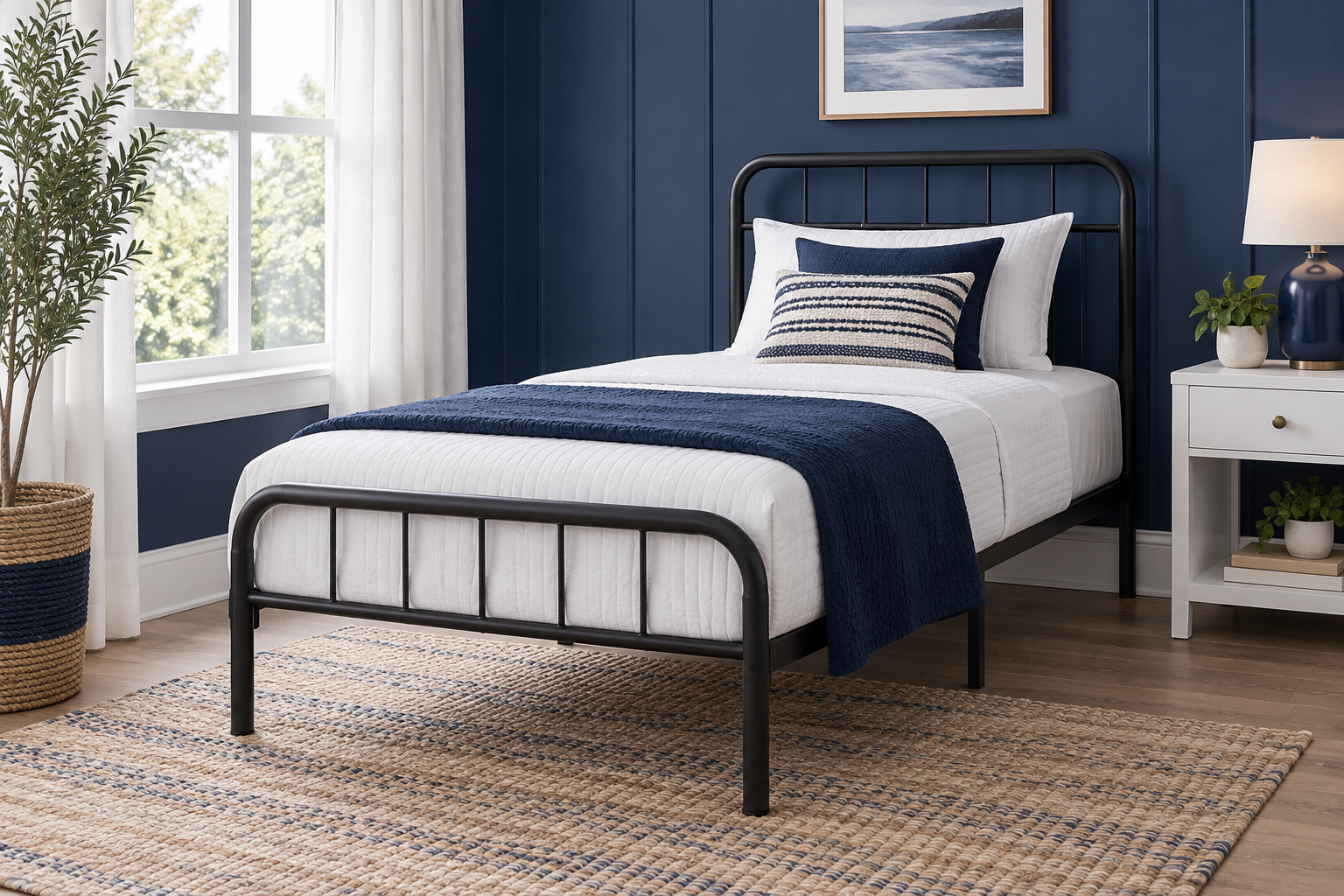
The ZINUS Abel Metal Platform Bed Frame – Twin Option represents a direct twin-frame format. Check selected variant, slat spacing, foundation requirements, center support, and weight capacity. Width alone does not establish that a mattress-frame pairing is correct.
Mattress thickness affects sitting height and fitted-sheet depth but does not change twin into double. On bunks and guarded beds, thickness also affects safety, so follow the structure’s stated maximum.
Use a terminology-safe shopping method
Write the required mattress dimensions first. For U.S. twin, that is nominally 38 by 75 inches; for U.S. full/double, 54 by 75. Add desired thickness, support type, and maximum assembled frame footprint. Search the label, but verify every result against those figures.
For a close built-in fit, save the dimensional diagram and obtain clarification when figures conflict. Rounded metric conversions can differ by a centimeter without indicating another size, while a discrepancy of several inches requires explanation.
Select fitted bedding from the mattress dimensions, not the frame’s exterior. Select room placement from the frame exterior, not the mattress. Keeping those roles separate prevents a large share of buying errors.
Use precise language when booking or sharing plans
Instead of asking for a twin room, state the need: two separate beds for two adults. Instead of requesting a double mattress for an inherited frame, provide the frame’s supported interior size and country standard. Precise language gives the other party a fact they can verify.
When family members plan a room, label diagrams with dimensions and units. Someone may use double to mean two beds rather than one full bed. A written 54-by-75-inch rectangle removes that ambiguity.
Retain the distinction in product metadata and receipts. If a return becomes necessary, the selected variant and stated dimensions are more useful than a conversation based only on common names.
This precision also helps when donating, selling, or moving furniture. Describe a frame as supporting a U.S. full/double mattress and provide its assembled outer dimensions. The next owner can determine both mattress compatibility and doorway fit. Avoid listing it simply as a double bed when buyers may come from a different sizing tradition.
For family travel, write preferences in occupant language: two independent beds for two people, or one shared bed at least a stated width. The booking system's category can then be checked against that need. This approach is especially valuable when translated terms change between the booking platform and the property itself.
If dimensions are unavailable, uncertainty is part of the decision. A flexible traveler may accept it; someone with medical, mobility, or separation requirements should obtain confirmation or choose an option with clearer documentation.
Frequently asked questions
Is a double bed the same as a twin?
No in U.S. sizing. Double generally means full at 54 inches wide, compared with twin at 38 inches.
Is a double bed twice as wide as a twin?
No. A U.S. double/full is only 16 inches wider.
Is a double longer than a twin?
Not in standard U.S. dimensions. Both are nominally 75 inches long.
What does twin room mean at a hotel?
It commonly means two separate single beds, but the property’s detailed configuration should be verified.
Will double sheets fit a twin mattress?
A double/full fitted sheet will be too wide. Use fitted bedding matched to the mattress’s dimensions and depth.
Final verdict
In U.S. home retail, double generally means full: sixteen inches wider than twin and no longer. Outside that setting, both double and twin can describe room arrangements or regional standards. Use names to find options, then use measurements and the number of separate mattresses to confirm what is actually being offered. This dimension-first habit also protects bedding and frame compatibility, because a translated label cannot compensate for a physical mismatch in any bedroom, store, or hotel reservation.
Product examples